Agaricus arvensis
Schaeff. ex Fr.
Horse mushroom
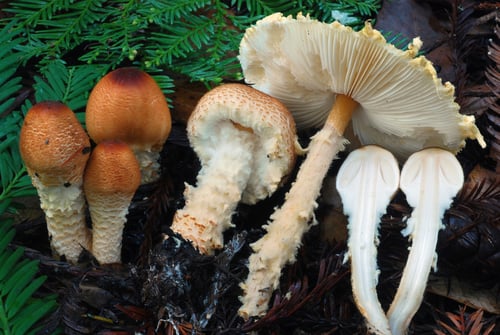
iNaturalist· cc-by-nc
(c) Felipe Hidalgo, some rights reserved (CC BY-NC), uploaded by Felipe Hidalgo
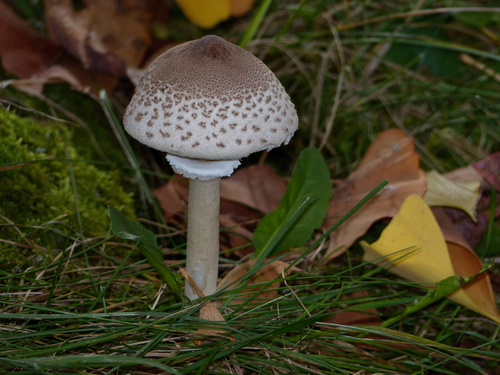
iNaturalist· cc-by-sa
(c) anonymous, some rights reserved (CC BY-SA)
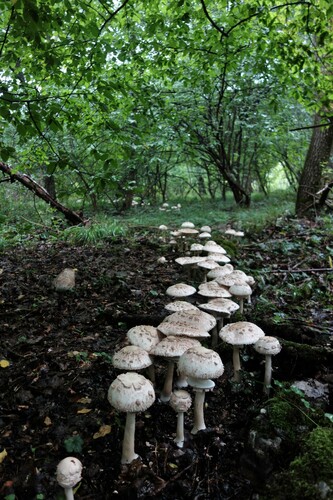
iNaturalist· cc-by-sa
(c) Salix, some rights reserved (CC BY-SA)
Summary
Source: WikipediaAgaricus arvensis, commonly known as the horse mushroom, is a mushroom-forming fungus of the genus Agaricus.
Description
A mushroom. The fruiting bodies are eaten. They are thick, firm and white. They can be 25 cm across.
This description is brief — help expand it
Edible Uses
The fruiting bodies are eaten raw in salads, grilled, stuffed, and used in soups, fritters, sauces, and casseroles.
Traditional Uses
They are eaten raw in salads and also grilled, stuffed and uses in soups, fritters, sauces and casseroles.
This uses section is brief — help expand it
Distribution
It is a temperate plant.
Where It Grows
Africa, Alaska, Armenia, Asia, Australia, Britain, Caucasus, China, Czech Republic, East Africa, Europe, Georgia, Greece, Hong Kong, Hungary, India, Iran, Iraq, Italy, Japan, Mediterranean, Mexico, Middle East, Mongolia, New Zealand, North America, Rwanda, Scandinavia, Sicily, Spain, Sweden, USA,
Other Information
It is sold in local markets.
Notes
There are about 300 Agaricus species.
Nutrition
| Part | Moisture | kJ | kcal | Protein | Vit A | Vit C | Iron | Zinc |
|---|---|---|---|---|---|---|---|---|
| Mushroom | 87.7 | 210 | 50 | 5.6 | — | — | — | — |
Synonyms
Also Known As
Kama, Mindvris kama, Snobollschempinjon, Yemogu
References (32)
- Aziz, F. H. & Toma, F. M., 2012, First Observations on the Mushroom in Mountain Area of Iraqi Kurdistan Region. Journal of Advanced Laboratory Research in Biology 3(4)
- Bianchini, F., Corbetta, F., and Pistoia, M., 1975, Fruits of the Earth. Cassell. p 120 (As Psalliota arvensis)
- Boa, E. R., 2004, Wild edible fungi and their importance to people. FAO Non Wood Forest Products Booklet 17
- Bussman, R. W., et al, 2016, A comparative ethnobotany of Khevsureti, Samtskhe-Javakheti, Tusheti, Svaneti, and Racha-Lechkhumi, Republic of Georgia (Sakartvelo), Caucasus. Journal of Ethnobiology and Ethnomedicine (2016) 12:43
- Bussman, R. W. et al, 2017, Ethnobotany of Samtskhe-Javakheti, Sakartvelo (Republic of Georgia), Caucasus. Indian Journal of Traditional Knowledge Vol. 16(1) pp 7-24
Show all 32 references Hide references
- Bussman, R. W., et al, 2021, Unity in diversity—food plants and fungi of Sakartvelo (Republic of Georgia), Caucasus. Journal of Ethnobiology and Ethnomedicine (2021) 17:72 p 15
- Cribb, A.B. & J.W., 1976, Wild Food in Australia, Fontana. p 199
- Crowe, A., 1997, A Field Guide to the Native Edible Plants of New Zealand. Penguin. p 128
- Degreef, J., et al, 2016, Wild edible mushrooms, a valuable resource for food security and rural development in Burundi and Rwanda. Biotechnol. Agron. Soc. Environ. 2016 20(4), 441-452
- Facciola, S., 1998, Cornucopia 2: a Source Book of Edible Plants. Kampong Publications, p 249
- Guild, B., 1979, The Alaskan Mushroom Hunter's Guide. Alaska Northwest Publishing Company. p 146
- Hall, I. R., et al, 2003, Edible and Poisonous Mushrooms of the World. Timber Press. p 195, 315
- Harter, J.(Ed.), 1988, Plants. 2400 copyright free illustrations. Dover p 5.8
- https://en.wikipedia.org/wiki/List of wild edible plants in Mongolian cuisine (As Psalliota arvensis)
- Imai, S., 1938, Studies on the Agaricaceae of Hokkaido. 2. Jour. Facul. Agr., Hokkaido Imp. Univ., Sapporo, Vol. XLIII, Pt. 2, August, 1938
- Jordan, P., 2000, The Mushroom Guide and Identifier, Hermes House, p 26
- Kalac, P. and Svoboda, L., 1999, A review of trace element concentrations in edible mushrooms. Food Chemistry 69: 273-281
- Kaufmann, B. et al, 1999, The Great Encyclopedia of Mushrooms. Konemann. p 160
- Kiple, K.F. & Ornelas, K.C., (eds), 2000, The Cambridge World History of Food. CUP p 318
- Lentini, F. and Venza, F., 2007, Wild food plants of popular use in Sicily. J Ethnobiol Ethnomedicine. 2007; 3: 15
- Li, H., et al, 2020, Reviewing the world’s edible mushroom species: A new evidence-based classification system. Compr Rev Food Sci Food Saf. 2021;20:1982–2014.
- Mabey, R., 1973, Food for Free. A Guide to the edible wild plants of Britain, Collins. p 47
- Mulherin, J., 1994, Spices and natural flavourings. Tiger Books, London. p 61
- Nanagulyan, S., et al, 2020, Wild plants and fungi sold in the markets of Yerevan (Armenia). Journal of Ethnobiology and Ethnomedicine 16:26
- Pace, G., 1998, Mushrooms of the world. Firefly books. p 46 (As Psalliota arvensis)
- Purkayastha, 1978,
- Svanberg, I., & Lindh, H., 2019, Mushroom hunting and consumption in twenty-first century post-industrial Sweden. Journal of Ethnobiology and Ethnomedicine (2019) 15:42
- Thatoi, H. & Singdevsachan, S. K., 2014, Diversity, nutritional composition and medicinal potential of Indian mushrooms: A review. Afr. J. Biotechnol. Vol. 13(4), pp. 523-545
- Uphof,
- Vetner, J., 2004, Arsenic content of some edible mushroom species. Eur. Food Res. Technol. 219: 71-74
- Vetner, J., 2005, Lithium content of some common edible wild-growing mushrooms. Food Chemistry 90:31-37
- www.plantnames.unimelb.edu.au