Dryandra quercifolia
R.Br.
Pingurl, Oak-leaf Dryandra
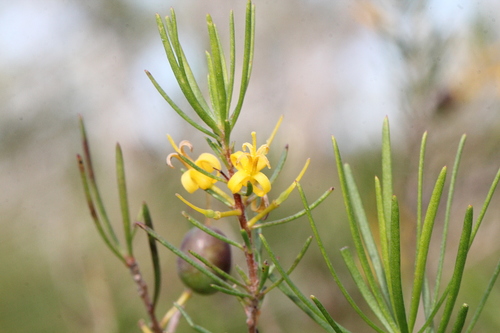
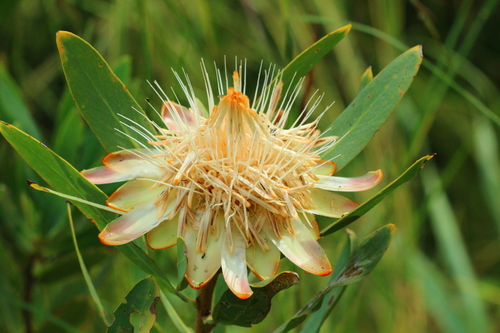
iNaturalist· cc-by-nc
(c) Nash Turley, some rights reserved (CC BY-NC)
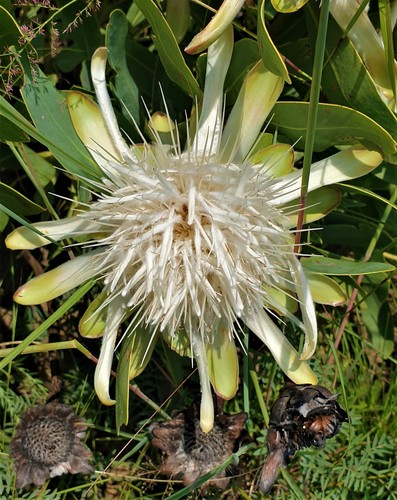
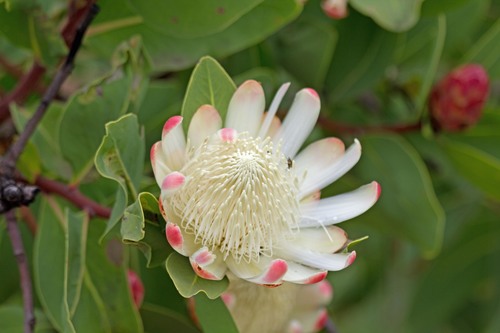
iNaturalist· cc-by-nc
(c) geoffbyrne, some rights reserved (CC BY-NC)
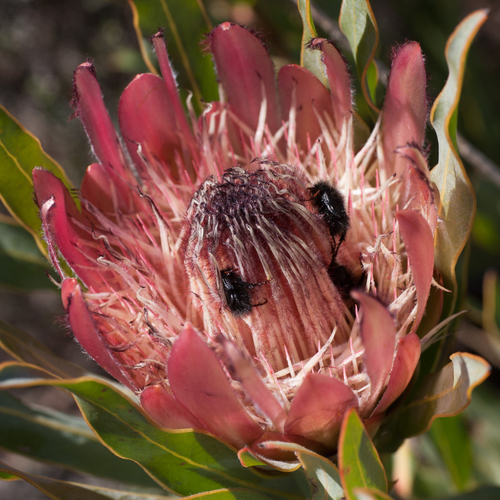
iNaturalist· cc-by-nc
(c) geoffbyrne, some rights reserved (CC BY-NC)
Description
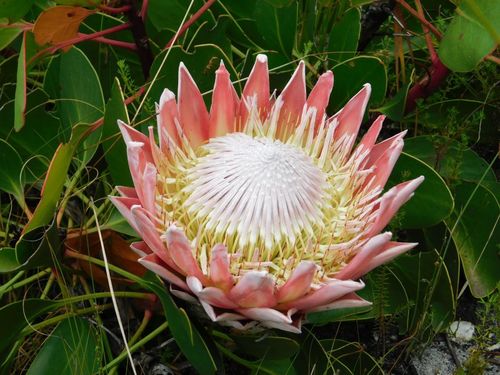
A medium to large shrub. It grows 2-4 m high and spreads 1-3.5 m wide. The leaves are wavy and have sharp lobes. They are 5-9 cm long by 4-6 cm wide. The flower heads are large and greenish-yellow. They can be pink. They are 7 cm wide and 6-7 cm long. The fruit is smooth and brown. they are fan shaped capsules. These are 2 cm long by 12 mm wide. They are hidden by the old flowers. The seeds are dull black with papery wings.
Edible Uses
The nectar is edible.
Distribution
It grows in temperate and semiarid regions. It needs well drained soil. It can grow in full sun or light shade. It can stand light frosts. It does best in neutral to acid soils. It suits hardiness zones 9-11.
Where It Grows
Australia*, Tasmania,
Cultivation
It can be grown from seed or cuttings.
Notes
There are over 50 Dryandra species.
Synonyms
References (11)
- Bodkin, F., 1991, Encyclopedia Botanica. Cornstalk publishing, p 361
- Bonney, N., 1997, Economic Native Trees and Shrubs for South Australia. Greening Australia (SA) inc. Campbelltown SA 5074 p 69
- Cronin, L., 1989, The Concise Australian Flora. Reed. p 46
- Cundall, P., (ed.), 2004, Gardening Australia: flora: the gardener's bible. ABC Books. p 515
- Etherington, K., & Imwold, D., (Eds), 2001, Botanica's Trees & Shrubs. The illustrated A-Z of over 8500 trees and shrubs. Random House, Australia. p 269
Show all 11 references Hide references
- Greig, D., 1996, Flowering Natives for Home Gardens. Angus & Robertson. p 150
- Hibbert, M., 2002, The Aussie Plant Finder 2002, Florilegium. p 89
- Holliday, I., 1979, A Field Guide to Australian Native Shrubs. Rigby. p 74
- Mast, A. R. and Thiele, K., 2007, The transfer of Dryandra R. Br. to Banksia L. f. (Proteaceae). Australian Systematic Botany 20:63-71
- Molyneux, B & Forrester, S., 1997, The Austraflora A-Z of Australian Plants. Reed. p 76
- Paczkowska, G . & Chapman, A.R., 2000, The Western Australian Flora. A Descriptive Calatogue. Western Australian Herbarium. p 477