Macadamia hildebrandii
Steenis
Celebes nut
gbif· cc-by-nc
President and Fellows of Harvard College
gbif· cc-by-nc
President and Fellows of Harvard College
gbif· cc-by-nc
President and Fellows of Harvard College
Description
Macadamia hildebrandii is an evergreen Tree growing to 14 m (46ft) by 10 m (32ft) at a medium rate. See above for USDA hardiness. It is hardy to UK zone 10. Suitable for: light (sandy), medium (loamy) and heavy (clay) soils and prefers well-drained soil. Suitable pH: mildly acid, neutral and basic (mildly alkaline) soils. It cannot grow in the shade. It prefers moist or wet soil.
Edible Uses
Oil. Macadamias are eaten fresh, roasted, and in baked goods. They are 7-8% protein. Carbon Farming Solutions - Staple Crop: oil (The term staple crop typically refers to a food that is eaten routinely and accounts for a dominant part of people's diets in a particular region of the world).
Distribution
Origin: Sulawesi an island in Indonesia.
Where It Grows
TROPICAL ASIA: Indonesia, Sulawesi (south), Sumatera (west),
Cultivation
Management: Standard New Perennial Crop Staple Crop: Oil. Climate: tropical. Humidity: humid. A rain forest species for truely wet lowlands. Cultivation: new crop. Management: standard (Describes the non-destructive management systems that are used in cultivation).
Propagation
Seed - best sown as soon as it is ripe in a nursery bed. The dehusked seed germinates quickly at 25°c. Cultivars may be grafted.
Other Uses
Cosmetic Fuel Oil Plant breeding Tannin. Possibly similar uses to other species in this genus which include: agroforestry Uses: The decomposed husk is commonly used in potting soil. Other Uses: Macadamia shells may be used as fuel, generating sufficient energy to dry wet, in-shell nuts. The oil from the seed is used in cosmetics. The green seed hulls contain approximately 14% of tannins.
Synonyms
Also Known As
Sulawesi nut, Sulawesi Macadamia, Celebes Macadamia, Celebes nut
More from Proteaceae
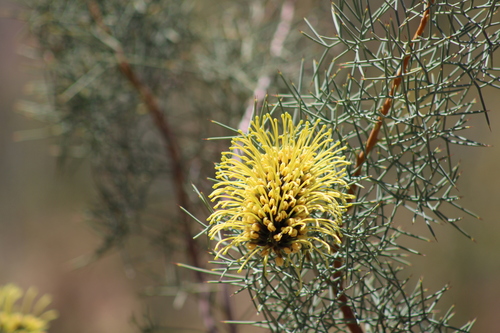
Hakea divaricata
Fork-leafed Corkwood, Corkbark, Needlewood
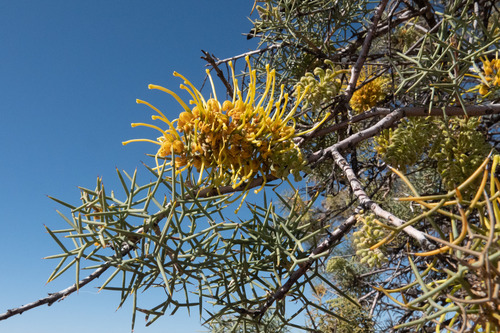
Hakea eyreana
Four-leaved Corkwood, Straggly Corkwood, Corkbark, Untjiya
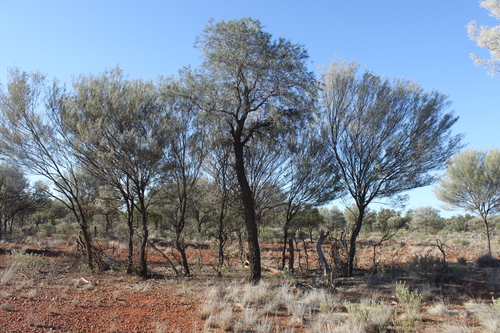
Hakea ivoryi
Corkbark Tree, Corkwood, Ivory's Hakea
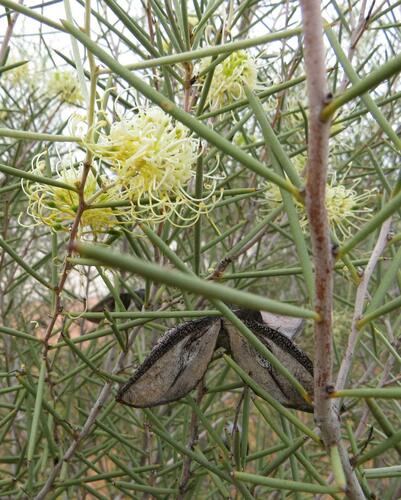
Hakea leucoptera
Needlebush, Silver Needlewood
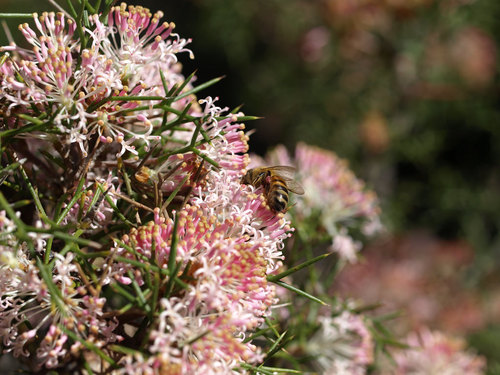
Hakea lissocarpha
Honey bush, Drake bush
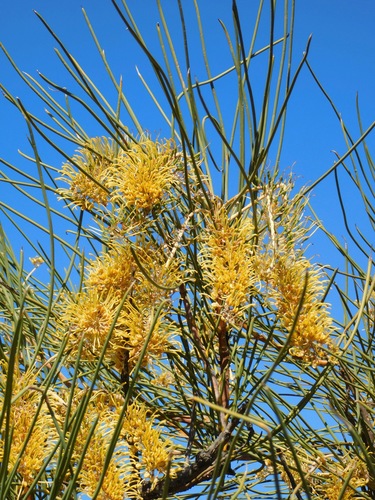
Hakea lorea
Cork Bark, Bootlace Oak, Corkwood oak, Western cork tree