Quercus lusitanica
Lam.
Lusitania oak
iNaturalist· cc-by
(c) Duarte Frade, some rights reserved (CC BY), uploaded by Duarte Frade
iNaturalist· cc-by
(c) zebedeugalinha, some rights reserved (CC BY)
iNaturalist· cc-by
(c) zebedeugalinha, some rights reserved (CC BY)
Summary
Source: WikipediaQuercus lusitanica, commonly known as gall oak, Lusitanian oak, or dyer's oak, is a species of oak native to Portugal, Spain (Galicia and western Andalucia) and Morocco. Quercus lusitanica is the source of commercial nutgalls. These galls are produced by the infection from the insect Cynips gallae tinctoriae. They are used for dyeing. Several other species are known colloquially as "gall oaks;" indeed, galls can be found on a large percentage of oak species. The specific epithet "lusitanica" refers to the ancient Roman Province of Lusitania, corresponding roughly to present-day Portugal and Extremadura in Spain.
Description
A cool temperate tree in the oak family (Fagaceae) suitable for hardiness zone 4.
This description is brief — help expand it
Edible Uses
The seeds are eaten as nuts.
Distribution
It is a cool temperate plant. It suits hardiness zone 4.
Where It Grows
Australia, Europe, Greece, Mediterranean, USA,
Notes
There are about 600 Quercus species.
Synonyms
References (5)
- Encycl. 1:719. 1785
- Hibbert, M., 2002, The Aussie Plant Finder 2002, Florilegium. p 244
- Jackes, D. A., 2007, Edible Forest Gardens (As Quercus fruticosa)
- Plants for a Future database, The Field, Penpol, Lostwithiel, Cornwall, PL22 0NG, UK. http://www.scs.leeds.ac.uk/pfaf/ (As Quercus fruticosa)
- Sfikas, G., 1984, Trees and shrubs of Greece. Efstathiadis Group. Athens. p 150
More from Fagaceae
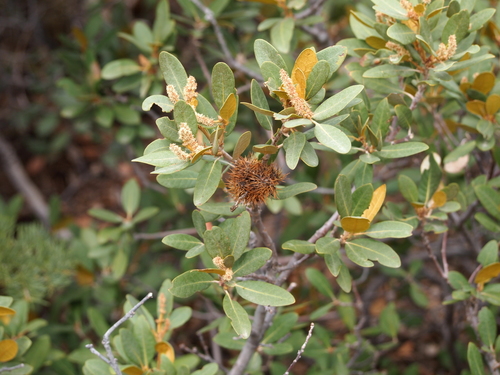
Chrysolepis sempervirens
Dwarf golden chinquapin, Bush or Dudley sierra chinquapin, Sierra chinquapin
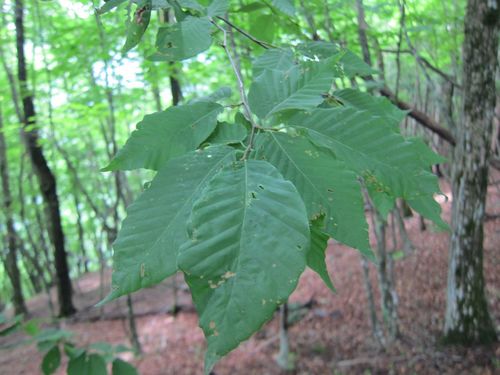
Fagus crenata
Japanese beech
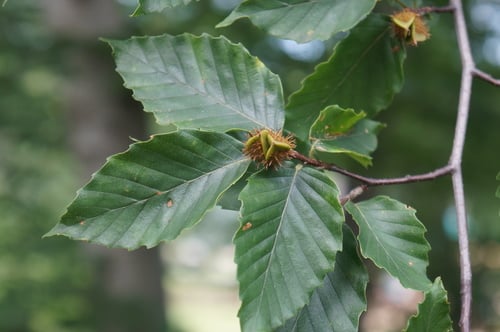
Fagus grandifolia
American beech, Beech mast
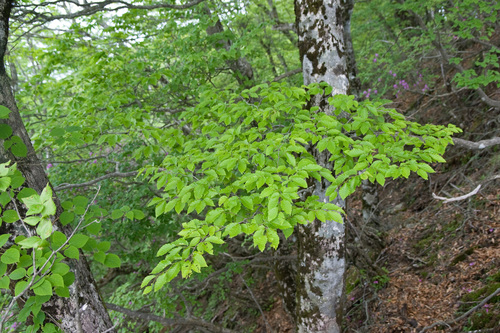
Fagus japonica
Japanese beech, Japanese blue beech
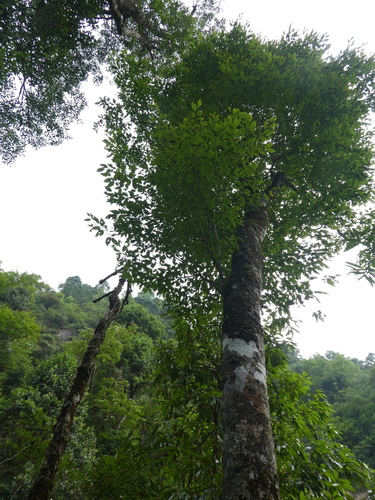
Fagus longipetiolata
Cu cuong dai, Shui qing gang
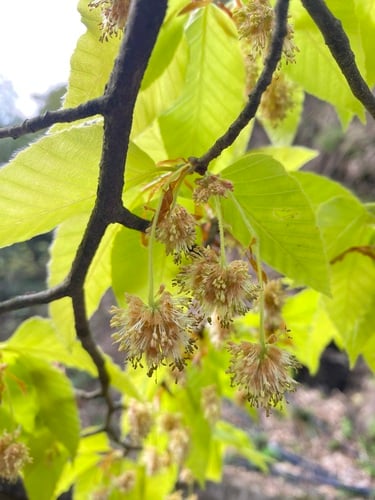
Fagus lucida
Guang ye shui qing gang