Quercus mongolica
Fischer ex Ledebour
Mongolian Oak
iNaturalist· cc-by-nc
(c) Svetlana Nesterova, some rights reserved (CC BY-NC), uploaded by Svetlana Nesterova
iNaturalist· cc-by-nc
(c) Vladimir Yu. Arkhipov, some rights reserved (CC BY-NC), uploaded by Vladimir Yu. Arkhipov
iNaturalist· cc-by-nc
(c) sergeyprokopenko, some rights reserved (CC BY-NC), uploaded by sergeyprokopenko
Summary
Source: WikipediaQuercus mongolica, commonly known as Mongolian oak, is a species of oak native to Japan, China, Korea, Mongolia, and Siberia. The species can grow to be 30 metres (98 feet) tall. The flavono-ellagitannins mongolicin A and B can be found in Quercus mongolica var. grosseserrata. Extrafloral nectaries have been reported on the leaf buds of this species.
Description
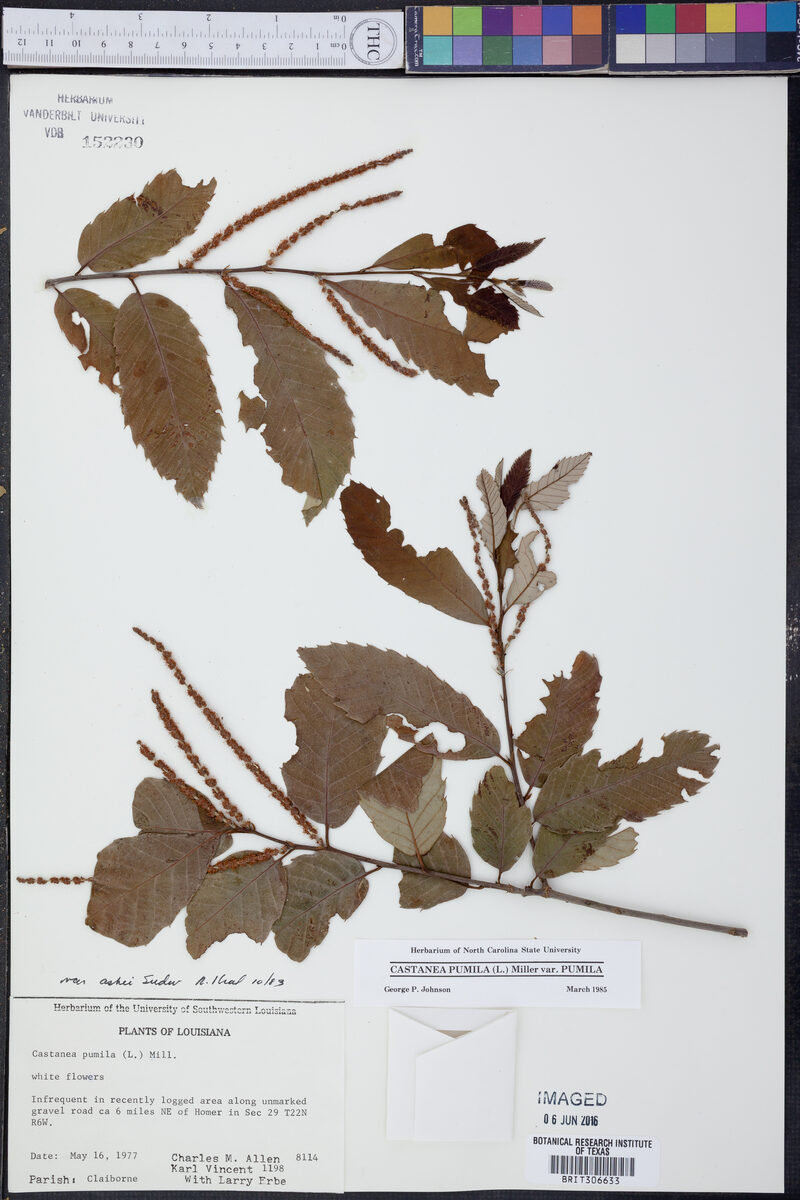
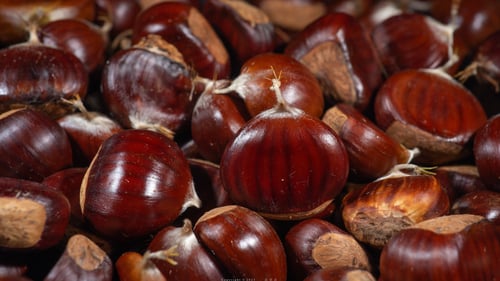
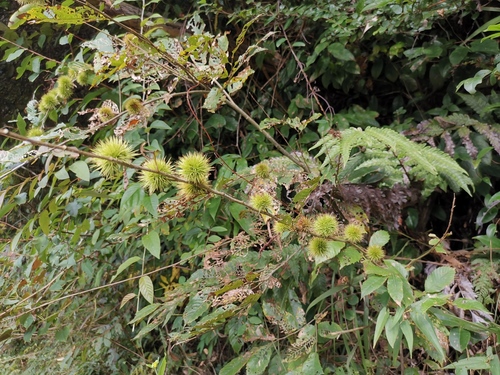
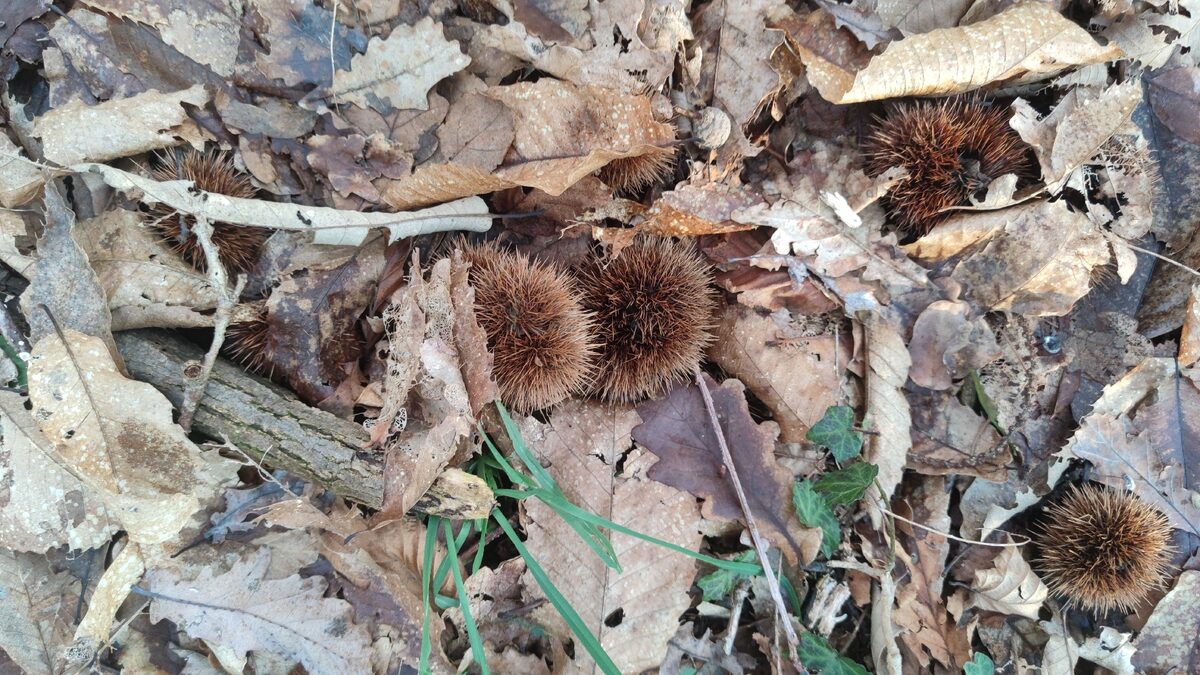
A tree. It grows to 30 m tall. It spreads 12 m wide. It loses its leaves during the year. The small branches are purple-brown and angular. The leaf stalk is 2-8 mm long. The leaf blade is narrow and oval. It is 7-19 cm long by 3-11 cm wide. Leaves are hairy along the veins. The base is narrowly rounded or ear shaped. The edges of the leaf have rough teeth or are wavy. There are 10-18 side veins on each side of the main vein. The cup half encloses the nut. The nut is narrow and oval. It is 2-2.4 cm long by 1.3-1.8 cm wide.
Edible Uses
The seed must be cooked and is around 2cm long. It can be dried and ground into a powder for use as a thickening agent in stews or mixed with cereals to make bread. The seed contains bitter tannins that can be removed by washing thoroughly in running water, though minerals are also lost in the process. Both whole seeds and ground powder can be leached — whole seeds may take several days or weeks, and a traditional method was to place them wrapped in a cloth bag in a running stream. Ground powder leaches more quickly. A taste test confirms when enough tannin has been removed. The traditional preparation involved burying seeds in boggy ground over winter and digging up the germinating seeds in spring, by which point most astringency would have faded. The roasted seed can be used as a coffee substitute.
Traditional Uses
The seeds have been processed into flour during times of food shortage. The leaves are used for tea.
This uses section is brief — help expand it
Medicinal Uses
Any galls produced on the tree are strongly astringent and can be used in the treatment of haemorrhages, chronic diarrhoea, and dysentery.
Distribution
It is a temperate plant. In China it grows in mixed forest between 200-2500 m altitude. It suits hardiness zones 4-9. Arboretum Tasmania. In Melbourne Botanical Gardens.
Where It Grows
Asia, Australia, China, Japan, Korea, Mongolia, Russia, Siberia, Tasmania,
Cultivation
Prefers a good deep fertile loam which can be on the stiff side. Young plants tolerate reasonable levels of side shade. Tolerates moderate exposure, surviving well but being somewhat stunted. Prefers warmer summers than are usually experienced in Britain, trees often grow poorly in this country and fail to properly ripen their wood resulting in frost damage overwinter. The seed ripens in its first year. Intolerant of root disturbance, trees should be planted in their permanent positions whilst young. Hybridizes freely with other members of the genus. Plants in this genus are notably resistant to honey fungus.
Propagation
Seed loses viability quickly if allowed to dry out. It can be stored moist and cool over winter, but is best sown as soon as it is ripe in an outdoor seed bed with protection from mice and squirrels. Small quantities can be sown in deep pots in a cold frame. Because plants develop a deep taproot, they should be moved to their permanent positions as soon as possible — seeds sown in situ produce the best trees. Do not leave trees in a nursery bed for more than 2 growing seasons, as they will transplant very poorly.
Other Uses
A mulch of leaves placed around plants repels slugs, grubs, and similar pests. Fresh leaves should not be used as they can inhibit plant growth. Oak galls, formed by insect larvae feeding within them, are a rich source of tannin once the insect has left, and can also be used as a dyestuff. The wood is used for construction and charcoal.
Notes
There are about 600 Quercus species.
Synonyms
Also Known As
Carasu, Charasu, Meng gu li, Xiang zi
References (15)
- Bodkin, F., 1991, Encyclopedia Botanica. Cornstalk publishing, p 864
- Brickell, C. (Ed.), 1999, The Royal Horticultural Society A-Z Encyclopedia of Garden Plants. Convent Garden Books. p 855
- Cundall, P., (ed.), 2004, Gardening Australia: flora: the gardener's bible. ABC Books. p 1125
- Fan, L., et al, The Use of Edible Wild Plants and Fungi in Korean-Chinese Villages. Journal of Environmental Information Science 44-5 p 71-79
- Fl. ross. 3(2):589. 1850
Show all 15 references Hide references
- Huang Chengjiu, Zhang Yongtian, Bartholomew, B., Fagaceae, Flora of China.
- Hu, Shiu-ying, 2005, Food Plants of China. The Chinese University Press. p 350
- Hwang, HS, et al, 2014, Distribution characteristics of plant in the Ungseokbong Mountain, Gyeongsangnam-do, Korea. Journal of Asia-Pacific Biodiversity. 7(2014) e164-e178
- Khasbagan, Hu-Yin Huai, and Sheng-Ji pei, 2000, Wild Plants in the Diet of Athorchin Mongol Herdsmen in Inner Mongolia. Economic Botany 54(4): 528-536
- Lord, E.E., & Willis, J.H., 1999, Shrubs and Trees for Australian gardens. Lothian. p 70
- Plants for a Future database, The Field, Penpol, Lostwithiel, Cornwall, PL22 0NG, UK. http://www.scs.leeds.ac.uk/pfaf/
- Sachula, et al, 2020, Wild edible plants collected and consumed by the locals in Daqinggou, Inner Mongolia, China. Journal of Ethnobiology and Ethnomedicine (2020) 16:60
- S.C.A.P.,
- Williams, D., 2017, Ainu Ethnobiology. Contributions in Ethnobiology. Society of Ethnobiology. p 139
- Zeven, A. C. & de West, J. M. J., 1982, Dictionary of cultivated plants and their regions of diversity. Wageningen. p 36