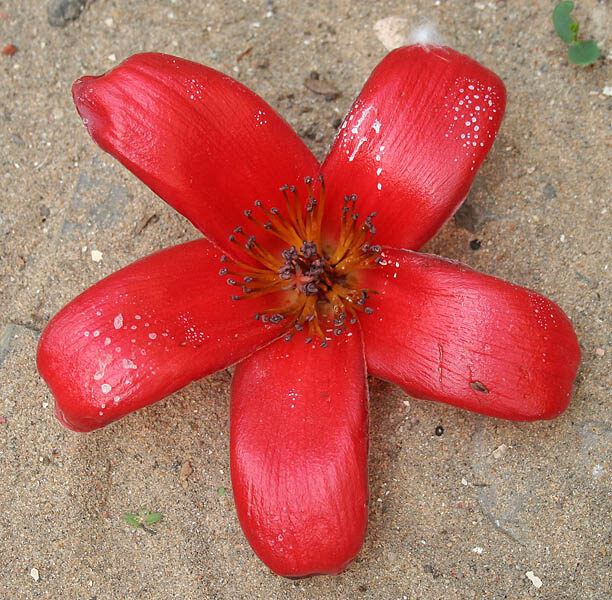
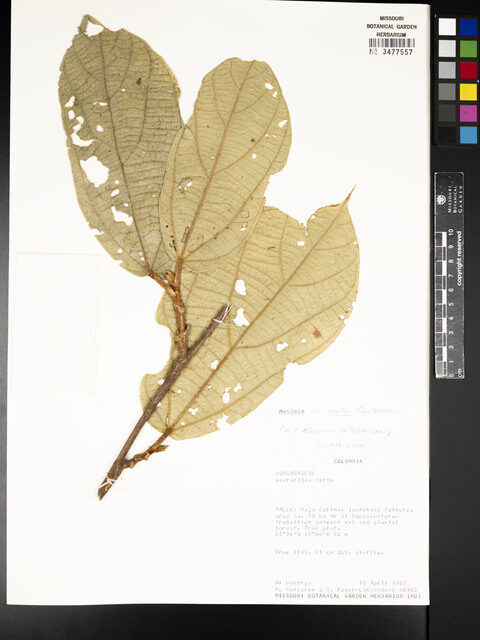
Cola rostrata
K. Schum.
Akoele
gbif· cc-by-nc-sa
MBG
gbif· cc-by-nc-sa
MBG
gbif· cc-by-nc-sa
MBG
Summary
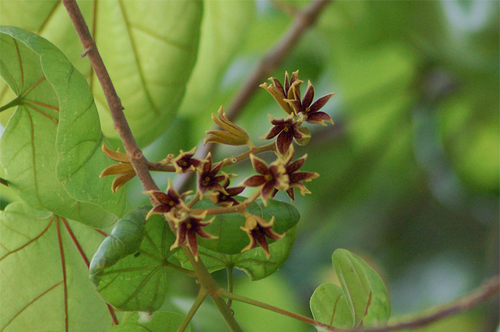
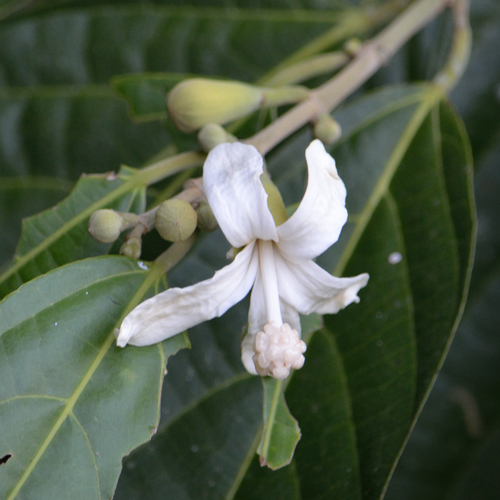
Source: WikipediaCola rostrata is a species of flowering plant in the family Malvaceae, commonly known as monkey cola or cockroach cola. It is a tree found in the tropical rainforests of Cameroon, Nigeria and Gabon.
Description
Cola rostrata is a medium-sized tropical tree that grows to 15 m high with a trunk approximately 40 cm across, belonging to the Malvaceae (formerly Sterculiaceae) family.
Edible Uses
The seeds are edible.
Known Hazards
Cola rostrata has sweet edible fruits, enjoyed by humans and also appreciated by monkeys, baboons and other primates. The edible part is the aril, the white fleshy mesocarp; the large, rough, brown, flattened seeds are not edible, unlike the seeds of the closely related cola nut (Cola nitida). The plant is not known to have traditional uses as a herbal remedy, but many members of the genus Cola do have pharmacological properties, and the plant was screened for potential drugs. An extract of the root bark was found to contain flavonoids, phenols, saponins, steroids, tannins and triterpenoids but no alkaloids. Triterpenoids are complex oils that may have interesting pharmacological activity. Saponins are haemolytic and tend to be toxic, but toxicological tests on the extract did not show toxicity when fed to mice.
Distribution
A tropical plant.
Where It Grows
Africa, Cameroon, Central Africa, Congo, Congo R, Equatorial Guinea, Gabon, Nigeria, West Africa,
Notes
Also put in the family Sterculiaceae.
Also Known As
Mecor
References (7)
- Billong Fils, P. E., et al, 2020, Ethnobotanical survey of wild edible plants used by Baka people in southeastern Cameroon. Journal or Ethnobiology and Ethnomedicine. 16:64 p 7
- Dalziel, 1937,
- Keay, R.W.J., 1989, Trees of Nigeria. Clarendon Press, Oxford. p 133
- Nkeoua, G. & Boundzanga, G. C., 1999, Donnees sur les produits forestieres non ligneux en Republique du Congo. FAO. p 22
- Peters, C. R., O'Brien, E. M., and Drummond, R.B., 1992, Edible Wild plants of Sub-saharan Africa. Kew. p 188
Show all 7 references Hide references
- Vivien, J., & Faure, J.J., 1996, Fruitiers Sauvages d'Afrique. Especes du Cameroun. CTA p 344
- Wickens, G.E., 1995, Edible Nuts. FAO Non-wood forest products. FAO, Rome. p154