Acanthocereus tetragonus
(L.) Hummelinck
Barbed-wire cactus
iNaturalist· cc-by
(c) johnyochum, some rights reserved (CC BY), uploaded by johnyochum
iNaturalist· cc-by-nc
(c) Aurelio Molina Hernández., some rights reserved (CC BY-NC), uploaded by Aurelio Molina Hernández.
iNaturalist· cc-by-nc
(c) Daniela Fernández y Fernández, some rights reserved (CC BY-NC), uploaded by Daniela Fernández y Fernández
Summary
Source: WikipediaAcanthocereus tetragonus is a species of cactus that is native to Florida and the Lower Rio Grande Valley of Texas in the United States, Mexico, Central America, the Caribbean, and northern South America. The species is invasive in New Caledonia. Common names include night-blooming cereus, barbed-wire cactus, sword-pear, dildo cactus, triangle cactus, and Órgano-alado de pitaya (Spanish). The miniature cultivar is known as fairy castle cactus. It was originally described by Carl Linnaeus in 1753 as Cactus tetragonus but was moved to the genus Acanthocereus in 1938 by Pieter Wagenaar Hummelinck.
Description
A shrub or small tree. It grows 5 m tall. There are prickles along the stem. The leaves are twice divided and there are 8-18 pairs of pinnae. There are up to 50 pairs of pinnules on each pinnae. The flowers are yellow. They are in large clusters at the ends of branches. The pods are flattened.
Edible Uses
The bright red fruits are juicy and sweet and can be eaten raw. They are ovoid to oblong, measuring 30–80mm long. Young, tender stems are edible when cooked.
Traditional Uses
The ripe fruit are eaten raw. They are sweet. The tender stems are cooked and eaten.
This uses section is brief — help expand it
Medicinal Uses
None known
Distribution
It is a tropical plant. It grows in sandy soils in dense thickets. It grows up to 10 m above sea level. It needs bright light. It needs a temperature above 13°C.
Where It Grows
Antilles, Asia, Belize, Caribbean, Central America, Colombia, Costa Rica, Cuba, Curacao, Dominica, Ecuador, El Salvador, Guatemala, Hawaii, Honduras, Indonesia, Martinique, Mexico*, Nicaragua, North America, Pacific, Panama, SE Asia, South America, Trinidad, USA*, Venezuela, West Indies,
Cultivation
Plants can be grown from seeds and cuttings.
Propagation
Seed
Other Uses
This cactus often forms impenetrable, spiny thickets in coastal hammocks. It is cultivated as an ornamental, and a miniature cultivar known as the Fairy Castle Cactus produces many curved branches resembling the turrets of a castle. It is also used in carbon farming as a living fence.
Notes
There are 6 Acanthocereus species.
Synonyms
Also Known As
Barbwire acanthocereus, Cruceta, Cushicuri, Jacube, Jacubo, Kaktus segitiga, Pitaya, Chaco, Nun-tsutsuy, Organo, Pitahaya, Pitahaya anaranjada, Pitahaya morada, Triangle cactus
References (19)
- Anderson, E.F., 2001, The Cactus Family, Timber Press. p 107
- Bircher, A. G. & Bircher, W. H., 2000, Encyclopedia of Fruit Trees and Edible Flowering Plants in Egypt and the Subtropics. AUC Press. p 5 (As Acanthocereus pentagonus) and (As Acanthocereus colombianus)
- Chizmar Fernandez, C., et al, 2009, Plantas comestibles de Centroamerica. Instituto de Biodiversidad, Costa Rica. p 137
- Facciola, S., 1998, Cornucopia 2: a Source Book of Edible Plants. Kampong Publications, p 63
- Flora of North America. www.eFloras.org
Show all 19 references Hide references
- Hermandez Bermejo, J.E., and Leon, J. (Eds.), 1994, Neglected Crops. 1492 from a different perspective. FAO Plant Production and Protection Series No 26. FAO, Rome. p14
- Innes, C. and Glass, C., 1997, The Illustrated Encyclopedia of Cacti. Sandstone Books. p 19
- Global Plants JSTOR
- Lopez-Diago, D. & Garcia, N., 2021, Wild edible fruits of Colombia. Biota ColomBiana 22 (2) p 34
- Martin, F. W., et al, 1987, Perennial Edible Fruits of the Tropics. USDA Handbook 642 p 84
- Morton,
- Piedra-Malagón, E. M. et al, 2022, Edible native plants of the Gulf of Mexico Province. Biodiversity Data Journal 10: e80565 p 15
- Roa, J. A. G. & Boada, D. S. G., 2018, Fundación para el Fortalecimiento de la Fruticultura y Plantas Alimenticias no Convencionales en Colombia.
- Segura, S. et al, 2018, The edible fruit species in Mexico. Genet Resour Crop Evol (2018) 65:1767–1793
- Standley, P. C. & Record, S. J., 1936, The Forests and Flora of British Honduras. (Belize). p 273 (As Cereus pentagonus)
- Succulenta (Leeuwarden) 20:165. 1938
- Torre, de la, L., et al, 2008, Enciclopedia de las Plantas Útiles del Ecuador. Herbario QCA. Pontificia Universidad Católica del Ecuador. p 267
- Usher, G., 1974, A Dictionary of Plants Used by Man. Constable. p 15
- World Checklist of Useful Plant Species 2020. Royal Botanic Gardens, Kew
More from Cactaceae
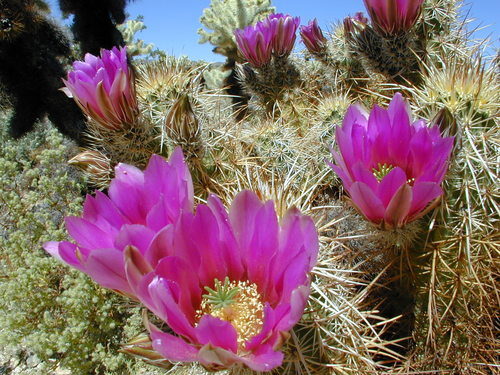
Echinocereus engelmannii
Strawberry hedgehog cactus
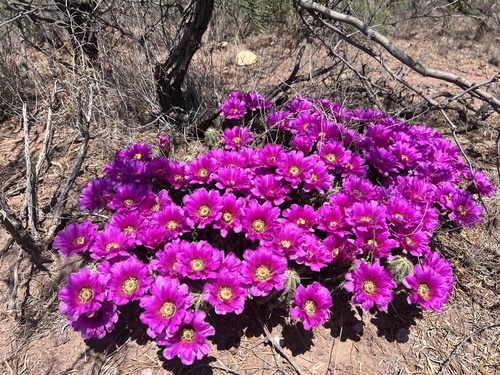
Echinocereus enneacanthus
Strawberry cactus
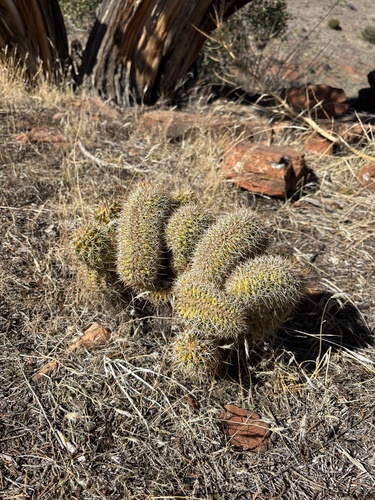
Echinocereus fasciculatus
Strawberry hedgehog
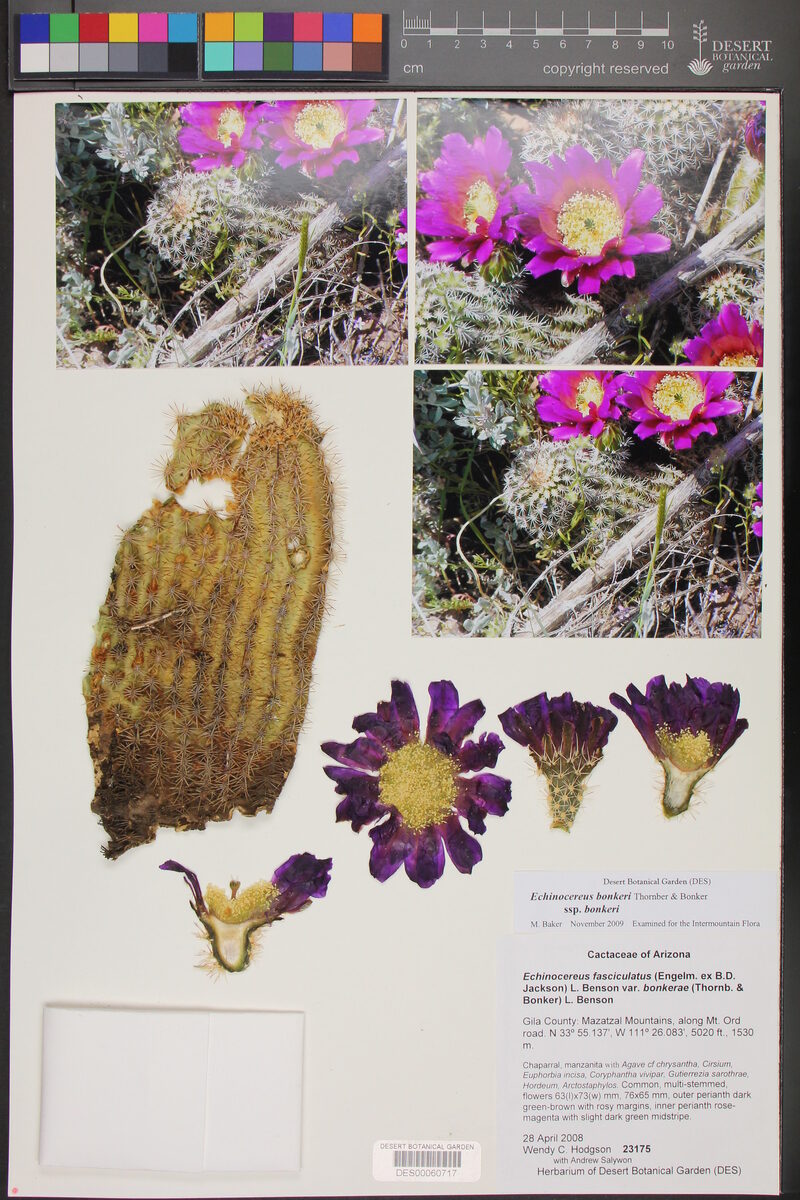
Echinocereus fasciculatus var. bonkerae
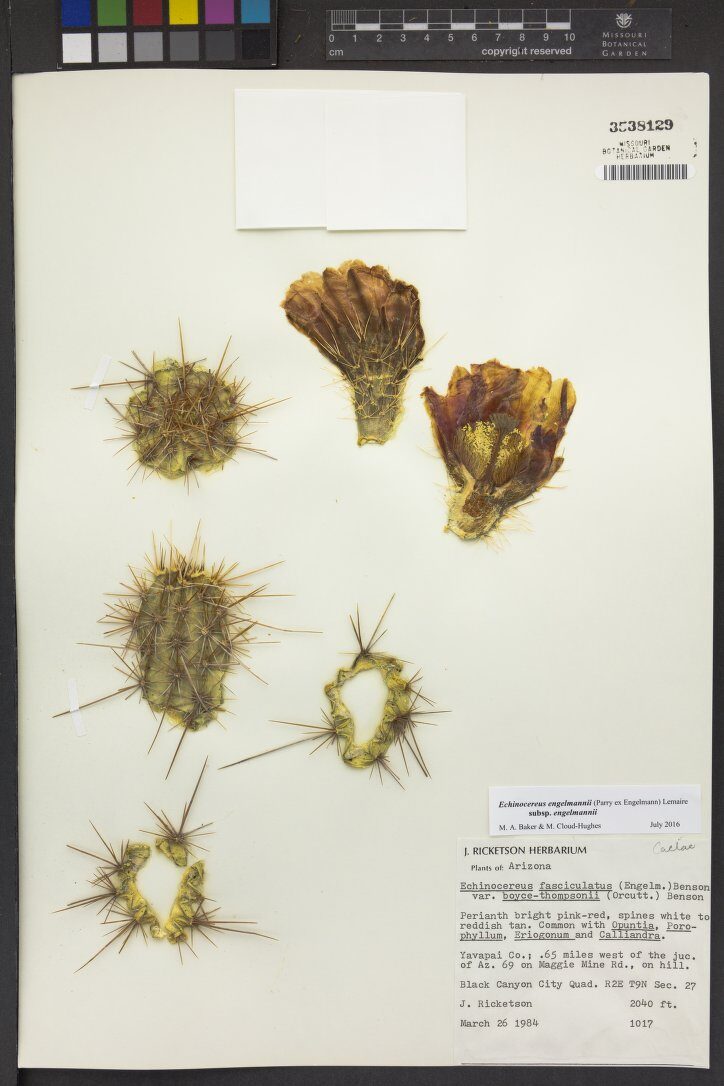
Echinocereus fasciculatus var. boyce-thompsonii
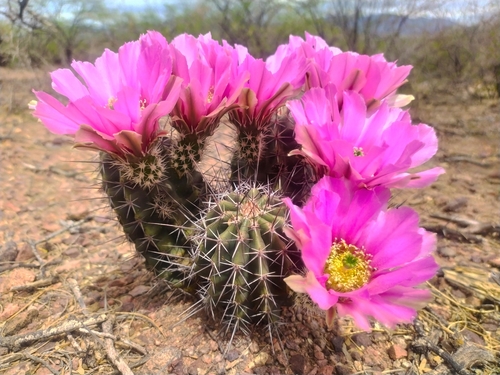
Echinocereus fendleri
Fendler's hedgehog cactus, Fendler needle-spine hedghog, Kuenzler's hedgehog, Kuenzler's cactus