Sesbania bispinosa
(Jacq.) W. F. Wight
Spiny Sesbania
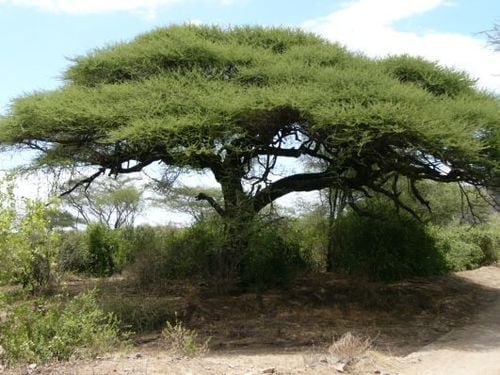
iNaturalist· cc-by-nc
(c) magdastlucia, some rights reserved (CC BY-NC), uploaded by magdastlucia
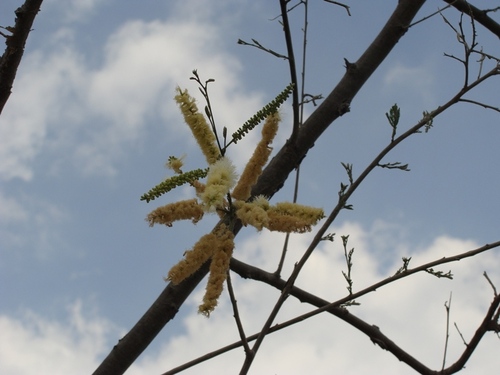
iNaturalist· cc-by
(c) Robert Taylor, some rights reserved (CC BY), uploaded by Robert Taylor
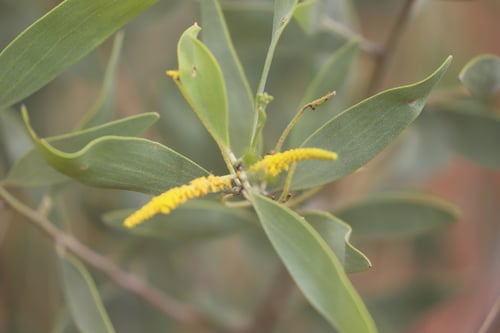
iNaturalist· cc-by-nc
(c) Linda Loffler, some rights reserved (CC BY-NC), uploaded by Linda Loffler
Summary
Source: WikipediaThe legume Sesbania bispinosa, also known as Sesbania aculeata (Willd.) Pers., is a small tree in the genus Sesbania.
Description
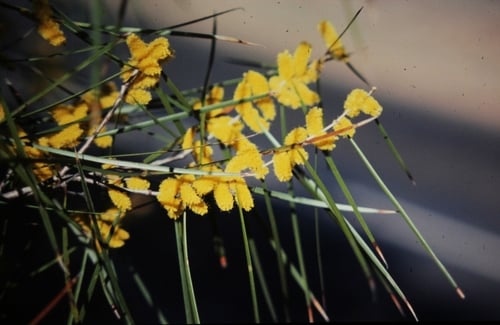
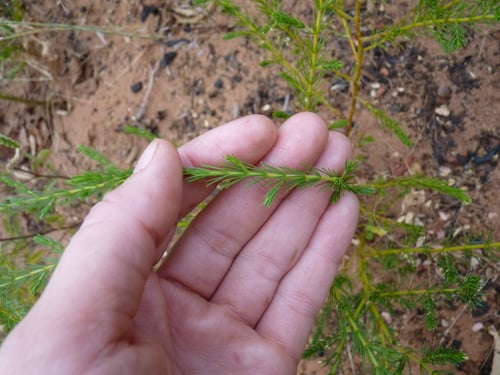
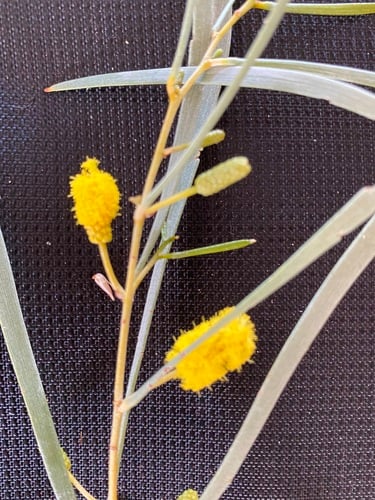
A soft wooded, short lived shrub. It grows 1-3 m tall. It has small prickles. The leaves have leaflets along the stalk. They end abruptly. There are 50-110 leaflets and they are 1-2 cm long by 3-4 mm wide. The flowers are yellow. They hang in long stalks. The fruit are pods 15-25 cm long by 2-3 mm wide. There are 35-40 seeds.
Edible Uses
Mature seeds can be cooked and eaten, though they are mainly used in times of famine.
Traditional Uses
The seeds are eaten. The seeds are made into flour. The flowers are lightly boiled.
This uses section is brief — help expand it
Medicinal Uses
The leaves and flowers are astringent and are used to treat inflammations, bacterial infections and tumours. They can be prepared as poultices for external application or taken as a decoction for internal ailments. The seed, mixed with flour, is used to treat ringworm, other skin diseases and worms.
Distribution
A tropical plant. It grows as a weed in rice fields. It grows in waterlogged ground and in waste places. It grows between 1,000-1,200 m above sea level. In Argentina it grows between 500-1,000 m above sea level. It grows in areas with an annual rainfall between 550-2,210 mm. It can grow in arid places. In Sichuan and Yunnan.
Where It Grows
Afghanistan, Africa, Andaman Is., Angola, Antigua and Barbuda, Argentina, Asia, Australia, Bahamas, Bangladesh, Barbados, Botswana, Burkina Faso, Cambodia, Cameroon, Cape Verde, Central Africa, Central African Republic, CAR, China, Congo, Cuba, Dominica, Dominican Republic, East Africa, Eswatini, Europe, Fiji, Gambia, Ghana, Grenada, Guadeloupe, Guinea, Guyana, Haiti, Himalayas, India, Indochina, Indonesia, Iraq, Italy, Jamaica, Kenya, Laos, Lesotho, Madagascar, Malawi, Malaysia, Maldives, Martinique, Mauritania, Mauritius, Mediterranean, Middle East, Montserrat, Mozambique, Myanmar, Namibia, Nepal, Netherlands Antilles, Oman, Pacific, Pakistan, Philippines, Puerto Rico, SE Asia, Saudi Arabia, Senegal, Seychelles, Sierra Leone, Somalia, South Africa, Southern Africa, South America, Sri Lanka, St Kitts and Nevis, St Lucia, St Vincent and the Grenadines, Swaziland, Tanzania, Thailand, Togo, Trinidad and Tobago, Uganda, Vietnam, Virgin Islands, West Africa, West Indies, Yemen, Zimbabwe,
Cultivation
It can be grown from seeds saved from the plant.
Propagation
No pre-treatment is strictly required, though the hard seedcoat may benefit from scarification to speed germination. Pour a small amount of nearly boiling water over the seeds (taking care not to cook them), then soak in warm water for 12–24 hours. If seeds have not swollen by then, carefully nick the seedcoat without damaging the embryo and soak for a further 12 hours before sowing. Plants can be established by direct seeding. Seed storage behaviour is orthodox; a germination rate of 24% has been recorded after 41 years of open storage at room temperature.
Other Uses
Sesbania species are excellent for green manure, soil improvement and erosion control, and can serve as a shade tree and fodder source for livestock. The plant fixes atmospheric nitrogen and is capable of growing on alkaline or saline soils of low fertility and poor texture. It has a remarkable sustaining quality on such soils and improves soil permeability. Leftover stalks, roots and fallen leaves further enrich the soil with organic matter. It can be used as temporary shade, a windbreak or a hedge. As a green manure crop — ploughed in 60–70 days after planting — rice yields are equivalent to those achieved with approximately 80 kg N/ha of chemical fertilizer. A fibre known as 'Dundee Fibre' is obtained from the stem and used for making sails and nets. It is considered very durable in water-related uses and is reputed to be superior to jute fibre in both durability and strength. The stems are also a useful source of pulp and paper. The seed is a potential source of cheap galactomannan gum, as the plant can be grown on substandard soils without extra investment. The wood provides light, small-sized firewood with a calorific value of 4,281 kcal/kg when fully grown and dried.
Production
It grows quickly. It is a short lived plant.
Notes
The seeds are 32.7% protein.
Synonyms
Also Known As
Dhencha, Diendien gai, Jananti, Jantar, Jayanti, Nardoo, Sanow, Sevri
References (19)
- Ambasta, S.P. (Ed.), 2000, The Useful Plants of India. CSIR India. p 568
- Bull. Imp. Instit. 17, 1919, p 184 (Analysis as food) (As Sesbania aculeata)
- Burkill, I.H., 1966, A Dictionary of the Economic Products of the Malay Peninsula. Ministry of Agriculture and Cooperatives, Kuala Lumpur, Malaysia. Vol 2 (I-Z) p 2032 (As Sesbania aculeata)
- Flora of Pakistan. www.eFloras.org
- Gunjatkar, N., & Vartak, V.D., 1982, Enumeration of wild edible legumes from Pune District, Maharashtra State. J.Econ. Tax. Bot. Vol 3 pp 1-9
Show all 19 references Hide references
- IRVINE, (As Sesbania aculeata)
- Kew Plants of the World Online
- Menninger, E.A., 1977, Edible Nuts of the World. Horticultural Books. Florida p 100 (As Sesbania aculeata)
- Plants of Haiti Smithsonian Institute http://botany.si.edu/antilles/West Indies
- Roodt, V., 1998, Common Wild Flowers of the Okavango Delta. Medicinal Uses and Nutritional value. The Shell Field Guide Series: Part 2. Shell Botswana. p 93
- Royal Botanic Gardens, Kew (1999). Survey of Economic Plants for Arid and Semi-Arid Lands (SEPASAL) database. Published on the Internet; http://www.rbgkew.org.uk/ceb/sepasal/internet [Accessed 29th April 2011]
- Singh, H.B., Arora R.K.,1978, Wild edible Plants of India. Indian Council of Agricultural Research, New Delhi. p 85
- Slocum, P.D. & Robinson, P., 1999, Water Gardening. Water Lilies and Lotuses. Timber Press. p 67 (As Sesbania aculeata)
- Srichaiwong, P., et al, 2014, A Study of the Biodiversity of Natural Food Production to Support Community Upstream of Chi Basin, Thailand. Asian Social Science 10 (2): (As Sesbania aculeata)
- Swaziland's Flora Database http://www.sntc.org.sz/flora
- Syn. pl. 2(2):316. 1807 [As Pers.] - an illegitimate, superfluous name (ICBN Art. 52) originally based on Coronilla aculeata Willd., nom. superfl. (As Sesbania aculeata)
- U.S.D.A. Bur. Pl. Industr. Bull. 137:15. 1909
- WATT, (As Sesbania aculeata)
- www.worldagroforestrycentre.org/treedb/