Indigofera compacta
N. E. Br.
iNaturalist· cc-by-nc
(c) Troos van der Merwe, some rights reserved (CC BY-NC)
iNaturalist· cc-by-nc
(c) Troos van der Merwe, some rights reserved (CC BY-NC)
iNaturalist· cc-by-nc
(c) Richard Gill, some rights reserved (CC BY-NC)
Description
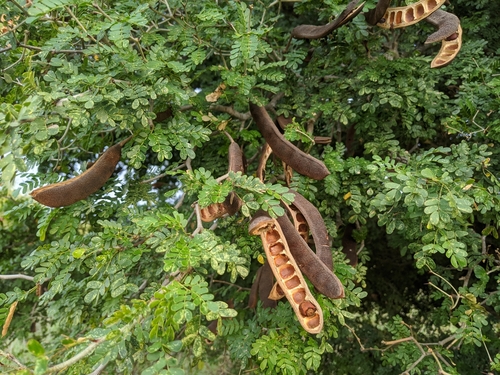
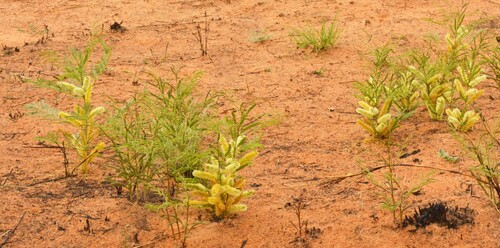
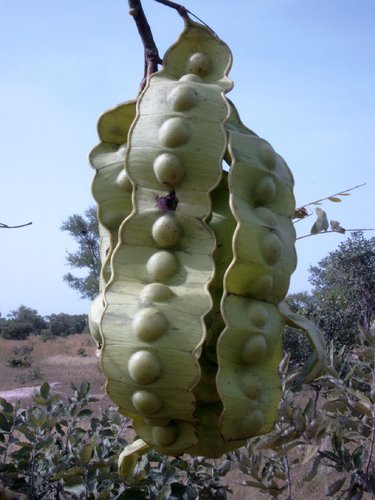
A herb or small shrub. It keeps growing from year to year. It grows 30 m high. It grows from a woody rootstock. It has many branches from the base. The stems are slender and dark reddish-brown. They are hairy. There are grooves along them. The leaves are compound with leaflets along the stalk. There are 5 closely set leaflets that are folded and opposite. They are hairy on both surfaces. The flowers are small and 4-6 mm long and a light red colour. The fruit is a pod that is slender and erect. See Indigofera hilaris
Edible Uses
The leaves are dried and used for tea. The roots are eaten as a relish, and the juice of the roots is eaten, especially by children.
Traditional Uses
The leaves are dried and used for tea. The roots are eaten as a relish.
This uses section is brief — help expand it
Distribution
It is a subtropical plant. It can grow in arid places.
Where It Grows
Africa, Eswatini, South Africa, Southern Africa, Swaziland,
Other Information
The juice of the roots is eaten especially by children.
Synonyms
Also Known As
Isaceke, Wilde teebos
References (3)
- Fox, F. W. & Young, M. E. N., 1982, Food from the Veld. Delta Books. p 212
- Royal Botanic Gardens, Kew (1999). Survey of Economic Plants for Arid and Semi-Arid Lands (SEPASAL) database. Published on the Internet; http://www.rbgkew.org.uk/ceb/sepasal/internet [Accessed 29th April 2011]
- Welcome, A. K. & Van Wyk, B.-E., 2019, An inventory and analysis of the food plants of southern Africa. South African Journal of Botany 122 (2019) 136–179