Solanum barbisetum
Nees
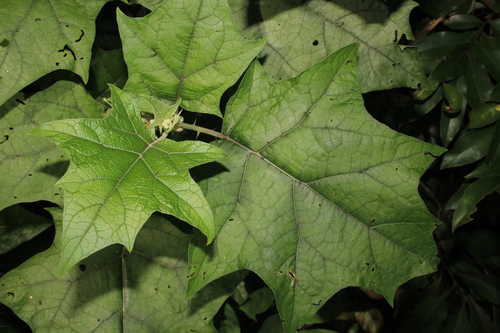
iNaturalist· cc-by-nc
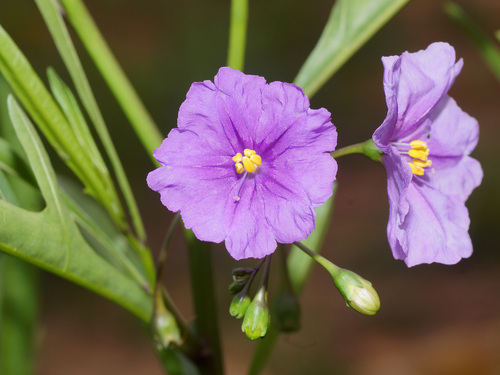
(c) Kroolek Reinthong, some rights reserved (CC BY-NC), uploaded by Kroolek Reinthong
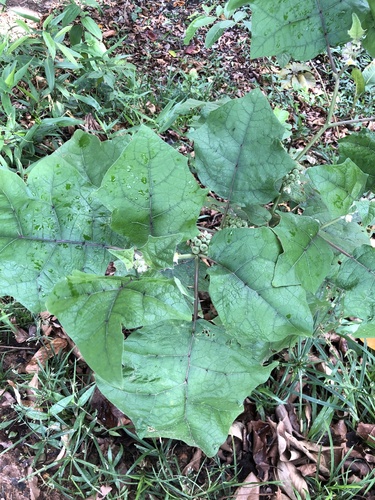
iNaturalist· cc-by-nc
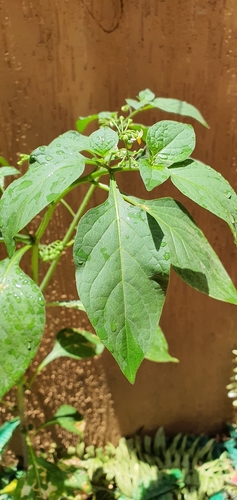
(c) Kroolek Reinthong, some rights reserved (CC BY-NC)
Description
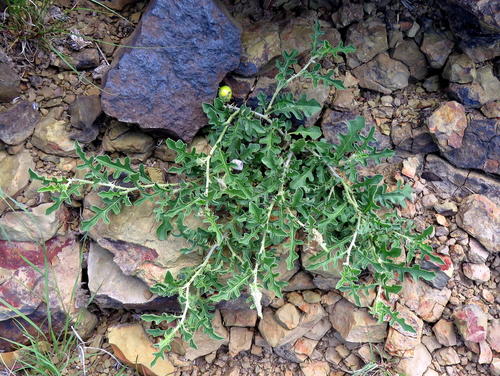
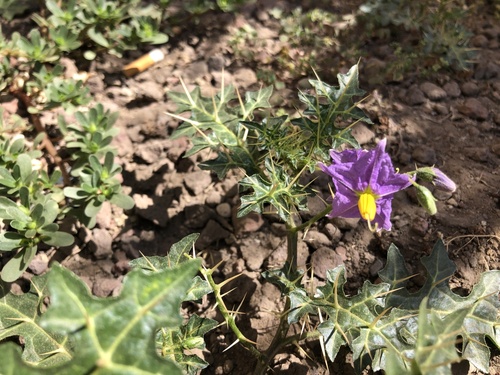
A herb or small shrub. It grows 1 m tall. It has straight prickles. It is also hairy. The leaves are in pairs. The leaves are narrowly oval and 16-24 cm long by 12-19 cm wide. The flowers are near the axils of the leaves. They are blue to purple. The fruit are round berries. The seeds are brown.
Edible Uses
The ripe fruit are eaten.
Traditional Uses
The ripe fruit are eaten.
This uses section is brief — help expand it
Distribution
It is a subtropical plant. It grows in waste and wet places between 500-1,300 m above sea level in southern China. In Yunnan.
Where It Grows
Asia, Bangladesh, China, India, Indochina, Laos, Myanmar, Northeastern India, SE Asia, Sikkim, Thailand,
Notes
There are about 1400 Solanum species.
Also Known As
Mak pu mak nya, Shiah, Soh-podok
References (6)
- Luczaj, L., et al, 2021, Wild food plants and fungi sold in the markets of Luang Prabang, Lao PDR. Journal of Ethnobiology and Ethnomedicine (2021) 17:6
- Samuels, J., 2015, Biodiversity of Food Species of the Solanaceae Family: A Preliminary Taxonomic Inventory of Subfamily Solanoideae. Resources 2015, 4. 277-322
- Sawian, J. T., et al, 2007, Wild edible plants of Meghalaya, North-east India. Natural Product Radiance Vol. 6(5): p 421
- Singh, H.B., Arora R.K.,1978, Wild edible Plants of India. Indian Council of Agricultural Research, New Delhi. p 72
- Singh, V. B., et al, (Ed.) Horticulture for Sustainable Income and Environmental Protection. Vol. 1 p 220
Show all 6 references Hide references
- Wild edible plants of Himachal Pradesh