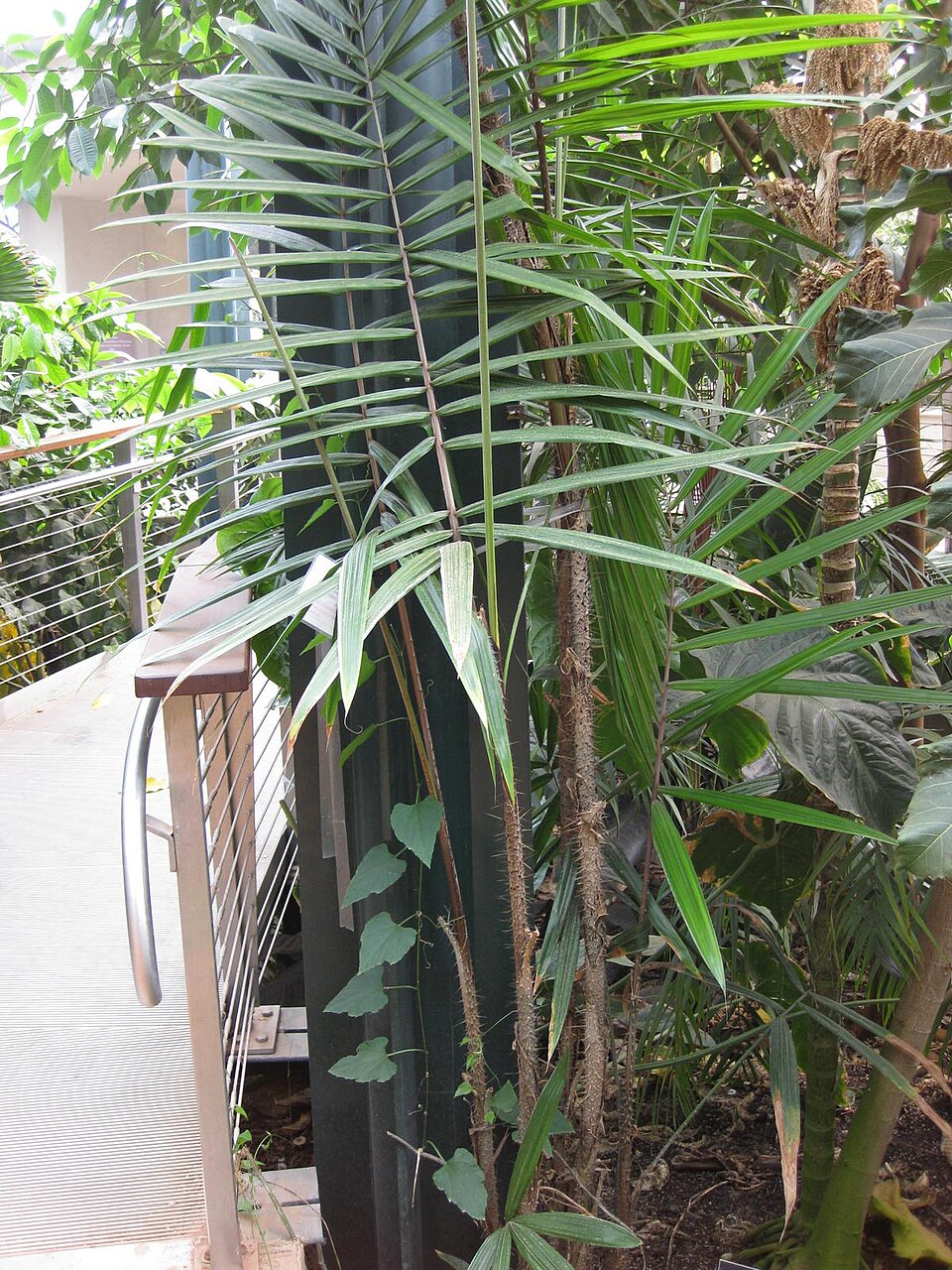
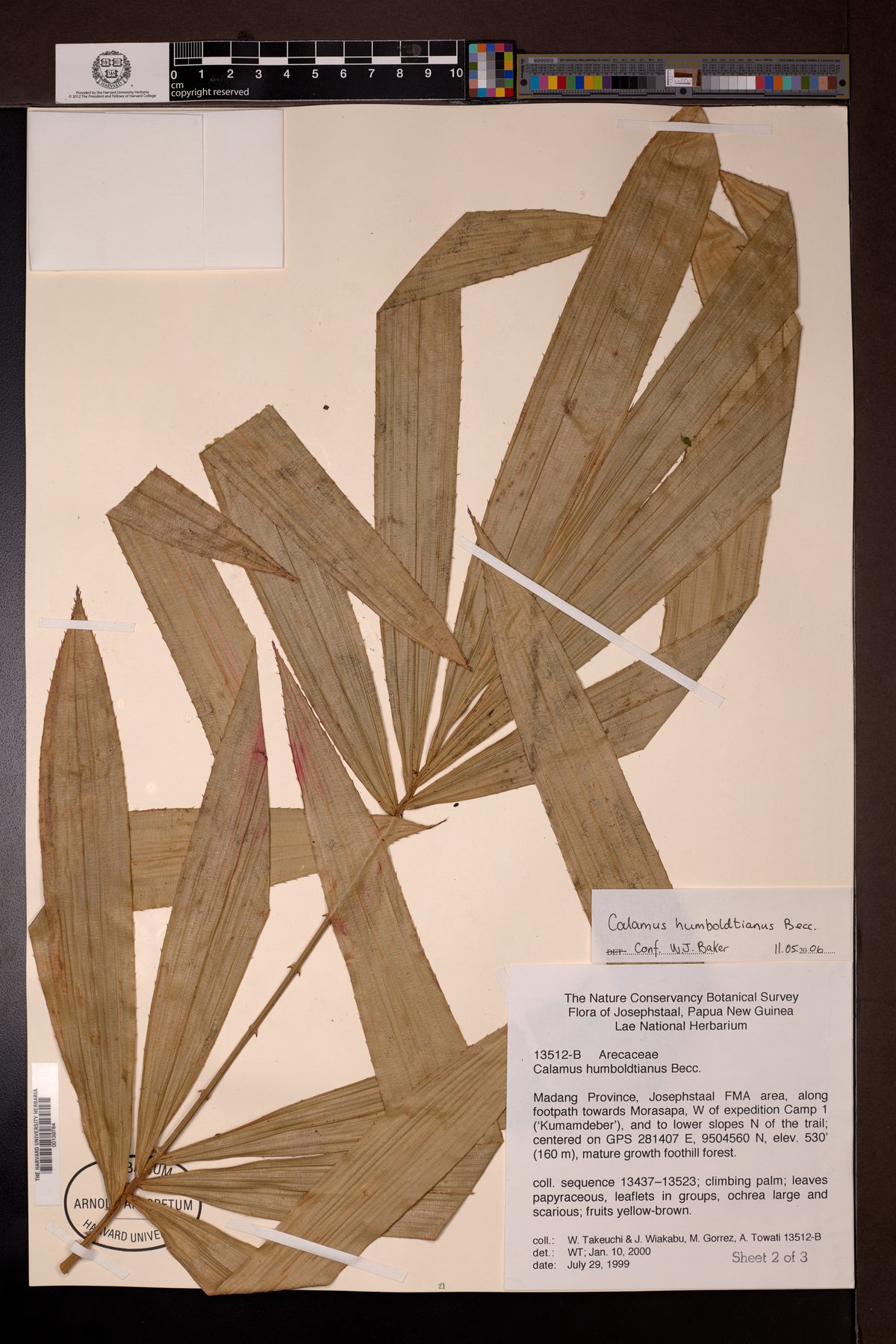
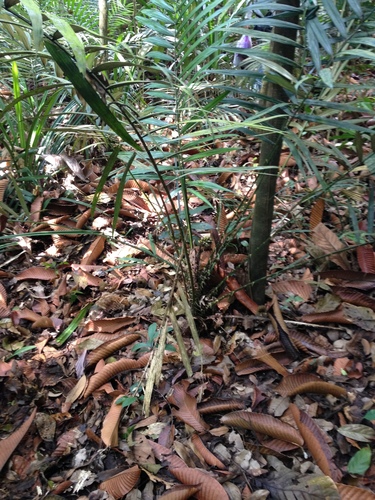
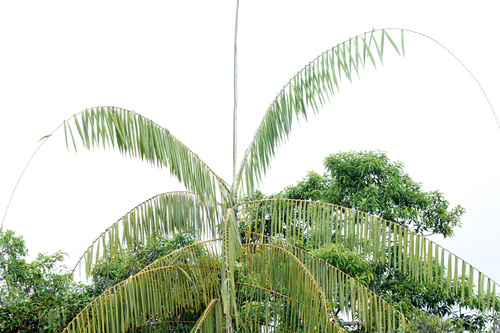
Phoenix loureiroi var. pedunculata
(Griff.) Govaerts.
Dwarf date palm, Hill date palm
iNaturalist· cc0
no rights reserved
iNaturalist· cc-by-nc
(c) Gavin, some rights reserved (CC BY-NC)
iNaturalist· cc-by-nc
(c) cldd, some rights reserved (CC BY-NC)
Summary
Source: WikipediaPhoenix loureiroi (commonly known as the mountain date palm, vuyavuy palm, or voyavoy palm,) is a species of flowering plant in the palm family, indigenous to southern Asia, from the Philippines, Taiwan, India, southern Bhutan, Burma, Thailand, Cambodia, Vietnam, Pakistan, and China. It occurs in deciduous and evergreen forests and in clear terrain from sea level to 1,500 m (4,900 ft) altitude. Phoenix loureiroi is named after João de Loureiro; it was originally written by Kunth as "loureirii", but this is an error to be corrected to loureiroi under the provisions of the ICBN.
Description
A dwarf palm tree. It has several trunks 10-20 cm tall. In sandy soils is is almost without a trunk but in rocky soils the trunk can be 2 m tall. It is a slender palm. The trunk has distinct square markings on it. This is produced from where the leaves have fallen. These leaf bases are arranged in a loose spiral. The leaves arch over. They are short and 1-2 m long. The leaflets are 50 cm long and narrow. They are grey-green. They are arranged in groups of up to 4 along the stalk. The fruit occur in long clusters. The fruit are 1.5-2 cm long and ripen from orange to black. They are sweet and edible. The variety pedunculata comes from 2000 m altitude and has very long fruit stalks.
Edible Uses
The ripe fruit can be eaten fresh, the bud is eaten as palm cabbage, and the pith from the young stem is eaten as palm heart.
Traditional Uses
The bud is eaten as a palm cabbage. The ripe fruit can be eaten fresh. The pith from the young stem is eaten.
This uses section is brief — help expand it
Distribution
A tropical and subtropical plant. It grows in grassy savannah. It can grow in low coastal plains and mountains. It grows between 300-1800 m altitude in Uttar Pradesh in India. It grows in isolated hill districts in India.
Where It Grows
Asia, Australia, Cambodia, China, Himalayas, India, Indochina, Myanmar, Nepal, Northeastern India, SE Asia, Sri Lanka,
Cultivation
Plants are grown from seed.
Notes
There are 17 Phoenix species.
Synonyms
Also Known As
Eenda, Imae prei, Khajur
References (13)
- Ambasta, S.P. (Ed.), 2000, The Useful Plants of India. CSIR India. p 448 (As Phoenix robusta)
- Balick, M.J. and Beck, H.T., (Ed.), 1990, Useful palms of the World. A Synoptic Bibliography. Colombia p 467, (As Phoenix humilis var. pedunculata)
- O. Beccari & J. D. Hooker, Fl. Brit. India 6:427. 1892 (As Phoenix robusta)
- Hedrick, U.P., 1919, (Ed.), Sturtevant's edible plants of the world. p 488 (As Phoenix humilis var. pedunculata)
- Jones, D.L., 1994, Palms throughout the World. Smithtonian Institution, Washington. p 287 (As Phoenix humilis var. pedunculata) and (As Phoenix robusta)
Show all 13 references Hide references
- Malhotra, C.L.., et al, 1985, Additional Notes on the wild edible plants of India J. Econ. Tax. Bot. Vol 6. No.2 pp 481-482 (As Phoenix humilis var. pedunculata)
- Manandhar, N.P., 2002, Plants and People of Nepal. Timber Press. Portland, Oregon. p 357 (As Phoenix humilis var. pedunculata)
- Negi, K.S., 1988, Some little known wild edible plants of U.P. Hills. J. Econ. Tax. Bot. Vol. 12 No. 2 pp 345-360 (As Phoenix humilis var. pedunculata)
- Phon, P., 2000, Plants used in Cambodia. © Pauline Dy Phon, Phnom Penh, Cambodia. p 495 (As Phoenix humilis var. pedunculata)
- Ramachandran, V.S. and Nair, V.J., 1981, Ethnobotanical studies in Cannanore District, Kerala State (India). J Econ. Tax. Bot. Vol 2 pp 65-72 (As Phoenix humilis var. pedunculata)
- Singh, H.B., Arora R.K.,1978, Wild edible Plants of India. Indian Council of Agricultural Research, New Delhi. p 68 (As Phoenix humilis var. pedunculata) and (As Phoenix robusta)
- Singh, V. B., et al, (Ed.) Horticulture for Sustainable Income and Environmental Protection. Vol. 1 p 217
- Uprety, Y., et al, 2012, Diversity of use and local knowledge of wild edible plant resources in Nepal. Journal of Ethnobotany and Ethnomedicine 8:16