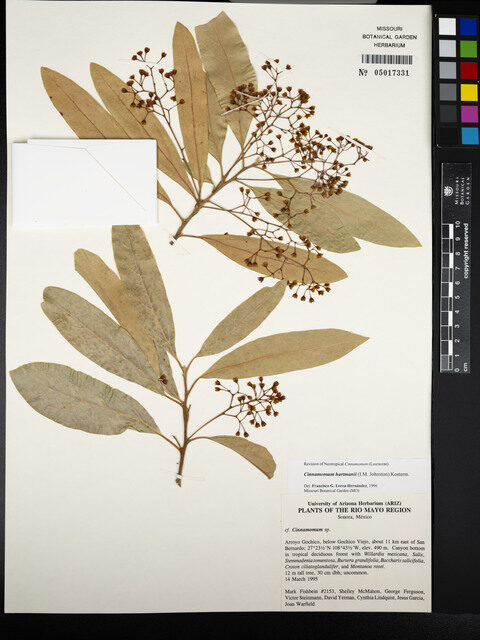
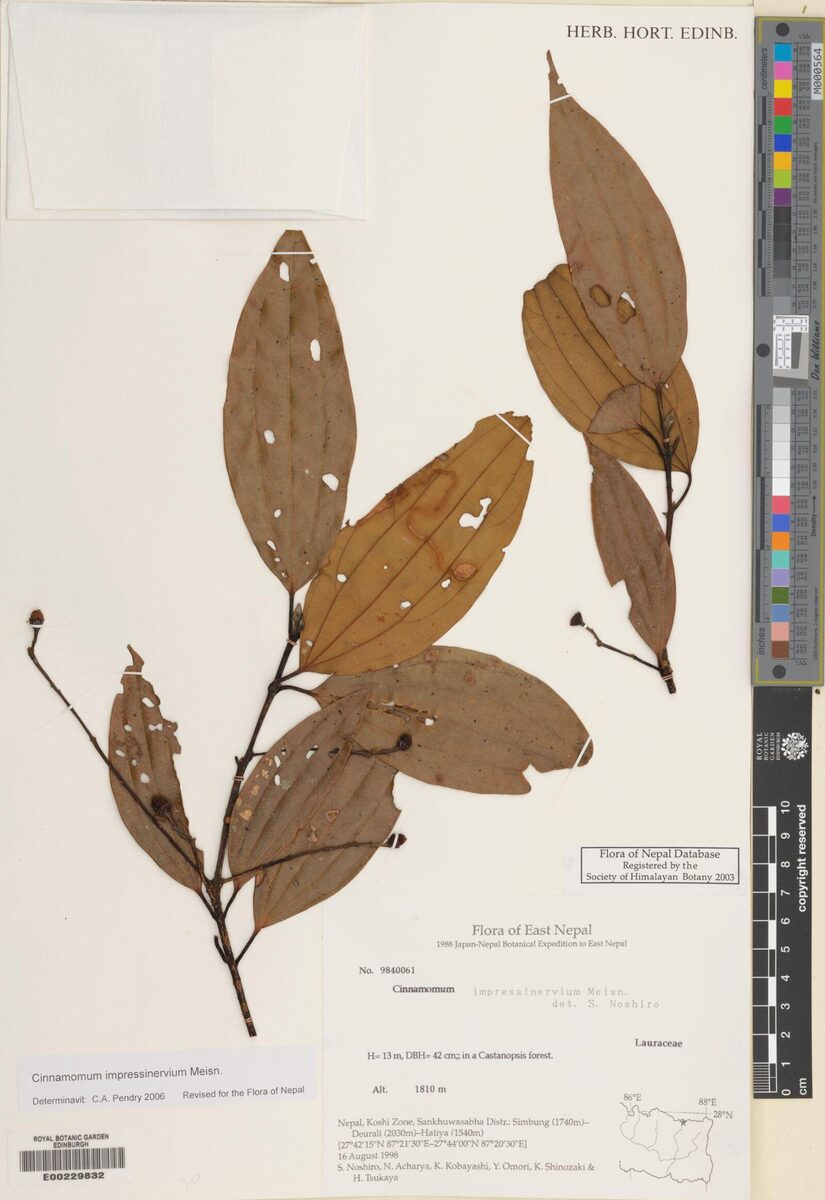
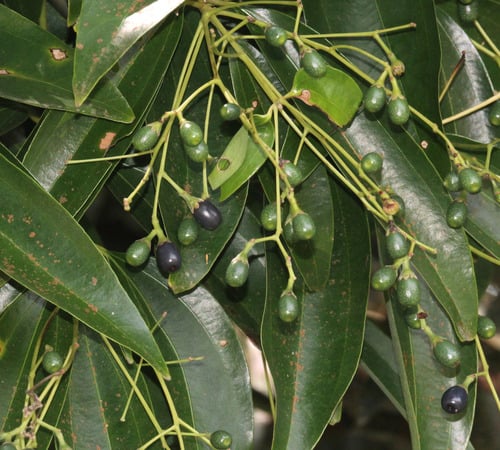
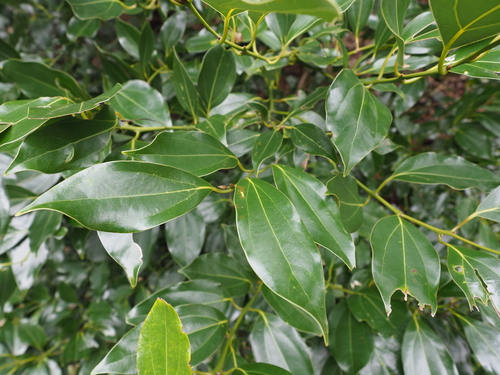
Cinnamomum eugenoliferum
Kosterm.
gbif· cc0
President and Fellows of Harvard College
gbif· cc0
President and Fellows of Harvard College
gbif· cc0
President and Fellows of Harvard College
Description
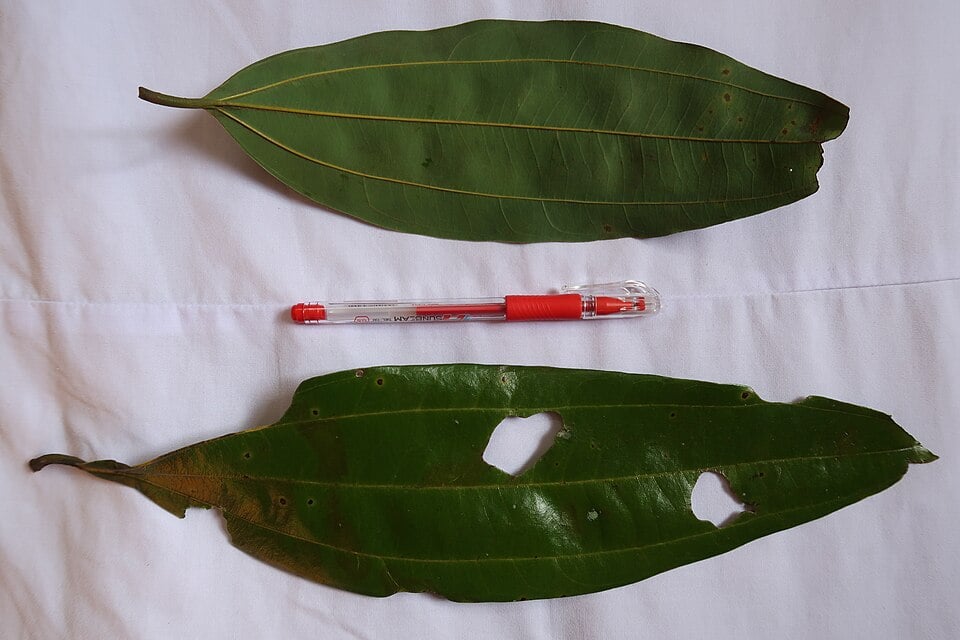
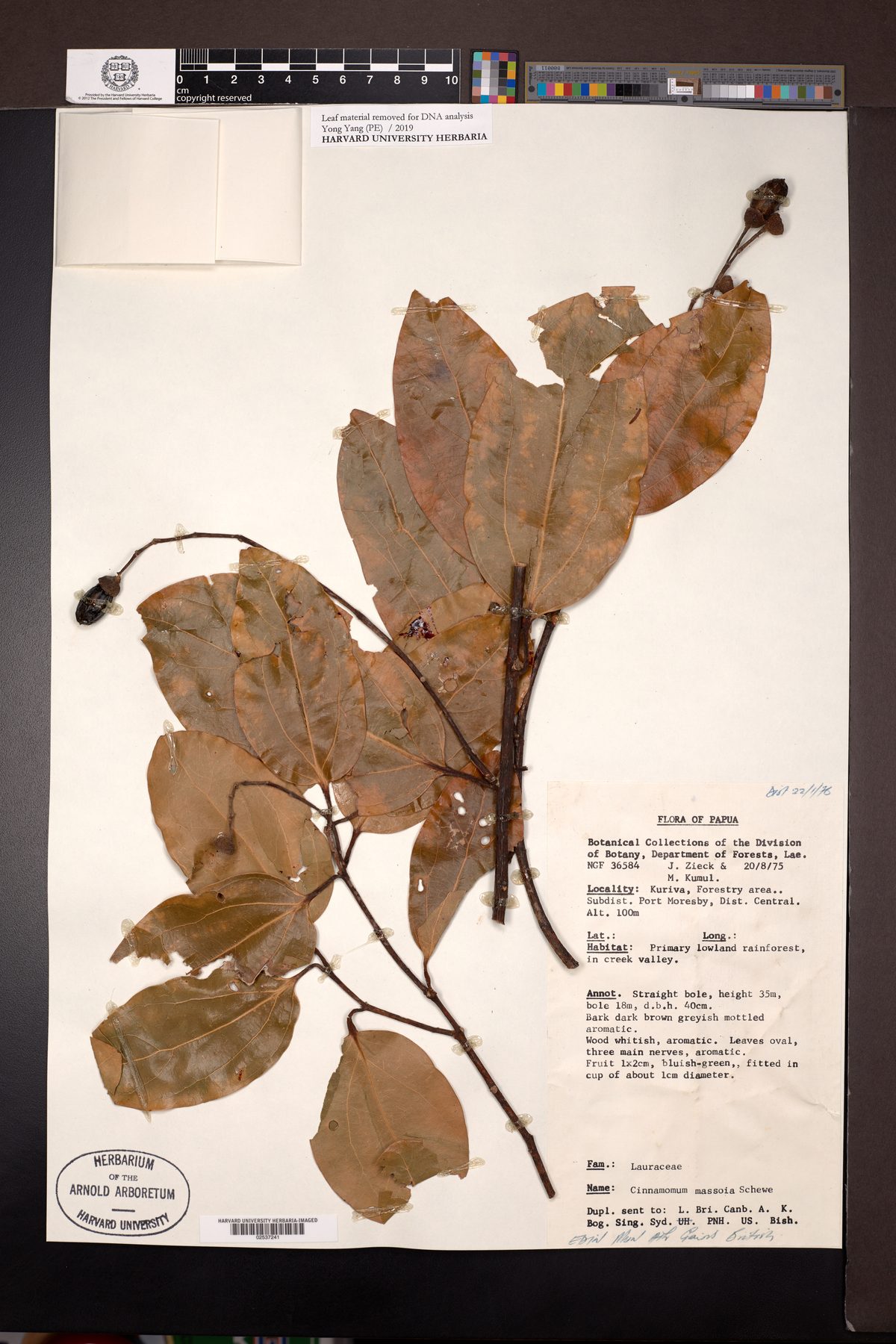
A tree. It grows 40 m tall. The trunk is 80 cm across. It has small buttresses. The leaves are opposite. They are 7.5-15 c, long by 4.5-6.5 cm wide. The flowering shoots are in the axils of leaves.
Medicinal Uses
We have no specific information for this species, but species in this genus are generally rich in essential oils with proven medicinal virtues. Species are often very similar and not always easily distinguished from each other. Many Cinnamomum species are likely to be used, particularly for treating disorders of the gastro-intestinal tract.
Distribution
It is a tropical plant.
Where It Grows
Papua New Guinea, PNG,
Cultivation
Species in this genus generally prefer an acidic soil with ample moisture in the growing season and a position with some shade. Species in this genus are generally able to resprout from basal wood if the top is damaged, and will soon recover from any damage.
Propagation
Seed - the seed has a short viability and is best sown as soon in containers as it is ripe. Remove the fruit pulp since this can inhibit germination. Soaking the seeds for 24 hours in lukewarm water hastens germination. Germination can take 1 - 6 months at 20°c. The germination rate of fresh seed is about 50%, falling to 25% for seed 6 months old, and zero for those 1 year old. Stored seed should be sown as soon as possible in containers. When they are large enough to handle, prick the seedlings out into individual pots and plant them out into their permanent positions when 10cm or more tall. Cuttings of semi-ripe side shoots, 7cm with a heel, in a frame with bottom heat.
Other Uses
The wood is a useful hardwood.
Synonyms
References (1)
- World Checklist of Useful Plant Species 2020. Royal Botanic Gardens, Kew