Cinnamomum glanduliferum
(Wall.) Meisner
Nepal camphor tree
iNaturalist· cc-by-nc-sa
(c) agtot, some rights reserved (CC BY-NC-SA)
iNaturalist· cc-by-nc
(c) Pablo Preliasco, some rights reserved (CC BY-NC)
iNaturalist· cc-by-nc
(c) Horacio Sirolli, some rights reserved (CC BY-NC)
Description
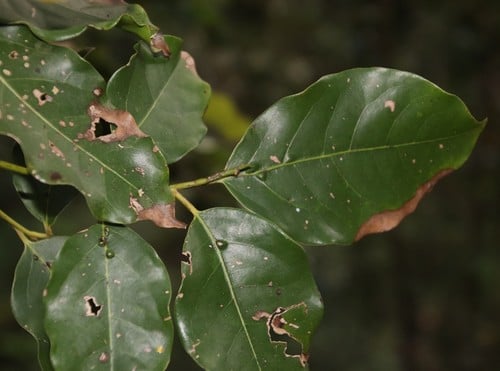
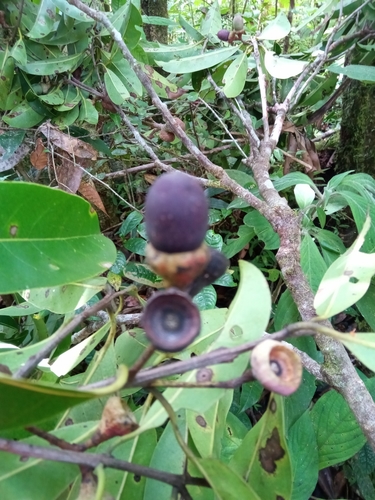
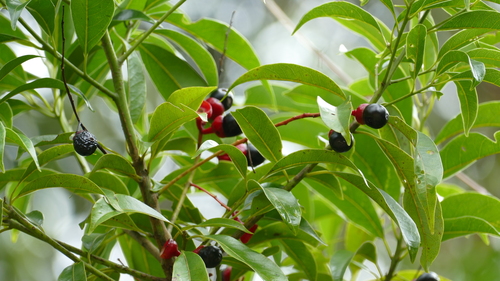
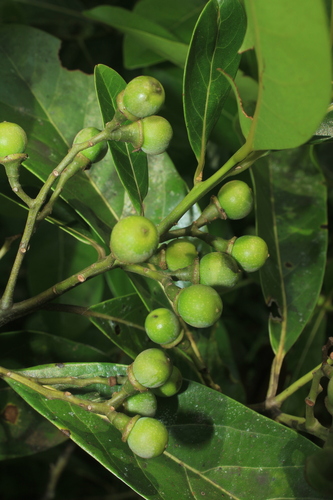
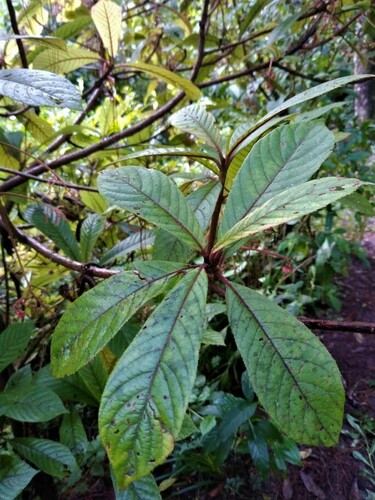
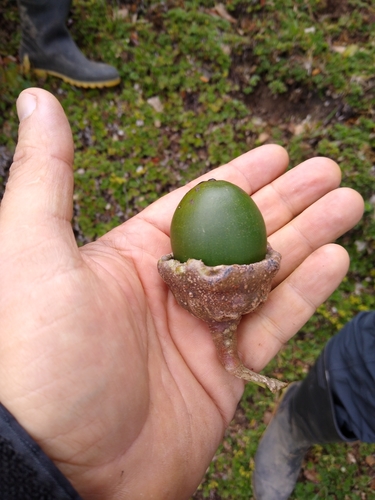
An evergreen tree. It grows 5-15 m tall. The bark is brown. It has cracks along it. The branches are robust and angular. The leaves are alternate and narrowly oval or sword shaped. They are 14-16 cm long by 4-7 cm wide. The flowers are small and have both sexes. They are light yellow and hairy and in groups. These are 4-10 cm long. The fruit is round and 10 cm across. It is black.
Edible Uses
The fruit are used in stir fries and as a spice, though use is only occasional.
Traditional Uses
The fruit are used in stir fries and as a spice.
This uses section is brief — help expand it
Medicinal Uses
Traditionally used as a spice.
Distribution
It is a tropical plant. It grows between 1,500-2,500 m above sea level. In Sichuan and Yunnan.
Where It Grows
Asia, Bhutan, China, Himalayas, India, Indochina, Malaysia, Myanmar, Nepal, SE Asia, Tibet,
Cultivation
Cinnamomum glanduliferum is a plant of warm temperate to tropcal climates in China, India and southeast Asia. It is able to tolerate short-lived frosts, probably down to -5°c, possibly lower. It needs to grow in areas with ample summer heat in order to ensure that it thoroughly ripens the current season's growth, otherwise it will be less winter-hardy. Requires a very sunny position in climates with cooler summers, but otherwise requires some shade from the strongest sun. Prefers an acidic soil with ample moisture in summer. Species in this genus are generally able to resprout from basal wood if the top is harmed, and will soon recover from frost damage. Almost all parts of the plant are aromatic.
Propagation
Seed - the seed has a short viability and is best sown as soon in containers as it is ripe. Remove the fruit pulp since this can inhibit germination. Soaking the seeds for 24 hours in lukewarm water hastens germination. Germination can take 1 - 6 months at 20°c. The germination rate of fresh seed is about 50%, falling to 25% for seed 6 months old, and zero for those 1 year old. Stored seed should be sown as soon as possible in containers. When they are large enough to handle, prick the seedlings out into individual pots and plant them out into their permanent positions when 10cm or more tall. Cuttings of semi-ripe side shoots, 7cm with a heel, in a frame with bottom heat.
Other Uses
The leafy branchlets contain essential oil and camphor. The oily fat obtained from the fruit kernel is used for industrial purposes. The wood is used for making furniture. There are a number of tree species (including this one) from Malaysia that are in the family Lauraceae and produce a useful timber that is either not distinct enough in itself, or is in insufficient supply, to warrant being traded individually. These various species have been lumped together under the trade name ‘medang’. We do not have any more information about the wood from this species, but a general description of medang timber is as follows:- The heartwood is very variable, from light-straw to red-brown and olive brown; the sapwood is ill-defined. The texture is moderately fine but even; the grain interlocked or wavy; the surface dull. The wood is not durable. It is easy to slightly difficult to resaw, and easy to moderately easy to cross-cut; easy to plane and the surface produced is smooth to moderately smooth. It is suitable for decorative work such as interior finishing, panelling, furniture and cabinet making. It is also suitable for plywood manufacture, whilst the heavier species are suitable for medium construction under cover
Production
In Yunnan fruit are harvested in August and September.
Other Information
They are only occasionally used.
Synonyms
Also Known As
Malagiri, Kyun-gado, Sunghandhaakokila, Taw-seik-nan-gyi, Xiangzhangzi
References (3)
- Aryal, K. P., et al, 2018, Diversity and use of wild and non-cultivated edible plants in the Western Himalaya. Journal of Ethnobiology and Ethnomedicine (2018) 14:10
- Ju, Y., et al, 2013, Eating from the wild: diversity of wild edible plants used by Tibetans in Shangri-la region, Yunnan, China, Journal of Ethnobiology and Ethno medicine 9:28
- www.efloras.org Flora of China Volume 7