Pavetta brownii
Bremek.
Waknani
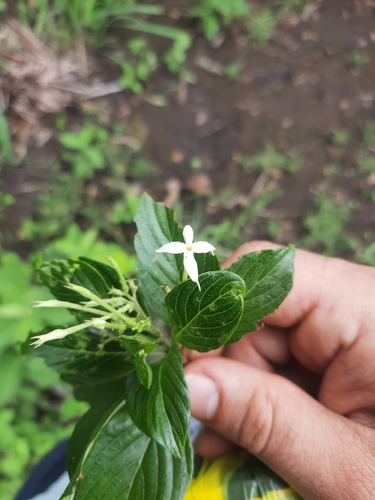
iNaturalist· cc-by-nc
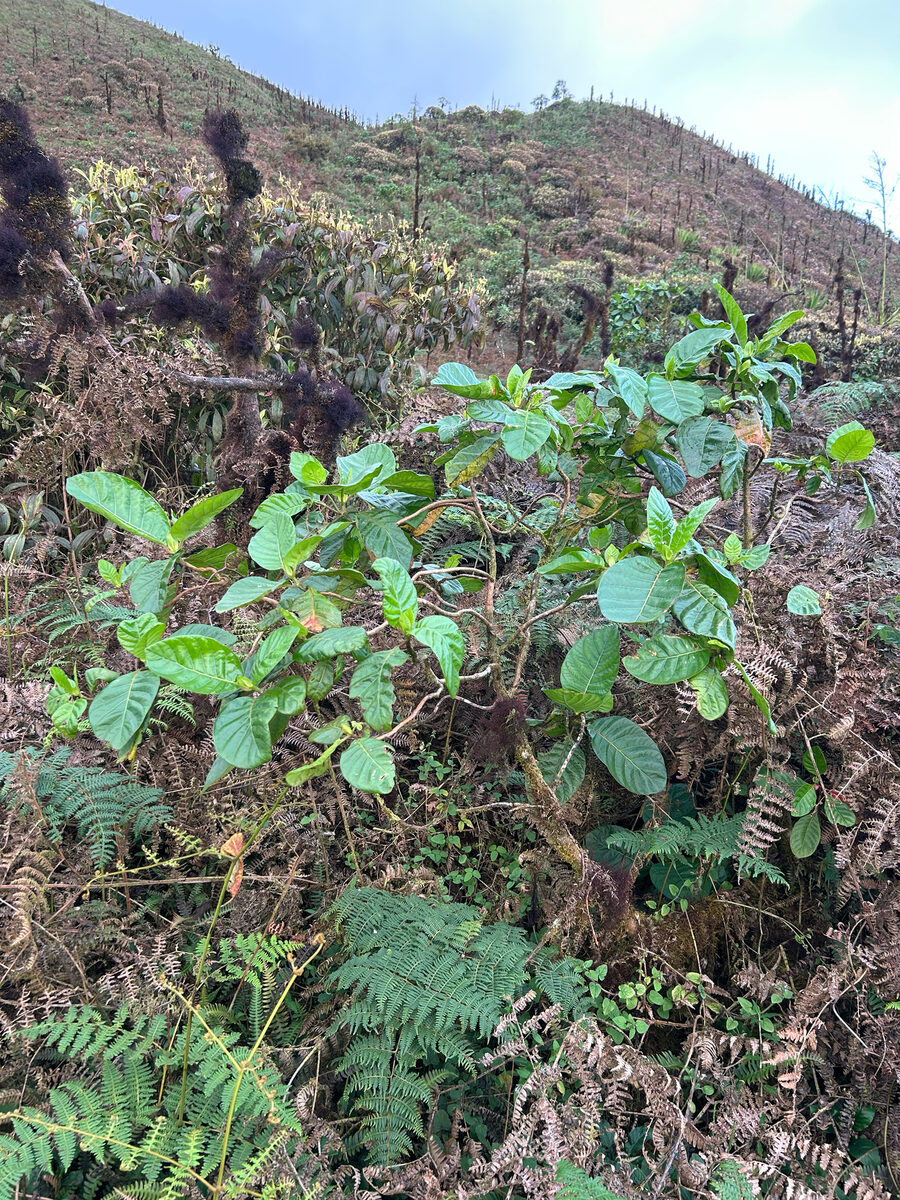
(c) Josh Magro, some rights reserved (CC BY-NC), uploaded by Josh Magro
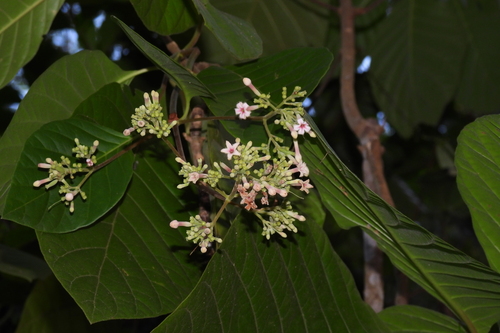
iNaturalist· cc-by-nc
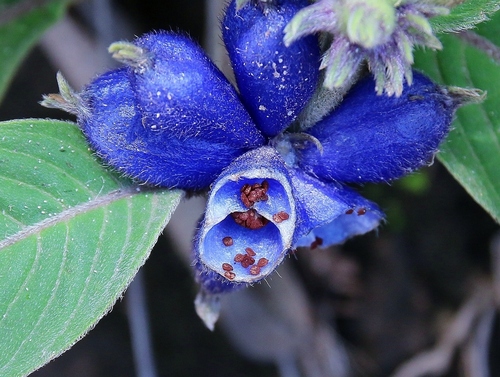
(c) Jason Searle, some rights reserved (CC BY-NC), uploaded by Jason Searle
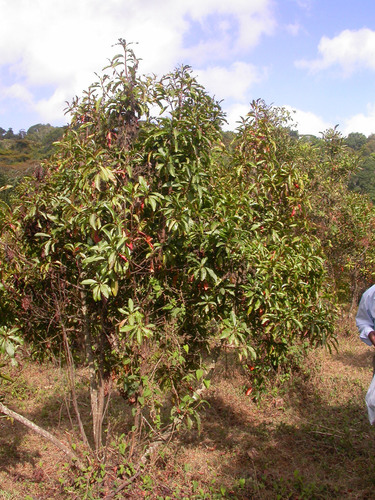
iNaturalist· cc-by
(c) Roland Muench, some rights reserved (CC BY), uploaded by Roland Muench
Description
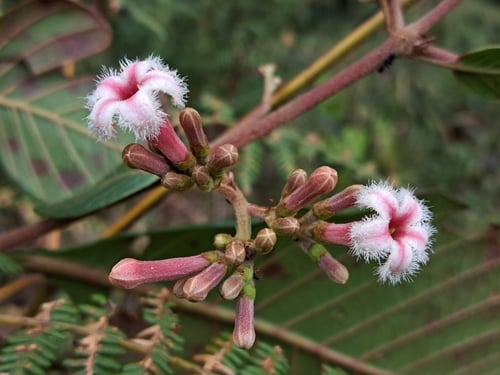
A small tree. It grows 1-5 m high and spreads 1-4 m wide. Young growth is usually hairy. The bark is grey and stringy. The branches spread or curve upwards. The small branches usually have fine hairs. The leaves are 7.5-21 cm long by 3.5-9.2 cm wide. They are oval and have stalks 3 cm long. They are deep green and leathery. The flower heads are up to 10 cm across. They are somewhat loose and at the ends of branches. They flowers are white and have a sweet scent. The fruit is fleshy and 0.8 cm long by 0.75 cm wide. They are almost round and black and smooth.
Edible Uses
The black fruit are eaten and are noted as being very tasty.
Traditional Uses
The black fruit are eaten.
This uses section is brief — help expand it
Distribution
It is a tropical plant. It grows naturally in monsoon vine forests. It grows on coastal scrubs and sand dunes. It can also grow in subtropical climates and seasonally dry places. It needs freely drained soils.
Where It Grows
Australia*,
Cultivation
It can be grown from fresh seed. It can possibly be grown from cuttings.
Other Information
The fruit are very tasty.
Notes
There are about 400 Pavetta species. They grow in the tropics.
References (4)
- Cooper, W. and Cooper, W., 2004, Fruits of the Australian Tropical Rainforest. Nokomis Editions, Victoria, Australia. p 448
- Elliot, W.R., & Jones, D.L., 1997, Encyclopedia of Australian Plants suitable for cultivation. Vol 7. Lothian. p 186 (Drawing)
- Wheeler, J.R.(ed.), 1992, Flora of the Kimberley Region. CALM, Western Australian Herbarium, p 922
- Yunupinu Banjgul, Laklak Yunupinu-Marika, et al. 1995, Rirratjinu Ethnobotany: Aboriginal Plant Use from Yirrkala, Arnhem Land, Australia. Northern Territory Botanical Bulletin No 21. Parks and Wildlife Commission of the Northern Territory. p 62.