Elaeocarpus prunifolius
Wall. ex Mull.Berol.
wikimedia· cc-by-sa
Rasbak (via Wikimedia Commons)
Summary
Source: WikipediaElaeocarpus prunifolius is a species of flowering plant in the Elaeocarpaceae family. It is found in Bangladesh and India. It is threatened by habitat loss.
Description
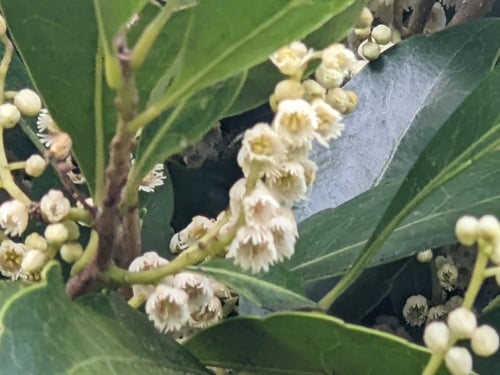
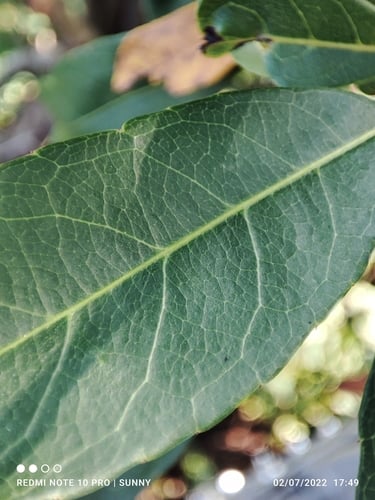
An evergreen tree. It grows 10-18 m high. Older trees have slight buttresses. The bark is grey and thin. The leaves are 9-17 cm long by 3-6 cm wide. They are narrowly oval. There are shallow teeth. There are 6-10 pairs of arching side veins. The stalks are 2-4 cm long. They are slightly swollen at both ends. The flowers are in clusters in the axils of leaves. They are 4-8 cm long. The fruit are 2 cm long and dark green. There are small cream dots. The fruit turn purple when ripe. The seeds are 1.5 cm long.
Edible Uses
The fruit are eaten raw, though they are sour.
Traditional Uses
The fruit are eaten raw. They are sour.
This uses section is brief — help expand it
Distribution
It is a tropical plant. In northeastern India it grows up to 1,350 m above sea level.
Where It Grows
Asia, India, Indochina, Myanmar, Northeastern India, SE Asia, Thailand, Vietnam,
Cultivation
We have no specific information for this species, but members of this genus generally grow well in full sun to moderate shade, requiring a fertile, moist but well-drained soil.
Propagation
The seed of most species in this genus is covered by a hard, woody shell and can be very slow and erratic to germinate, sometimes taking 2 years or more. Filing down the shell, or cracking it (being very careful not to damage the seed) in order to allow the ingress of moisture can help to greatly speed up germination. Sow the seed in containers in light shade. When the seedlings are large enough to handle, prick them out into individual pots and grow them on until large enough to plant out, Cuttings of almost ripe shoots, in a sandy soil in a frame. The leaves should be left on the stem.. Many species strike readily from cuttings.
Production
In northeastern India plants flower and fruit September to November.
Notes
There are about 360 Elaeocarpus species mostly in the tropics.
Synonyms
Also Known As
Banghkri, Bon jalpai, Cm la-prun, Dieng-ruin, Soh-khyllam-eit-blang, Sunganeren, Syngkiahaitblang
References (11)
- Ambasta, S.P. (Ed.), 2000, The Useful Plants of India. CSIR India. p 191
- Gardner, S., et al, 2000, A Field Guide to Forest Trees of Northern Thailand, Kobfai Publishing Project. p 97
- Jeeva, S., 2009, Horticultural potential of wild edible fruits used by the Khasi tribes of Meghalaya. Journal or Horticulture and Forestry Vol. 1(9) pp. 182-192
- Majumdar, K and Datta, N., 2009, Traditional wild edible fruits for the forest dwellers of Tripura, India. Pleione 3(2) 167-178
- Mozhui, R., et al, 2011, Wild edible fruits used by the tribals of Dimapur district of Nagaland, India. Pleione 5(1): 56 - 64.
Show all 11 references Hide references
- Phawa, G. M., Dkhar, E. K. & Marbaniang, D., 2019, Indigenous Wild Edible Plants of Bataw Village, East Jaintia Hills District, Meghalaya. International Journal of Arts, Science and Humanities. 7(2)
- Sawian, J. T., et al, 2007, Wild edible plants of Meghalaya, North-east India. Natural Product Radiance Vol. 6(5): p 416
- Singh, H.B., Arora R.K.,1978, Wild edible Plants of India. Indian Council of Agricultural Research, New Delhi. p 59
- Singh, V. B., et al, (Ed.) Horticulture for Sustainable Income and Environmental Protection. Vol. 1 p 216
- Numer. List 2669. 1831
- Wild edible plants of Himachal Pradesh