Alphonsea ventricosa
(Roxb.) Hook.f. and Thomson
wikimedia· cc-by
Wikimedia Commons - Alphonsea ventricosa (Roxb.) Hook.f. & Thomson (licensed under https://creativecommons.org/licenses/by/4.0/)
Description
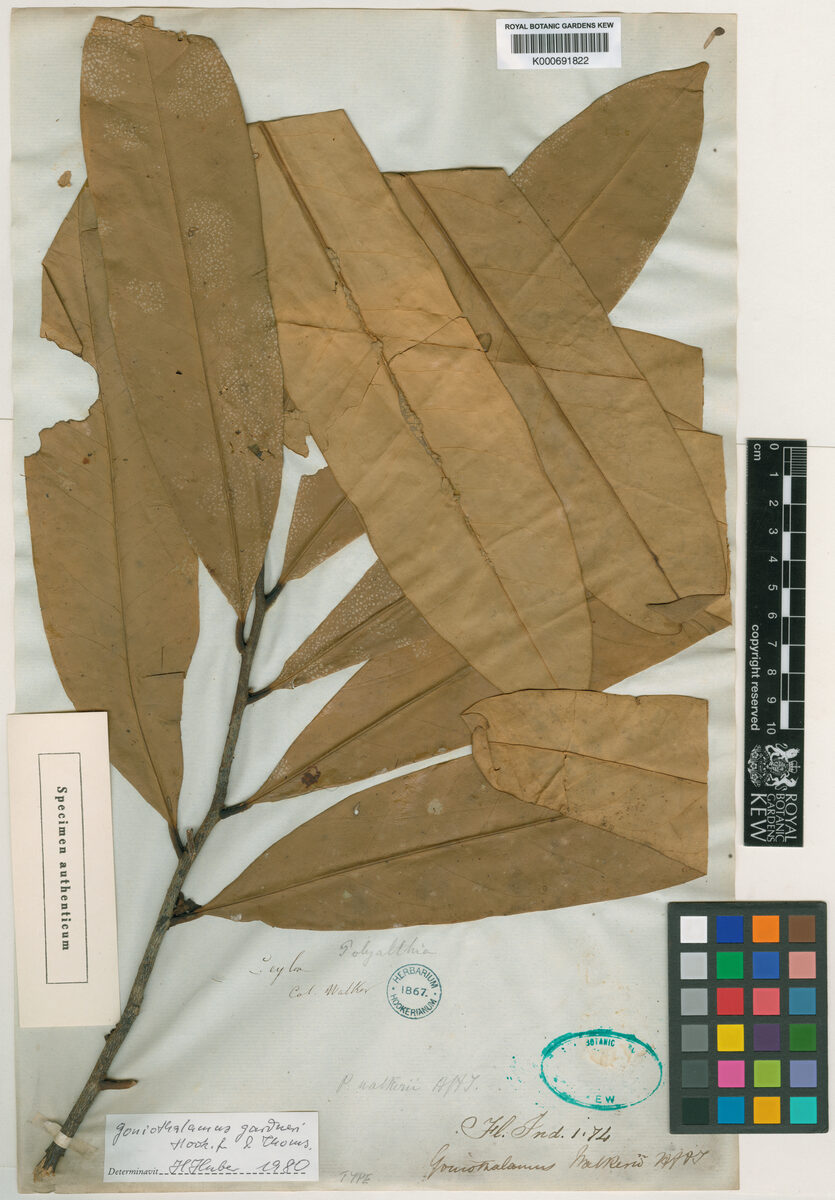
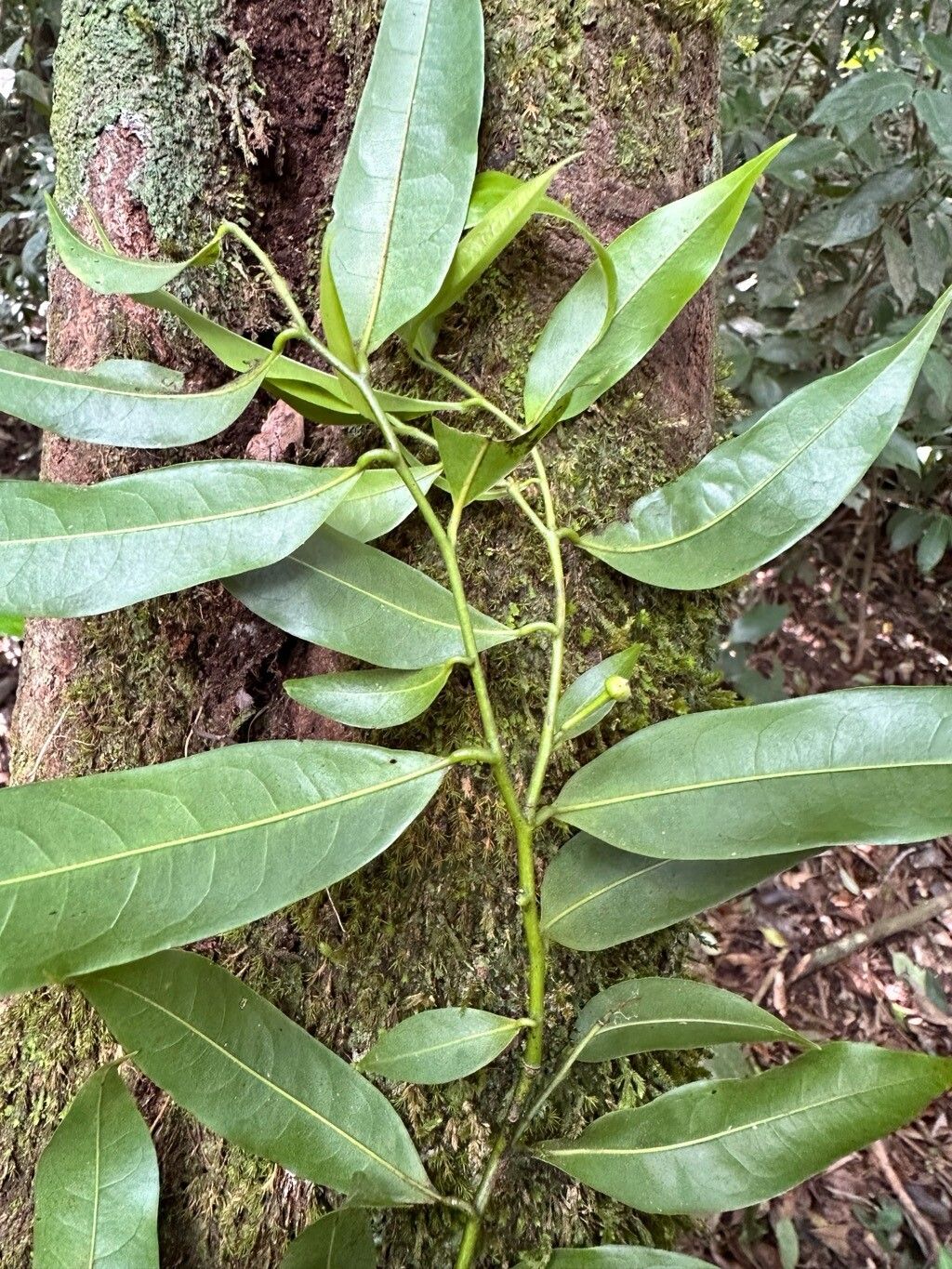
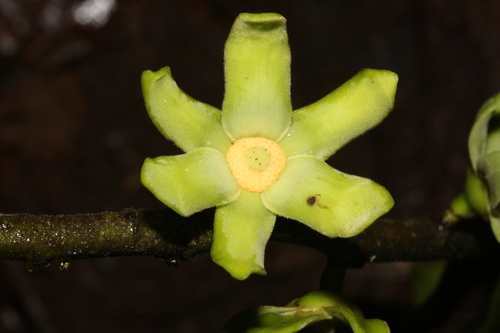
An evergreen tree. It grows 20-30 m tall. The trunk is straight and the branches are at right angles. The bark is dark brown and corky. The leaves are dark, thick and shiny. They are 15-25 cm long by 3-7 cm wide. The flowers have both sexes. They are near and usually opposite the leaves. The fruit are in groups of about 10. They are oblong and taper to the tip. They are 2.5-3.5 cm long.
Edible Uses
The ripe fruit are eaten.
Traditional Uses
The ripe fruit are eaten.
This uses section is brief — help expand it
Distribution
A tropical plant.
Where It Grows
Andamans, Asia, Assam, Bangladesh, Himalayas, India, Indonesia, Myanmar, Northeastern India, SE Asia,
Notes
The Annonaceae are a mainly tropical family.
Synonyms
Also Known As
Fonsetricosa, Jhigpi-arung-otwang, Jong-mot, Noga-kola, Norlok-arong, Pakna-kala, Rulang-buphang, Thaisen-phang, Thei-vawk-ek, Thei-wok-ek
References (7)
- Ambasta S.P. (Ed.), 2000, The Useful Plants of India. CSIR India. p 30
- Bakri, Y. M. et al, 2017, A mini Review on Alphonsea sp. (Annonaceae): Traditional uses, Biological Activities and Phytochemistry. Journal of Applied Pharmaceutical Science Vol. 7 (10), pp. 200-203
- Dobriyal, M. J. R. & Dobriyal, R., 2014, Non Wood Forest Produce an Option for Ethnic Food and Nutritional Security in India. Int. J. of Usuf. Mngt. 15(1):17-37
- Kar, A., et al, 2013, Wild Edible Plant Resources used by the Mizos of Mizoram, India. Kathmandu University Journal of Science, Engineering and Technology. Vol. 9, No. 1, July, 2013, 106-126
- Pasha, M. K. & Uddin, S. B., 2019, Minor Edible Fruits of Bangladesh. Bangladesh J. Plant Taxon. 26(2): 299–313
Show all 7 references Hide references
- Singh, H.B., Arora R.K.,1978, Wild edible Plants of India. Indian Council of Agricultural Research, New Delhi. p 48
- Wild edible plants of Himachal Pradesh