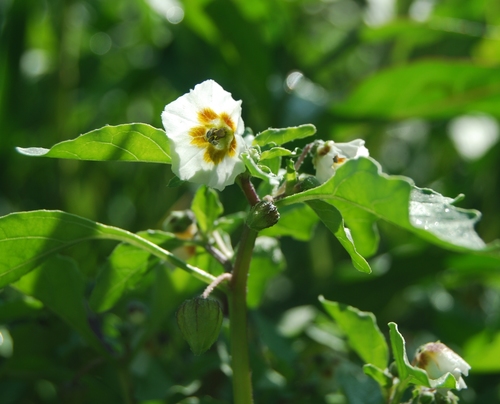
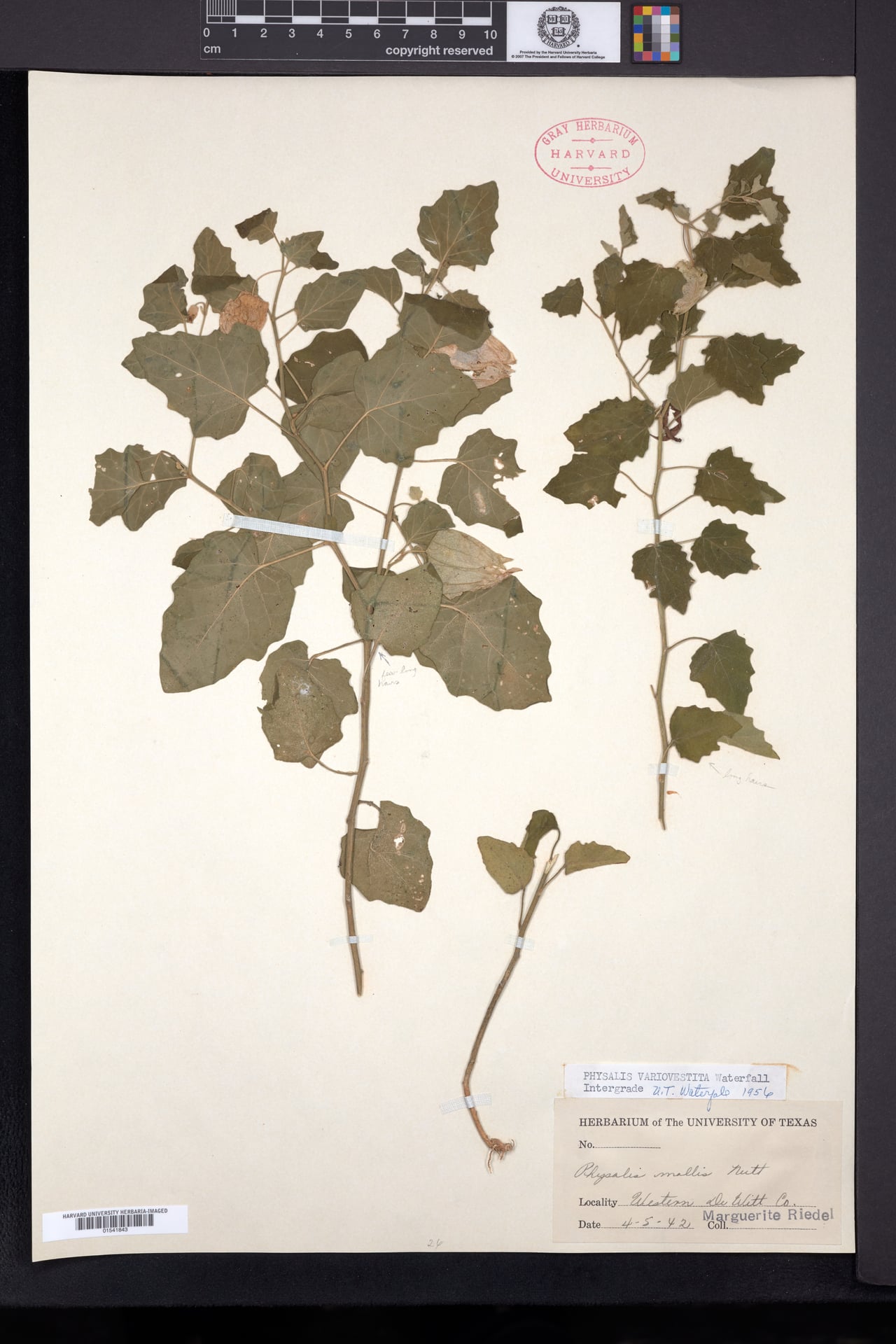
Solanum indicum subsp. distichum
L.; (Thonn.) Bitter
Children’s tomato
gbif· cc-by
Royal Botanic Gardens, Kew
Summary
Source: WikipediaSolanum indicum can refer to: Solanum indicum L., a synonym of Solanum lasiocarpum Dunal Solanum indicum Roxb., a synonym of Solanum melongena L., eggplant A number of varieties and subspecies now assigned to Solanum anguivi Lam.
Description
A herb or small shrub. It grows 1 m tall. The leaves are alternate and narrowly oval. They are 8 cm long by 4 cm wide and are wavy. The fruit are orange-red. They are 1 cm across.
Edible Uses
Both the leaves and fruit are cooked and used as a vegetable and flavouring.
Traditional Uses
The fruit are cooked and used as a vegetable and flavouring.
This uses section is brief — help expand it
Distribution
A tropical plant. In Nigeria it is recorded at 1,700 and 2,100 m above sea level.
Where It Grows
Africa, Cameroon, Central Africa, Congo DR, Côte d'Ivoire, East Africa, Equatorial Guinea, Ivory Coast, Nigeria, Sierra Leone, Uganda, West Africa,
Notes
There are about 1400 Solanum species.
Synonyms
Also Known As
Anzuwe, Atanga, Bilolo, Guri, Ikalu, Kasongo, Katunkuma, Lukambo, Mgbako, Namatala, Ngbaku, Nsui, Nzagi, Oli, Uli
References (15)
- Chapman, J. D. & Chapman, H. M., 2001, The Forest Flora of Taraba and Andamawa States, Nigeria. WWF & University of Canterbury. p 203
- Fern, K., 2012, Tropical Species Database http://theferns.info/tropical/
- Goode, P., 1989, Edible Plants of Uganda. FAO p 26
- Goode, P., 1989, Edible Plants of Uganda. FAO p 39
- Herzog, F., Gautier-Beguin, D. & Muller, K., Uncultivated plants for human nutrition in Cote d'Ivoire. FAO Corporate Document repository. International Conference on Domestication nd Commercialisaton of Non Timber species.
Show all 15 references Hide references
- http://aflora.africa.kyoto-u.ac.jp
- Jardin, C., 1970, List of Foods Used In Africa, FAO Nutrition Information Document Series No 2.p 10
- Martin, F.W. & Ruberte, R.M., 1979, Edible Leaves of the Tropics. Antillian College Press, Mayaguez, Puerto Rico. p 220 (As Solanum distichum)
- Repert. Spec. Nov. Regni Veg. Beih. 16:13. 1923
- Rubaihayo, E. B., Conservation and use of traditional vegetables in Uganda. Bioversity International.
- Tanno, T., 1981, Plant Utilization of the Mbuti Pygmies: With Special reference to their Material Culture and Use of Wild Vegetable Foods. Kyoto University Research. African Study Monographs 1:1-53
- Terashima, H., et al, 1992, Ethnobotany of the Lega in the Tropical Rainforest of Eastern Zaire (Congo): Part Two, Zone de Walikale, African Study Monographs, Suppl. 19:1-60
- Termote, C., et al, 2011, Eating from the wild: Turumbu, Mbole and Bali traditional knowledge of non-cultivated edible plants, District Tshopo, DRCongo, Gen Resourc Crop Evol. 58:585-618 (As Solanum distichum)
- Termote, C., et al, 2012, Wild Edible Plant Markets in Kisangani, Democratic Republic of Congo. Human Ecology 40:269-285 (As Solanum distichum)
- Terra, G.J.A., 1973, Tropical Vegetables. Communication 54e Royal Tropical Institute, Amsterdam, p 73 (As Solanum distichum)