Blyttia spiralis
(Forsk.) D. V. Field & J. R. I. Wood
wikimedia· cc0
Wikimedia Commons - Richard Toll 1984-11-10 http://creativeco...cdomain/zero/1.0/
Description
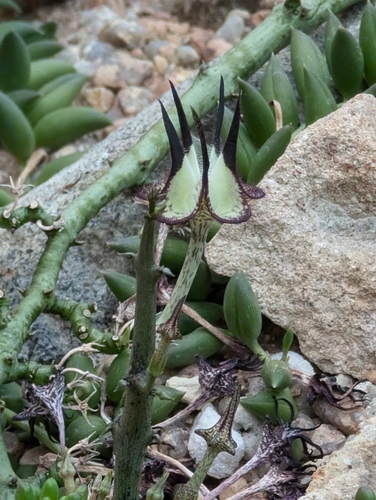
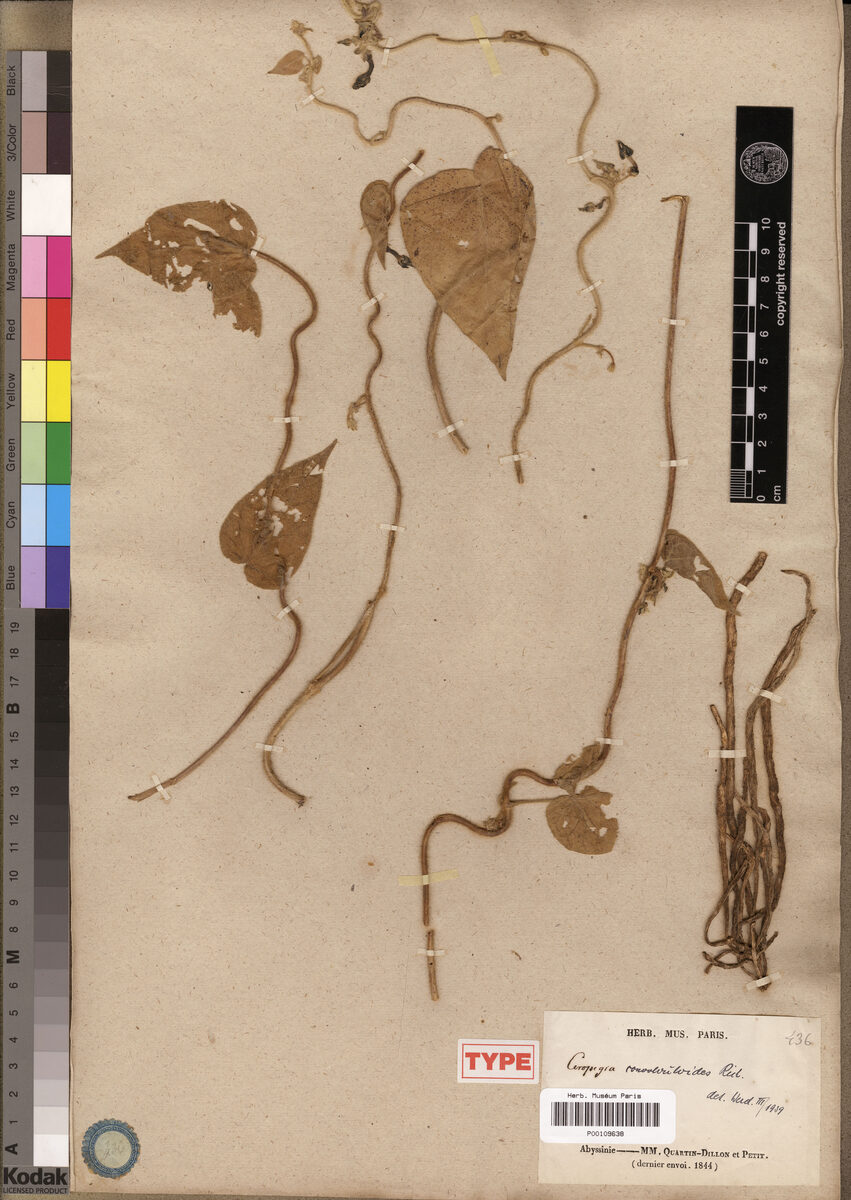
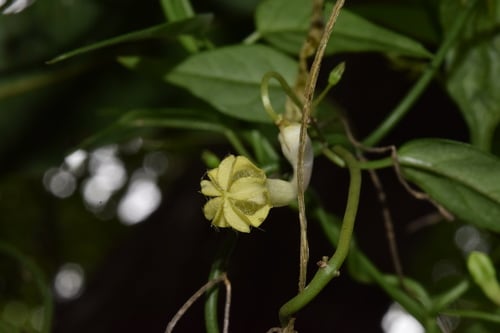
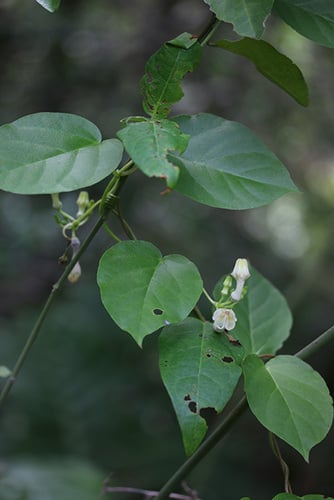
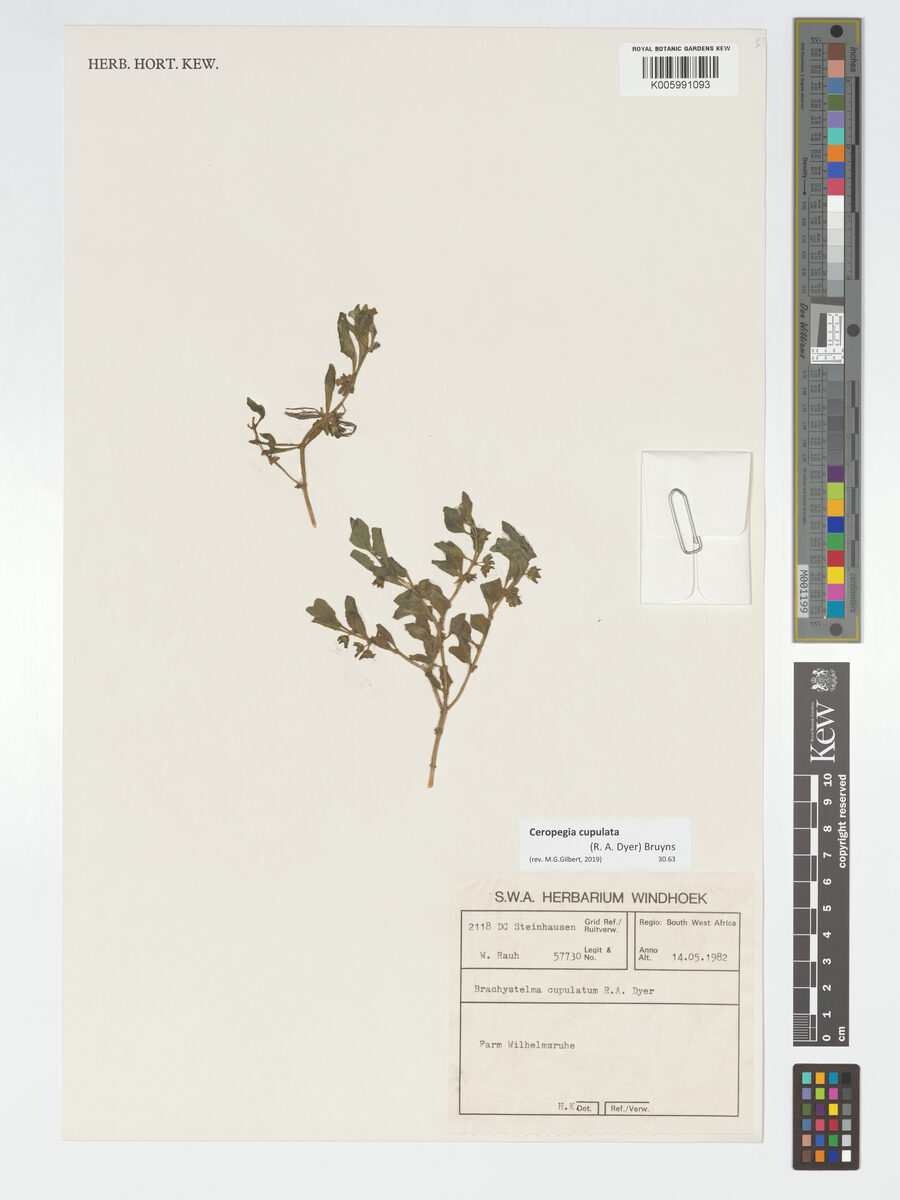
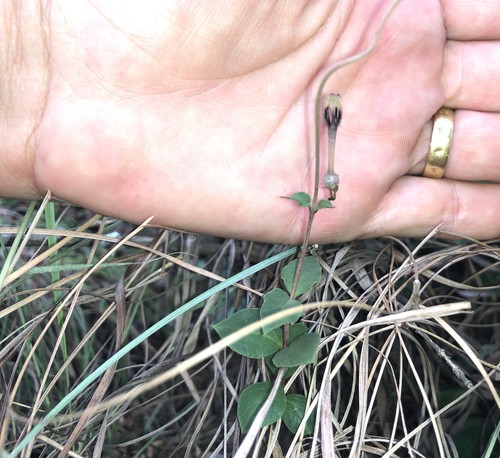
A woody twiner. The roots are tubers. The leaves are 1-4 cm long by 6-18 mm wide. The flowers are a dull purplish-green. The fruit follicles are 5-8 cm long by 8 mm wide. The seeds are 4.5 mm long.
Edible Uses
The sweet tubers are peeled and eaten.
Traditional Uses
The sweet tubers are peeled and eaten.
This uses section is brief — help expand it
Medicinal Uses
The plant is used as medicine.
Distribution
A subtropical plant. It grows in dry sandy places and along seasonal streams. It grows in dry savannah areas.
Where It Grows
Africa, Asia, East Africa, Ethiopia, India, Iran, Kenya, Mali, Middle East, Nigeria, Pakistan, Saudi Arabia, Senegal, Sudan, West Africa,
Notes
It is used as medicine.
Synonyms
Also Known As
Ambarvel, Kauathodi, Shigaroti, Shvetakavali, Vanveri
References (5)
- Ambasta, S.P. (Ed.), 2000, The Useful Plants of India. CSIR India. p 439 (As Pentatropis spiralis)
- Burkill, H. M., 1985, The useful plants of west tropical Africa, Vol. 5. Kew. (As Pentatropis spiralis)
- Hedrick, U.P., 1919, (Ed.), Sturtevant's edible plants of the world. p 471 (As Pentatropis spiralis)
- Singh, H.B., Arora R.K.,1978, Wild edible Plants of India. Indian Council of Agricultural Research, New Delhi. p 14 (As Pentatropis spiralis)
- World Checklist of Useful Plant Species 2020. Royal Botanic Gardens, Kew (As Vincetoxicum spirale)