Asparagus falcatus
L.
Sicklethorn, Large forest asparagus
iNaturalist· cc-by
(c) Mahomed Desai, some rights reserved (CC BY), uploaded by Mahomed Desai
iNaturalist· cc-by-nc
(c) Craig Peter, some rights reserved (CC BY-NC), uploaded by Craig Peter
iNaturalist· cc-by-nc
(c) chris_rob, some rights reserved (CC BY-NC)
Summary
Source: WikipediaAsparagus falcatus (Sicklethorn, Large Forest Asparagus, Imblekazana or Doringtou) is a large, thorny, climbing plant of the Asparagus genus, that is indigenous to South Africa and Mozambique. It is often grown as a security hedge in southern Africa.
Description
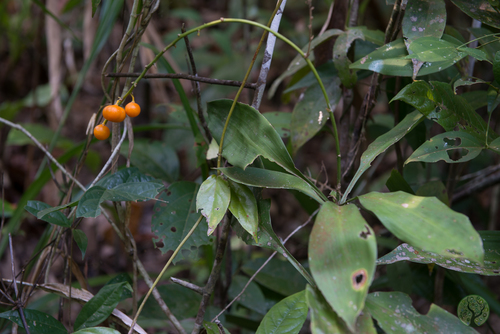
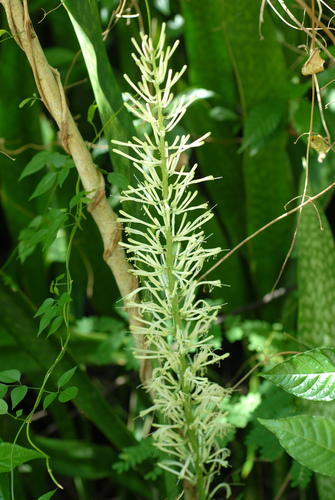
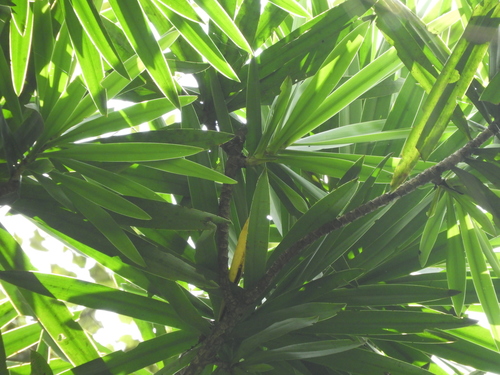
A climber. The roots have tubers. The stem can climb 7 m. The branches have grooves. It has sharp spines. The leaves are small and bright green. They are sickle shaped and 5 cm long. The flowers are small and have a sweet smell. They are white. The fruit are small orange berries.
Edible Uses
The shoots and roots are eaten.
Known Hazards
The plant has sharp spines.
Distribution
It is a tropical plant. In Swaziland it grows only in the lowveld. It needs rich, moist, well-drained soil. It grows in dense scrub and along the edges of forests.
Where It Grows
Africa, Australia, East Africa, Eswatini, Kenya, Mozambique, Rwanda, South Africa, Southern Africa, Swaziland, Zambia, Zimbabwe,
Cultivation
Plants can be grown by seeds or cuttings.
Notes
There are between 160-300 Asparagus species.
Synonyms
Also Known As
Akako-bamakanga, Mowungwi, Munmulungo, Umushabishabi
References (8)
- Bodkin, F., 1991, Encyclopedia Botanica. Cornstalk publishing, p 108
- Fowler, D. G., 2007, Zambian Plants: Their Vernacular Names and Uses. Kew. p 65
- Hibbert, M., 2002, The Aussie Plant Finder 2002, Florilegium. p 34
- Macmillan, H.F. (Revised Barlow, H.S., et al), 1991, Tropical Planting and Gardening. Sixth edition. Malayan Nature Society. Kuala Lumpur. p 356
- Mutie, F. M., et al, 2023, Important Medicinal and Food Taxa (Orders and Families) in Kenya, Based on Three Quantitative Approaches. Plants 2023, 12, 1145
Show all 8 references Hide references
- Sp. pl. 1:313. 1753
- Swaziland's Flora Database http://www.sntc.org.sz/flora
- World Checklist of Useful Plant Species 2020. Royal Botanic Gardens, Kew