Decalepis hamiltonii
Wight & Arn.
Swallowroot
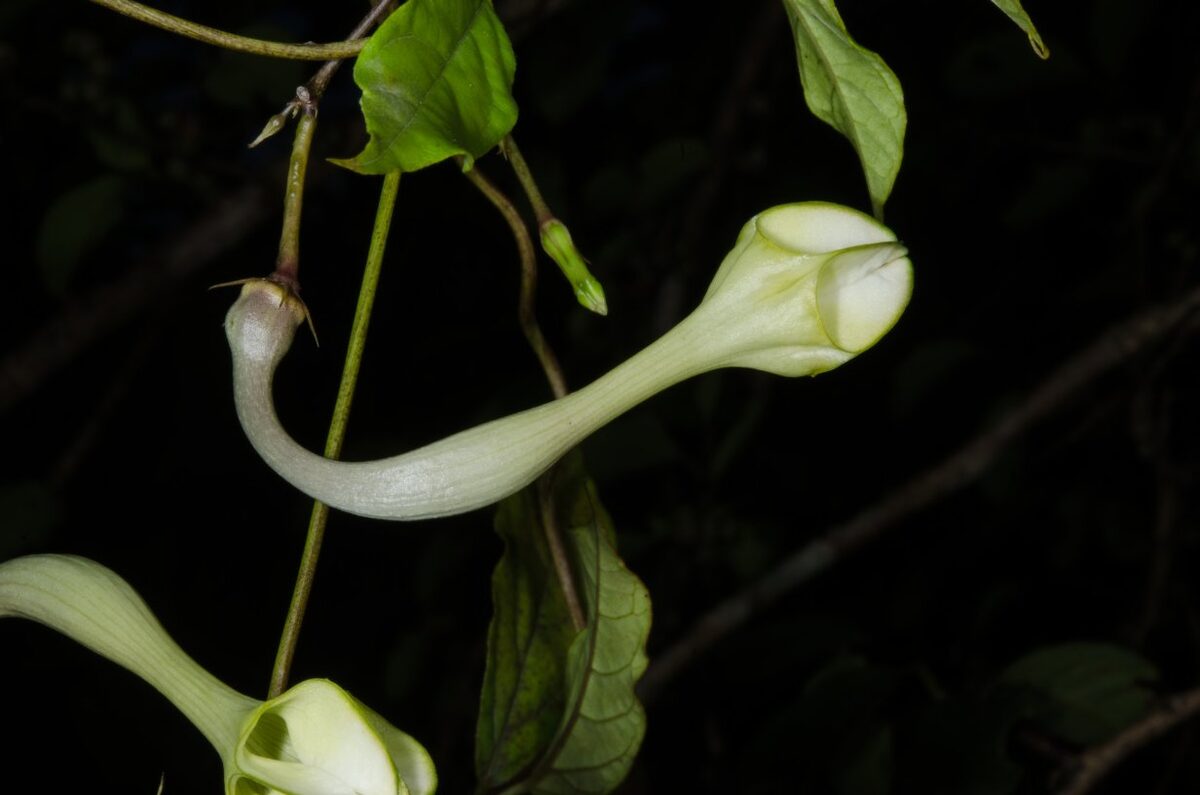
iNaturalist· cc-by
(c) Siddarth Machado, some rights reserved (CC BY), uploaded by Siddarth Machado
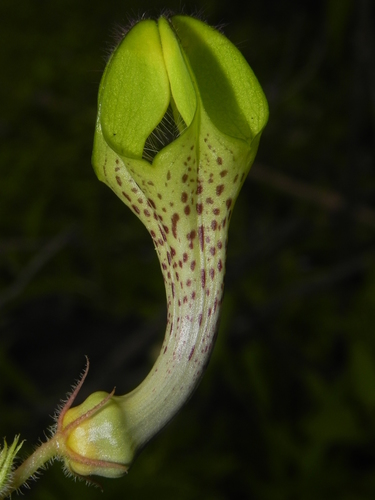
iNaturalist· cc-by
(c) Siddarth Machado, some rights reserved (CC BY), uploaded by Siddarth Machado
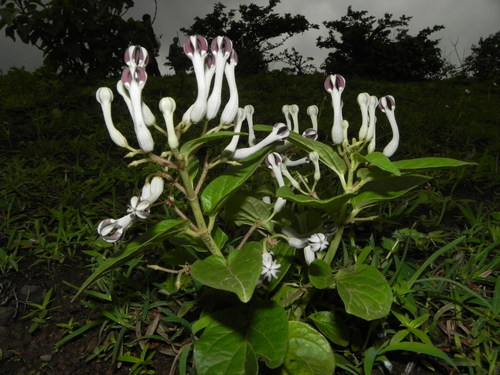
iNaturalist· cc-by
(c) Siddarth Machado, some rights reserved (CC BY), uploaded by Siddarth Machado
Summary
Source: WikipediaDecalepis hamiltonii is a species of plant in the family Apocynaceae. It is endemic to Peninsular India and known by its names of maredu kommulu, nannari kommulu or madina kommulu in Telugu, makali beru or vagani beru in Kannada and magali kizhangu in Tamil is a plant whose root is used in Ayurvedic medicines and for use in pickles and to make sharbat. The English name of swallowroot is sometimes used for the plant and studies have shown that it has insecticidal activity and a potential use in control of stored grain pests. The active ingredient in the root was synthesized and encapsulated with beta-cyclodextrins. The roots were also subjected to supercritical carbon-dioxide based extraction at the Central Food Technological Research Institute, Mysore, India. The plant is often confused with Hemidesmus indicus, Indian sarsaparilla The root contains antioxidants and extraction methods for it have been patented. The popularity of Decalepis in the international market has recently made its price soar and sends worrying signals about it getting being endangered due to over-exploitation.
Description
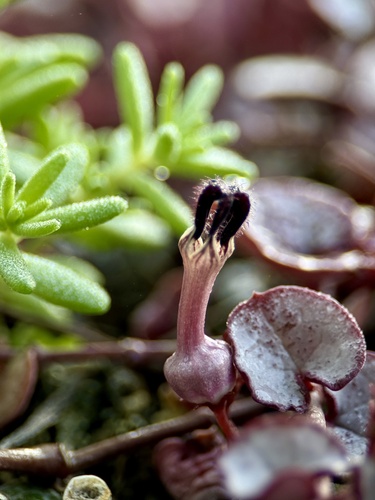
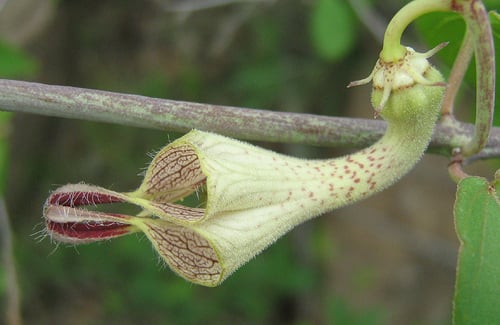
A climbing shrub. It has tuberous roots. The stems and branches can be 5 cm across. The leaves are simple and opposite. They are narrowly oval and 2.5 cm long by 1.5 cm wide. They are folded along their length. The plant has milky latex. The roots have a vanillin like smell. They can be 150 cm long by 3.5 cm wide. There are 4 to 10 roots from one rootstock. The flowers are cream to brown. The fruit follicle is oblong and 5.5 cm long by 3 cm wide. It has a thick crinkled skin.
Edible Uses
The young aromatic roots are used for pickles and as a condiment for meat, and can also be used for coffee. The roots serve as a spice.
Traditional Uses
The young aromatic roots are used for pickles. They are used as a condiment for meat. They are also used for coffee.
This uses section is brief — help expand it
Medicinal Uses
The roots contain antioxidants.
Known Hazards
This plant is at risk due to overharvesting.
Distribution
It is a tropical plant. It grows in deciduous forests.
Where It Grows
Asia, India,
Cultivation
Seeds have a hard seed coat and dormancy.
Propagation
Seed - it has a short viability and is best sown as soon as it is ripe. Presoaking the seeds for 24 hours in warm water improved germination levels. Germination rates are often low, but the seed germinates much better on moist filter paper than it does on moist sand. Germination starts within 2 weeks and continues for another week.. Stem cuttings
Other Uses
The dried, powdered roots have insecticidal properties. The rice weevil (Sitophilus oryzae) is a pest of stored grain, attacking the seeds of several crops, including wheat, rice, and maize. In a trial, wheat grain was mixed with 5% and 10% air-dried root powder and infested with rice weevil. The treatments achieved 96% and 100% mortality respectively, and no progeny emerged from either treatment.
Other Information
It is used for a popular pickles in South India.
Notes
The roots can be used to reduce losses of stored grains due to fungi. The root contains antioxidants. It is an at risk plant due to overharvesting.
Synonyms
Also Known As
Maagalikkizhangu, Madina kommulu, Magali kizhangu, Magalie, Mahali kizhangu, Makali beru, Maredu kommulu, Mavilangum, Nannari
References (15)
- Ambasta, S.P. (Ed.), 2000, The Useful Plants of India. CSIR India. p 164
- Contr. bot. India 64. 1834
- Davis, S.D., Heywood, V.H., & Hamilton, A.C. (eds), 1994, Centres of plant Diversity. WWF. Vol 1 or 2. p 117
- Kannan, M., et al, 2015, Ethnobotanical survey on wild edible plants of Kalrayan Hills, Salem District, Tamil Nadu, India. Global J. Res. Med Plants & Indigen. med. 4(12): 236-246
- Kumar, G.M., & Shiddamallayya, N., 2014, Documentation of Wild Plant Tubers as Food Resources in Hassan District, Karnataka, International Journal of Applied Biology and Pharmaceutical Technology. 5(2) p 91
Show all 15 references Hide references
- Mohan, V. R. & Kalidass, C., 2010, Nutritional and Antinutritional Evaluation of some Unconventional Wild Edible Plants. Tropical and Subtropical Agroecosystems, 12 (2010): 495- 506
- Pradhan, R., et al, 2020, Potential Wild Edible Plants and its Significance in Livelihood of Indigenous People of Male Mahadeshwara Hills, Karnataka. Economic Affairs Vol. 64, No. 4 pp. 01-14
- Rasingam, L., 2012, Ethnobotanical studies on the wild edible plants of Irula tribes of Pillur Valley, Coimbatore district, Tamil Nadu, India. Asian Pacific Journal of Tropical Biomedicine. (2012) S1493-S1497
- Reddy, K. N. et al, 2007, Traditional knowledge on wild food plants in Andhra Pradesh. Indian Journal of Traditional Knowledge. Vol. 6(1): 223-229
- Samydurai, P., et al, 2012, Wild habits of Kolli Hills being staple food of inhabitant tribes of eastern Ghats, Tamil Nadu, India. Indian Journal of Natural Products and Resources. 3(3) September 2012 pp 432-437
- Seidemann J., 2005, World Spice Plants. Economic Usage, Botany, Taxonomy. Springer. p 134
- Singh, H.B., Arora R.K.,1978, Wild edible Plants of India. Indian Council of Agricultural Research, New Delhi. p12
- Srivastava, A & Shivanandappa, T., 2010, Hepatoprotective effect of the root extract of Decalepis hamiltonii against carbon tetrachloride-induced oxidative stress in rats. Food Chemistry 118: 411-417
- Tamil herbs, 2007, Edible Plants of the Tropical Dry Evergreen Forest.
- World Checklist of Useful Plant Species 2020. Royal Botanic Gardens, Kew