Desplatsia subericarpa
Bocq.
No photos yet for Desplatsia subericarpa
Sign in to contribute a photoDescription
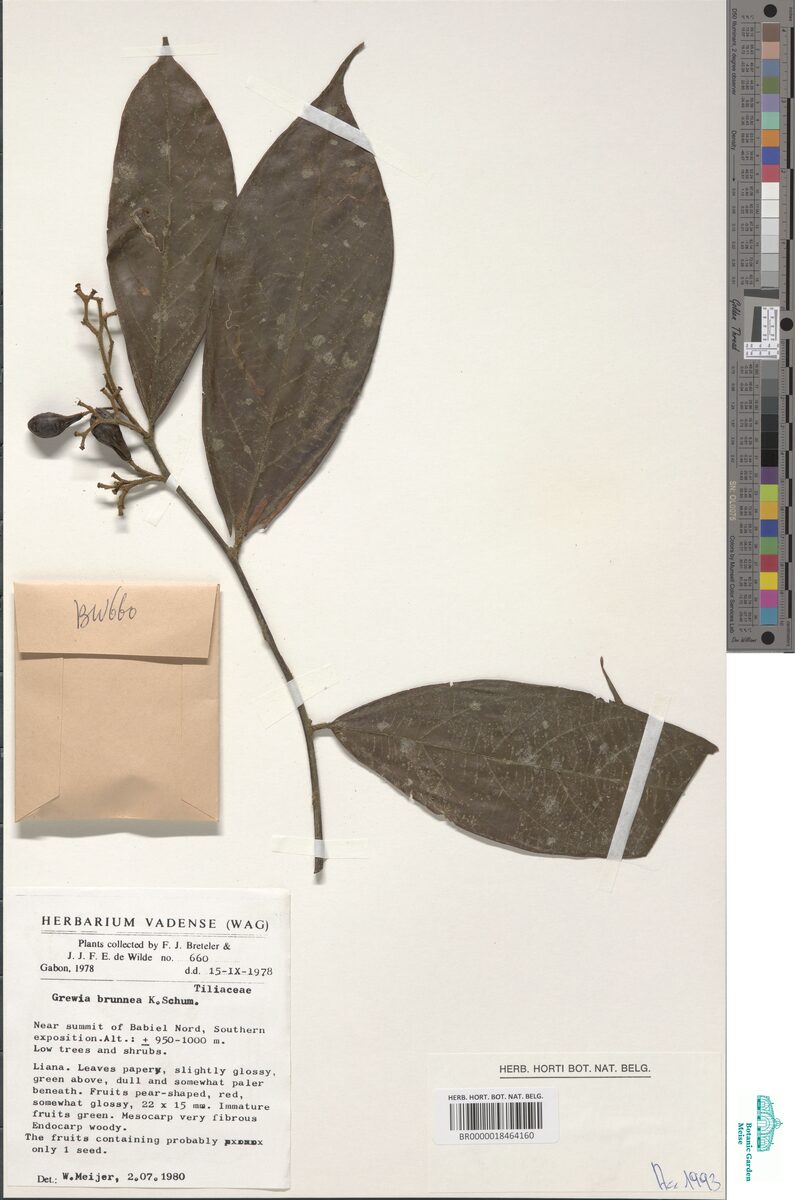
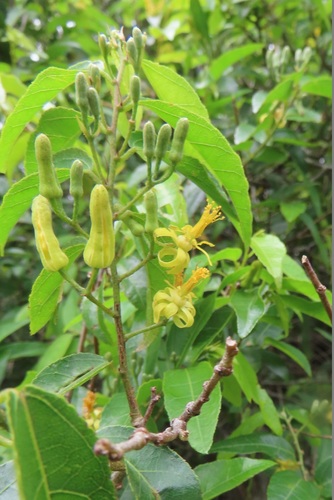
A shrub or small tree. It grows 9 m high. The flowers are pink. The fruit are large and yellow. They are oblong and 9-10 cm long by 7-8 cm wide.
This description is brief — help expand it
Edible Uses
Leaves - cooked and eaten as a vegetable. Other sources mention that the leaves have been used for poisoning. Fruit. Said to be cooked and eaten as a vegetable. The yellow fruit is an oblong-ellipsoid drupe 6 - 10cm long and 5 - 7.5cm wide.It contains a gum changing from yellow through orange and red to black.
Distribution
A tropical plant. It grows as a forest understorey tree.
Where It Grows
Africa, Benin, Cabinda, Cameroon, Central Africa, Central African Republic, CAR, Congo DR, Equatorial Guinea, Gabon, Ghana, Liberia, Nigeria, Sierra Leone, Togo, West Africa,
Other Uses
The fibrous bark is used for making rope. The ripe fruit is boiled to obtain a black dye, which is derived from an orange-red gum present in the fruit. The dye is used for cloth and produces an indelible stain like printer's ink. The fruit is rubbed on the body to prevent animals from biting.
Notes
There are only a few Desplatsia confined to West Africa. Also put in the family Sparrmanniaceae.
Also Known As
Esonowisamfie-bere, Ila-erin, Oghia wogha
References (6)
- Abbiw, D.K., 1990, Useful Plants of Ghana. West African uses of wild and cultivated plants. Intermediate Technology Publications and the Royal Botanic Gardens, Kew. p 46
- Burkill, H. M., 1985, The useful plants of west tropical Africa, Vol. 2. Kew.
- Grivetti, L. E., 1980, Agricultural development: present and potential role of edible wild plants. Part 2: Sub-Saharan Africa, Report to the Department of State Agency for International Development. p 33
- Grubben, G. J. H. and Denton, O. A. (eds), 2004, Plant Resources of Tropical Africa 2. Vegetables. PROTA, Wageningen, Netherlands. p 561
- Keay, R.W.J., 1989, Trees of Nigeria. Clarendon Press, Oxford. p 114
Show all 6 references Hide references
- World Checklist of Useful Plant Species 2020. Royal Botanic Gardens, Kew