Trilepisium madagascariense
DC.
False fig, Urn fig
iNaturalist· cc-by-nc
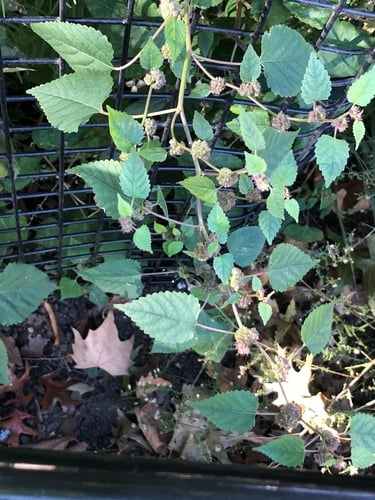
(c) Linda Loffler, some rights reserved (CC BY-NC), uploaded by Linda Loffler
iNaturalist· cc-by-nc
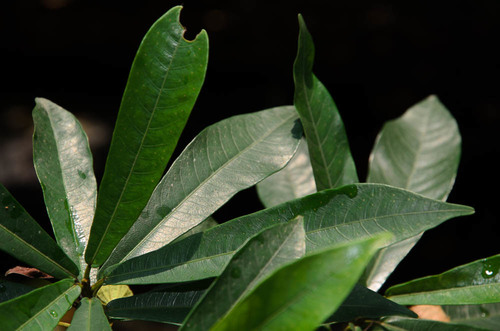
(c) Troos van der Merwe, some rights reserved (CC BY-NC)
Summary
Source: WikipediaTrilepisium madagascariense, the urnfig or false-fig, is a species of plant in the family Moraceae, with an extensive range in the subtropical and tropical Afrotropics. It grows to a medium-sized or large tree in primary or secondary forest, or in forest patches, and is rarely cultivated.
Description
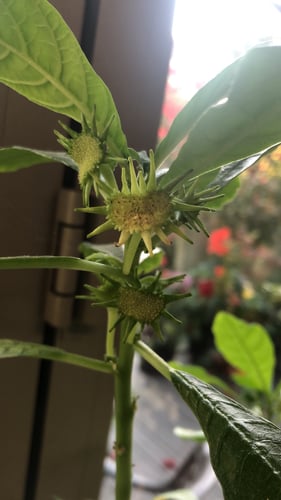
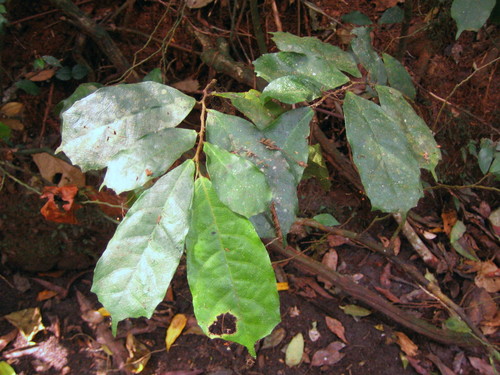
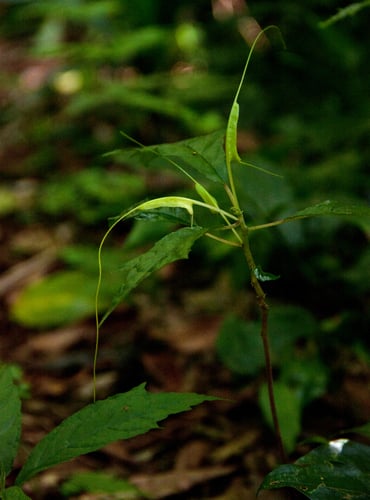
It is a large tree. It grows to 17-35 m high. The trunk is furrowed. The bark is grey. The leaves are simple and glossy. The leaves are rigid and narrowly oval. They are oblong and 7-14 cm long by 3-6.5 cm wide. They are very dark green and glossy. They are leathery. They taper from a broad base to a rounded tip. The veins form loops. The flowers are separate but in the same receptacle. The flowers are urn shaped being swollen in the middle and narrowing at the top. They are in the axils of the leaves. The receptacle is about 1.5 cm long. It is something like a fig. It has a wide opening at the top. There are many male flowers with stamens sticking out the end of the receptacle. The female flowers are imbedded in the fleshy receptacle. The fruit is a nut. These are embedded in the fleshy receptacle. The whole structure is about 2 cm long. The fruit is fleshy and contains a single seed.
Edible Uses
The leaves are cooked as a vegetable. The ripe fruit are eaten fresh or roasted, and the seeds (with skin removed) are roasted and eaten as a nut. The fruit are especially popular with children.
Traditional Uses
The leaves are used as a vegetable. They are cut then cooked. The seeds with the skin removed are roasted as a nut and eaten. The ripe fruit are eaten fresh. They are also roasted.
Medicinal Uses
Roots are pounded, soaked in cold water and the infusion mixed with porridge made out of finger millet flour. The porridge is drunk as a remedy for impotence.
Distribution
A tropical plant. It grows in the lowlands and highlands. It grows along the edges of rivers and in patches of evergreen forest. It extends into the savannah in West Africa. It grows from sea level to 2,000 m above sea level.
Where It Grows
Africa, Angola, Benin, Cameroon, Central Africa, Central African Republic, CAR, Congo DR, Congo R, Côte d'Ivoire, East Africa, Eswatini, Ethiopia, Ghana, Guinea, Guinée, Ivory Coast, Kenya, Madagascar, Malawi, Mozambique, Nigeria, Sao Tome and Principe, Seychelles, South Africa, Southern Africa, Swaziland, Tanzania, Togo, Uganda, West Africa, Zambia, Zimbabwe,
Cultivation
Plants can be grown from fresh seeds. Plants can be budded. It can be grown from cuttings.
Other Uses
A latex is obtained from the bark. It turns orange to blood-red upon exposure to air. Used to waterproof bags, it is also sometimes used to adulterate rubber. The milky sap is the source of a red dye. The wood is strong and heavy. It is used for building poles, tool handles, spoons, bedsteads, bows, gunstocks and carvings. The wood is used for fuel.
Production
In Tanzania fruit are collected from October to December.
Other Information
The fruit are especially eaten by children.
Notes
There is only one variable Trilepisium species.
Synonyms
Also Known As
Anziga, Bastard fig, Bumbu, Daocou, Daocu, Fongi, Gabo, Gagut, Gemuy, Goboy, Gogee, Indoli, Kid, Koko eran, Kumbu, M'tundui, Metchi, Mfilafila, Mkwenampelele, Mrua, Msisingololo, Mzughu, Mzugo, Nsekena, Nsekeni, Ntombo a ngola, Okure, Omukumbwe, Osomzo, Oze, Pongi, Saworo, Toukoutou, Triwa, Tulukpala, Ukputu
References (36)
- Abbiw, D.K., 1990, Useful Plants of Ghana. West African uses of wild and cultivated plants. Intermediate Technology Publications and the Royal Botanic Gardens, Kew. p 46 (Also as Bosqueia angolensis)
- Atato, A., et al, 2010, Diversity of Edible Wild Fruit Tree Species of Togo. Global Science Books.
- Awas, T., 1997, A Study on the Ecology and Ethnobotany of Non-cultivated Food Plants and Wild Relatives of Cultivated crops in Gambella Region, Southwestern Ethiopia. Addis Ababa University. p 59
- Bekele-Tesemma A., Birnie, A., & Tengnas, B., 1993, Useful Trees and Shrubs for Ethiopia. Regional Soil Conservation Unit. Technical Handbook No 5. p 438
- Bircher, A. G. & Bircher, W. H., 2000, Encyclopedia of Fruit Trees and Edible Flowering Plants in Egypt and the Subtropics. AUC Press. p 62 (As Bosqueia angolensis)
Show all 36 references Hide references
- Burkill, H. M., 1985, The useful plants of west tropical Africa, Vol. 4. Kew.
- Codjia, J. T. C., et al, 2003, Diversity and local valorisation of vegetal edible products in Benin. Cahiers Agricultures 12:1-12 (As Bosqueia angolensis)
- Cunningham, A. B., 1996, People, park and plant use. Division of Ecological Sciences, UNESCO. p 54
- Danforth, R.M., & Boren, P.D., 1997, Congo Native fruits. Twenty-five of the best. Privately published. p 69 (As Bosqueia angolensis)
- East African Herbarium records, 1981,
- Grubben, G. J. H. and Denton, O. A. (eds), 2004, Plant Resources of Tropical Africa 2. Vegetables. PROTA, Wageningen, Netherlands. p 565
- Hoare A. L., 2007, The Use of Non-timber Forest Products in the Congo Basin. Constraints and Opportunities. Rainforest Foundation. p 41
- http://aflora.africa.kyoto-u.ac.jp (As Bosqueia congolensis S. Moore)
- Jardin, C., 1970, List of Foods Used In Africa, FAO Nutrition Information Document Series No 2.p 39, 123 (As Bosqueia angolensis)
- Latham, P., 2004, Useful Plants of Bas-Congo province. Salvation Army & DFID p 282
- Lulekal, E., et al, 2011, Wild edible plants in Ethiopia: a review on their potential to combat food insecurity. Afrika Focus - Vol. 24, No 2. pp 71-121
- Mawunu, M., et al, 2022, Ethnobotanical uses of wild edible plants of Mucuba municipality, Angola. Natural Resources for Human Health. 2022, 0:1-10
- Menninger, E.A., 1977, Edible Nuts of the World. Horticultural Books. Florida p 74 (As Bosqueia angolensis)
- Msuya, T. S., et al, 2010, Availability, Preference and Consumption of Indigenous Foods in the Eastern Arc Mountains, Tanzania, Ecology of Food and Nutrition, 49:3, 208-227
- Nkeoua, G. & Boundzanga, G. C., 1999, Donnees sur les produits forestieres non ligneux en Republique du Congo. FAO. p 39
- Palgrave, K.C., 1996, Trees of Southern Africa. Struik Publishers. p 102
- Peters, C. R., O'Brien, E. M., and Drummond, R.B., 1992, Edible Wild plants of Sub-saharan Africa. Kew. p 153
- Prodr. 2:639. 1825 [ As madagascariensis]
- Pl. uteis 271. 1884 (As Bosqueia angolensis)
- Reitveld, S., 2013, The Animals and Plants of the Zazamalala Forest in Western Madagascar. p 120
- Ruffo, C. K., Birnie, A. & Tengnas, B., 2002, Edible Wild Plants of Tanzania. RELMA p 678
- Schatz, G.E., 2001, Generic Tree Flora of Madagascar. Royal Botanical Gardens, Kew and Missouri Botanical Garden. p 278
- Senbeta, F., et al, 2013, Diversity of Useful Plants in the Coffee Forests of Ethiopia. Ethnobotany Research & Applications 11:049-069
- Swaziland's Flora Database http://www.sntc.org.sz/flora
- Terashima, H., & Ichikawa, M., 2003, A comparative ethnobotany of the Mbuti and Efe hunter-gatherers in the Ituri Forest, Democratic Republic of Congo. African Study Monographs, 24 (1, 2): 1-168, March 2003 (As Bosquiea angolensis)
- Termote, C., et al, 2011, Eating from the wild: Turumbu, Mbole and Bali traditional knowledge of non-cultivated edible plants, District Tshopo, DRCongo, Gen Resourc Crop Evol. 58:585-618
- Vivien, J. & Faure, J.J., 1985, Abres des forets dense d'Afrique Centrale. Agence de Cooperation Culturelle et Technique. Paris. p 316
- Vivien, J., & Faure, J.J., 1996, Fruitiers Sauvages d'Afrique. Especes du Cameroun. CTA p 225
- White, F., Dowsett-Lemaire, F. and Chapman, J. D., 2001, Evergreen Forest Flora of Malawi. Kew. p 398
- World Checklist of Useful Plant Species 2020. Royal Botanic Gardens, Kew
- Yimer, A., et al, 2021, Ethnobotanical study of wild edible plants used by Meinit Ethnic Community at Bench-Maji Zone, Southwest Ethiopia. Research Square. p 6