Digitaria ciliaris
(Retz.) Koeler
Summer grass, Tropical finger grass
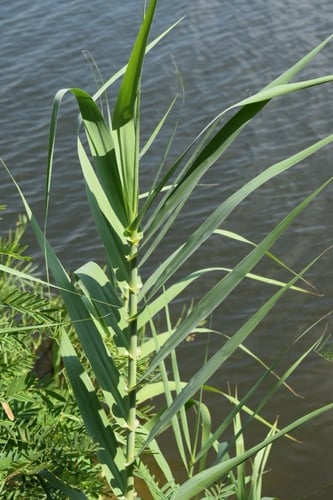
iNaturalist· cc-by-nc
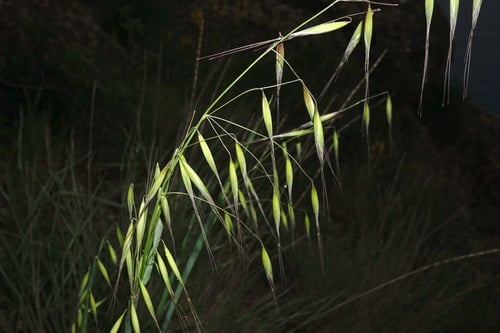
(c) Chuangzao, some rights reserved (CC BY-NC), uploaded by Chuangzao
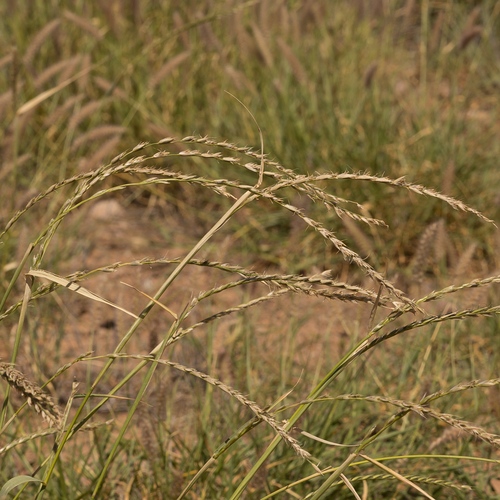
iNaturalist· cc-by-nc
(c) cesdamess, some rights reserved (CC BY-NC), uploaded by cesdamess
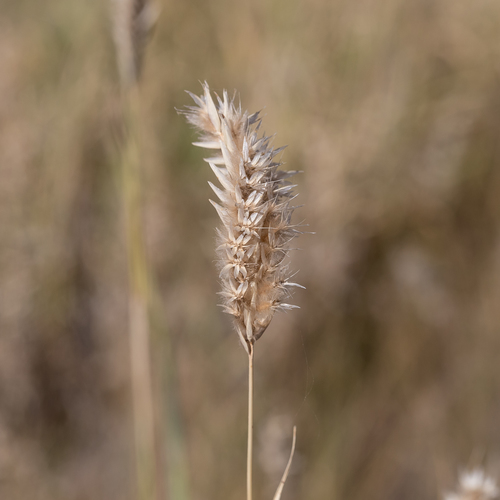
iNaturalist· cc-by
(c) Dan Johnson, some rights reserved (CC BY), uploaded by Dan Johnson
Summary
Source: WikipediaDigitaria ciliaris is a species of grass known by the common names southern crabgrass, tropical finger-grass, tropical crabgrass or summer grass. The grass is known as "ගුරු තණ - guru thana" in Sri Lanka.
Description
A wild millet grass. It is an annual grass. It branches and roots at the lower nodes. It is 30-100 cm tall. The leaf blade is 5-20 cm long. The flowering stalk has 3 spike like stalks each 3-20 cm long. The spikelets are 2.5-3.5 mm long. It is a very variable plant.
Edible Uses
One report indicates the plant is edible but does not specify which part. It is a wild millet grass with possibly edible seeds.
Medicinal Uses
None known
Distribution
It grows in the tropics and subtropics. In Argentina it grows from sea level to 2,000 m above sea level. Tasmanian Herbarium. In Sichuan and Yunnan.
Where It Grows
Africa, American Samoa, Argentina, Asia, Australia, Botswana, Brazil, Burkina Faso, Chile, China, East Africa, Easter Island, Eswatini, Europe, Fiji, Ghana, Guiana, Guianas, Guinea, Guinée, Guinea-Bissau, Guyana, Himalayas, India, Iran, Iraq, Korea, Mali, Marquesas, Middle East, Mozambique, Myanmar, Nepal, Norfolk Island, North America, Pacific, Pakistan, Paraguay, Rotuma, SE Asia, Sierra Leone, South Africa, South America, Southern Africa, Sri Lanka, St Helena, St. Kitts and Nevis, Suriname, Swaziland, Taiwan, Tasmania, Tibet, Tuvalu, Uruguay, USA, Venezuela, West Africa, Zimbabwe,
Cultivation
Prefers a moist, sandy or loamy soil, responding very well in conditions of high soil fertility. The plant is a bad weed in cropping areas, growing well in plantations of crops such as rubber and oil palm. It is classified as invasive in many areas.
Propagation
Seed.
Other Uses
Used as fodder and forage. The cultivar Red River is a high-yielding forage and conservation-type cultivar developed and released in 1988. Also used in agroforestry and soil conservation applications.
Other Information
It is harvested as a wild cereal in times of scarcity.
Notes
There are about 250 Digitaria species. Possibly not naturalised in Tasmania.
Synonyms
Also Known As
a crab grass, Arisipillu, Cecele, Chansarieu, Djadje, Djadjin, Etupu, Fundo-bravo, Fonhe-tchole, Nwa-che-myet, Takri, Takria, Tara, Shikool, Xian mao ma tang
References (19)
- Abbiw, D.K., 1990, Useful Plants of Ghana. West African uses of wild and cultivated plants. Intermediate Technology Publications and the Royal Botanic Gardens, Kew. p 25
- Ambasta, S.P. (Ed.), 2000, The Useful Plants of India. CSIR India. p 170 and p 172 (As Digitaria adscendens)
- Blumea 1:92. 1934 (As Digitaria adscendens)
- Busson, 1965,
- Curtis, W.M., & Morris, D.I., 1994, The Student's Flora of Tasmania. Part 4B St David's Park Publishing, Tasmania, p 347
Show all 19 references Hide references
- Dashorst, G.R.M., and Jessop, J.P., 1998, Plants of the Adelaide Plains & Hills. Botanic Gardens of Adelaide and State Herbarium. p 172
- Descr. Gram. 27. 1802
- Flora of Australia Volume 49, Oceanic Islands 1, Australian Government Publishing Service, Canberra. (1994) p 491
- Gallagher, D. E., 2010, Farming beyond the escarpment: Society, Environment, and Mobility in Precolonial Southeastern Burkina Faso. PhD University of Michigan.
- Hussey, B.M.J., Keighery, G.J., Cousens, R.D., Dodd, J., Lloyd, S.G., 1997, Western Weeds. A guide to the weeds of Western Australia. Plant Protection Society of Western Australia. p 50
- Jardin, C., 1970, List of Foods Used In Africa, FAO Nutrition Information Document Series No 2.p 2 (As Digitaria adscendens)
- Kiple, K.F. & Ornelas, K.C., (eds), 2000, The Cambridge World History of Food. CUP p 116
- Paczkowska, G. & Chapman, A.R., 2000, The Western Australian Flora. A Descriptive Catalogue. Western Australian Herbarium. p 101
- Peduruhewa, P. S., et al, 2021, Potential of Underutilized Wild Edible Plants as the Food for the Future – A Review. Journal of Food Security, Vol. 9, No. 4, 136-147
- Peters, C. R., O'Brien, E. M., and Drummond, R.B., 1992, Edible Wild plants of Sub-saharan Africa. Kew. p 21
- Swaziland's Flora Database http://www.sntc.org.sz/flora
- Tasmanian Herbarium Vascular Plants list p 84
- Thaman, R. R, 2016, The flora of Tuvalu. Atoll Research Bulletin No. 611. Smithsonian Institute p 53
- World Checklist of Useful Plant Species 2020. Royal Botanic Gardens, Kew