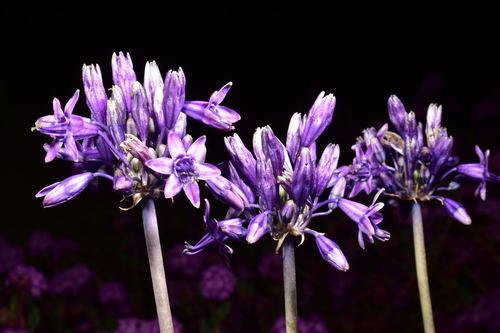
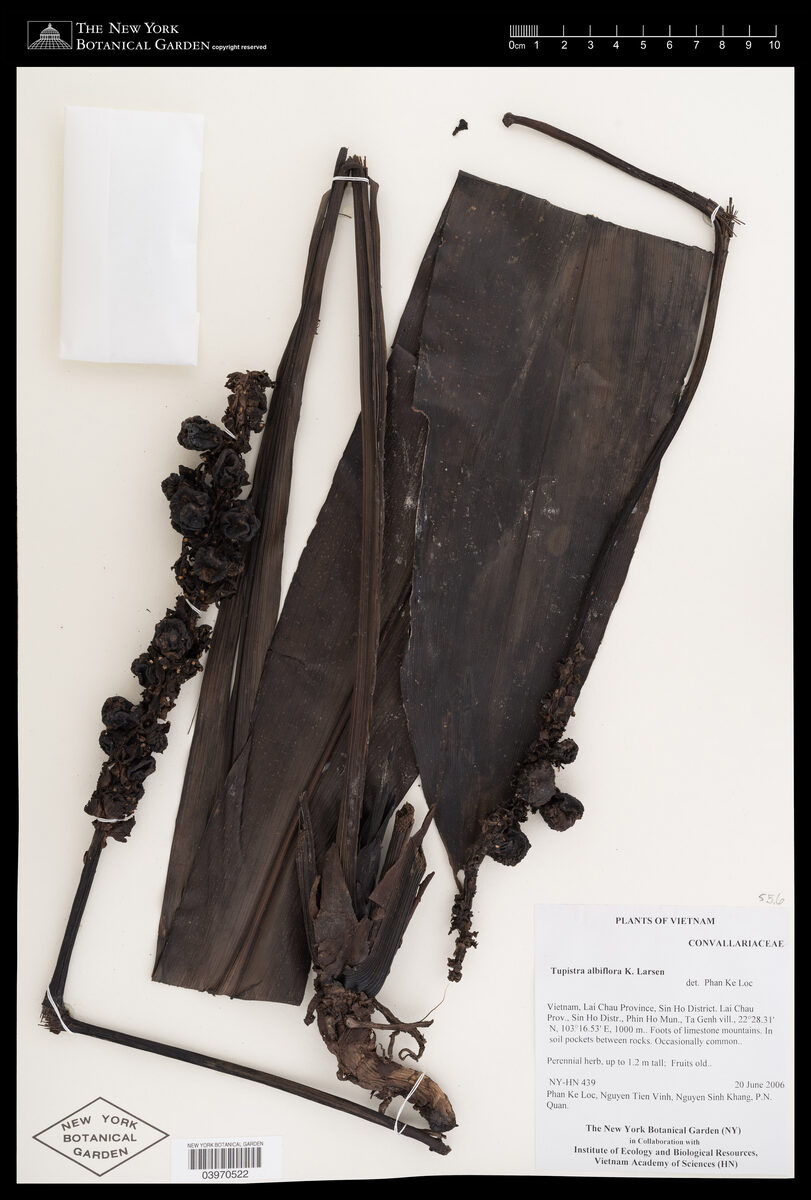
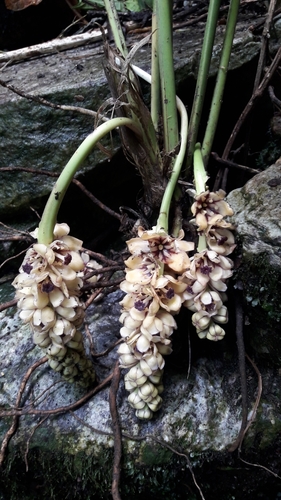
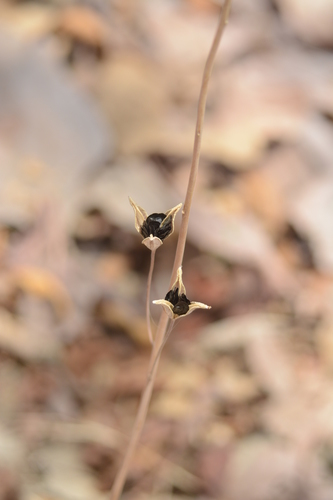
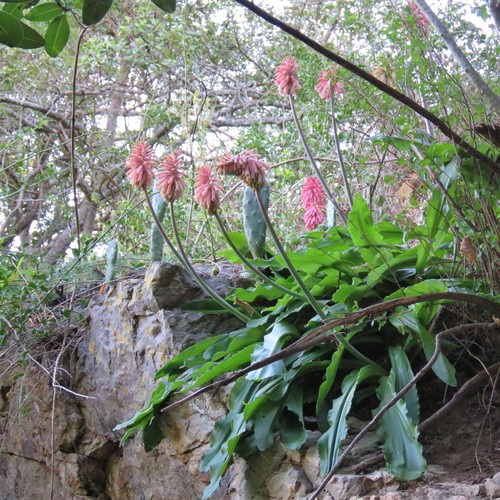
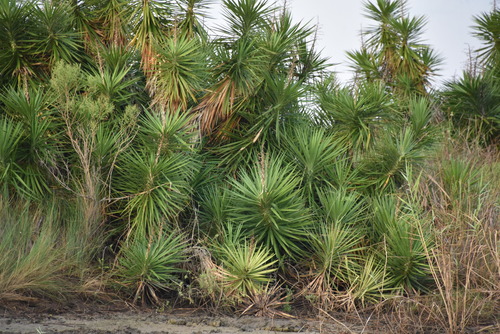
Asparagus adscendens
Roxb.
wikimedia· cc-by-sa
Wikimedia Commons - Atudu
wikimedia· cc-by-sa
Wikimedia Commons - DenesFeri
Summary
An evergreen shrub remaining in leaf year-round. Dioecious and bee-pollinated, it requires both male and female plants for seed production and is not self-fertile. It tolerates light sandy, medium loamy, and heavy clay soils with good drainage, thriving in mildly acid to mildly alkaline pH. The plant grows in semi-shade to full sun and prefers moist soil.
Description
An evergreen shrub. It is prickly Male and female flowers are in separate plants.
This description is brief — help expand it
Edible Uses
Edible Parts: Root Shoots Stem Edible Uses: The plant is a source of a nutritious starch that can be used like salep (which is obtained from various species of orchid). The part of the plant that is used is not specified but is most likely to be the root. To make salep, the root is dried and ground into a powder. The young shoots are probably edible, used like asparagus.
Traditional Uses
The young leaves are used as a vegetable. The tuberous roots are pickled.
This uses section is brief — help expand it
Medicinal Uses
Demulcent Diaphoretic Dysentery Galactogogue Stimulant The roots are demulcent, diaphoretic, galactogogue and stimulant. They are useful in the treatment of diarrhoea, dysentery and general debility.
Distribution
It is a subtropical to temperate plant. It is best in moist soil. It can grow in light shade. It grows between 500-1,800 m above sea level.
Where It Grows
Asia, Afghanistan, Himalayas, India, Iran, Middle East,
Cultivation
We have very little information on this species and do not know if it will be hardy in Britain. The following notes are based on the general needs of the genus. Easily grown in any good garden soil. Prefers a rich sandy loam. Dioecious. Male and female plants must be grown if seed is required.
Propagation
Seed - pre-soak for 12 hours in warm water and then sow in spring or as soon as the seed is ripe in early autumn in a greenhouse. It usually germinates in 3 - 6 weeks at 25°c. Prick out the seedlings into individual pots when they are large enough to handle and grow them on in a sunny position in the greenhouse for their first winter. Plant them out into their permanent positions in late spring or early summer. Division in early spring as the plant comes into growth.
Other Uses
None known Special Uses
Notes
There are between 160-300 Asparagus species. It is used in local medicines.
Also Known As
Dholi-musali, Kairu, Safed musli, Sanspour, Satavar, Satawari, Sat-musli, Stawar, Sufed-musli, Ujli-musli
References (8)
- Ambasta S.P. (Ed.), 2000, The Useful Plants of India. CSIR India. p 59
- Bhatia, H., et al, 2018, Traditionally used wild edible plants of district Udhampur, J&K, India. Journal of Ethnobiology and Ethnomedicine (2018) 14:73
- Bircher, A. G. & Bircher, W. H., 2000, Encyclopedia of Fruit Trees and Edible Flowering Plants in Egypt and the Subtropics. AUC Press. p 45
- Bohra, N., et al, 2017, Ethnobotany of wild edible plants traditionally used by the local people in the Ramnagar regions from Nainital District, Uttarakhand, India. Biolife 5(1): 12-19
- Fl. ind. ed. 1832, 2:153. 1832
Show all 8 references Hide references
- Hedrick, U.P., 1919, (Ed.), Sturtevant's edible plants of the world. p 80
- Plants for a Future database, The Field, Penpol, Lostwithiel, Cornwall, PL22 0NG, UK. http://www.scs.leeds.ac.uk/pfaf/
- Singh, H.B., Arora R.K.,1978, Wild edible Plants of India. Indian Council of Agricultural Research, New Delhi. p11, 18