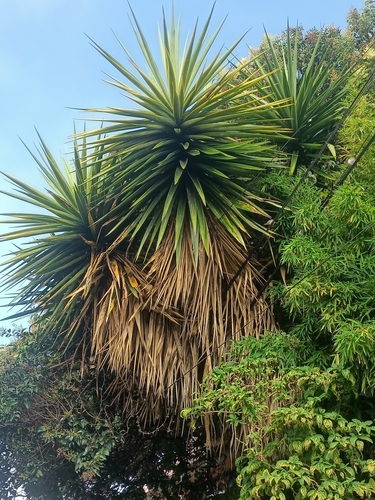
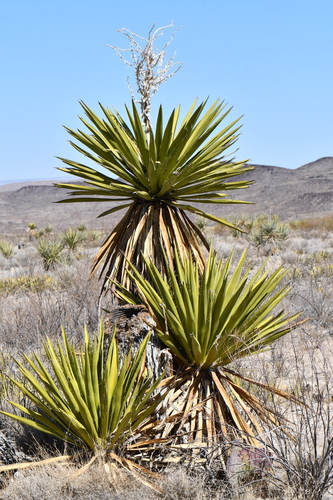
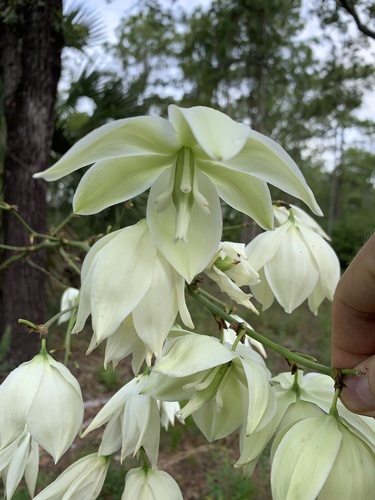
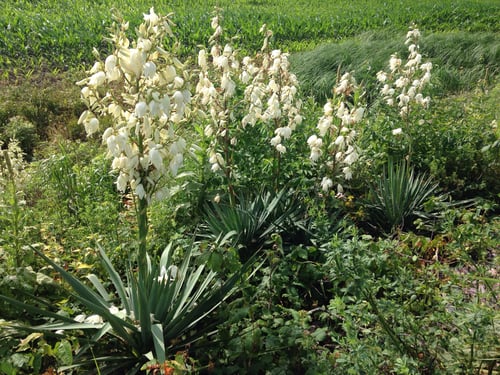
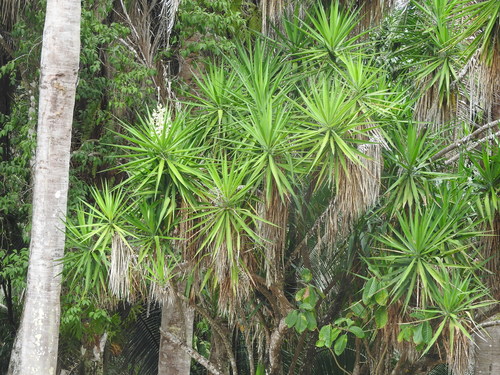
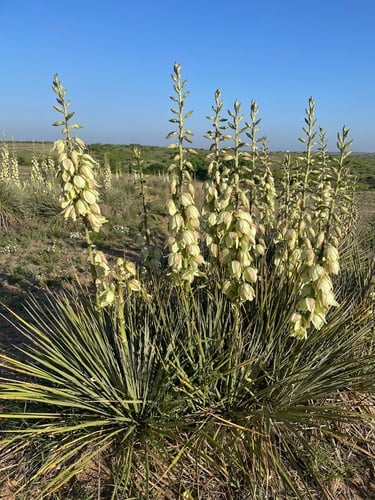
Dasylirion serratifolium
(Karw.) Zucc.
Sotol
iNaturalist· cc-by-sa
(c) Juan Cruzado Cortés, some rights reserved (CC BY-SA), uploaded by Juan Cruzado Cortés
iNaturalist· cc-by-sa
(c) Juan Cruzado Cortés, some rights reserved (CC BY-SA), uploaded by Juan Cruzado Cortés
iNaturalist· cc-by-nc
(c) Leticia Soriano Flores, some rights reserved (CC BY-NC), uploaded by Leticia Soriano Flores
Summary
Source: WikipediaDasylirion serratifolium, or the sandpaper sotol, is a plant species in the family Asparagaceae, native to the Mexican states of Hidalgo and Oaxaca. It is often in cultivation as an ornamental in other places, including in Europe.
Description
A spiky plant. It only has a short stem. The leaves are 1 m long and 2-4 cm wide. They are whitish.
This description is brief — help expand it
Edible Uses
The stems are roasted and fermented for savory preparations and alcoholic drinks. The leaf bases and flower shaft are eaten, with the sweet pith extracted by roasting or boiling the head for 24 hours. The leaves are also used in savory preparations.
Traditional Uses
The stems are used for savoury preparations and alcoholic drinks. They are roasted and allowed to ferment. The leaves are trimmed off the head and the head is then roasted or boiled and the sweet pith eaten. The heads are baked for 24 hours. The leaves are used for savoury preparations. The flower shaft is eaten.
Distribution
It is a tropical plant. It grows in dry rocky places. It can grow in arid places.
Where It Grows
Africa, Egypt, Mexico, North Africa, North America, USA,
Other Uses
We have no specific information for this species, the following notes are general to the genus. The tough leaves contain a fibre suitable for making rough cordage. This fibre also seems to be suitable for the manufacture of paper. The leaves are often used in weaving, for making baskets, rough hats, mats, handicrafts etc.. The leaves are also much used for thatching. When one of the plants, covered with the dead leaves, is set on fire it will burn for some time, and the burned stumps are a familiar sight in regions where the plants occur. The leaf bases remaining on such burned plants, when removed from the trunk, make very satisfactory beds upon camping expeditions, for they are elastic and not uncomfortably hard. The trunks are used frequently in constructing traditional houses. The trunks are used for fuel.
Notes
Also put in the Dracaenaceae and Nolinaceae families.
Synonyms
Also Known As
Cucharilla, Manitas
References (5)
- Arellanes, Y., et al, 2013, Influence of traditional markets on plant management in the Tehuacan Valley. Journal of Ethnobiology and Ethnomedicine 9:38
- Casas, A., et al, 2016, Ethnobotany for Sustainable Ecosystem Management: A Regional Perspective in the Tehuacán Valley. In Lira, R.,et al (eds.) Ethnobotany of Mexico. Springer Chp. 8 p 199
- Rangel-Landa, S., et al, 2017, Sociocultural and ecological factors influencing management of edible and non-edible plants: the case of Ixcatlan, Mexico. Journal of Ethnobiology and Ethnomedicine. 13:59
- Royal Botanic Gardens, Kew (1999). Survey of Economic Plants for Arid and Semi-Arid Lands (SEPASAL) database. Published on the Internet; http://www.rbgkew.org.uk/ceb/sepasal/internet [Accessed 16th April 2011]
- World Checklist of Useful Plant Species 2020. Royal Botanic Gardens, Kew