Physalis lagascae
Roem. & Schult.
iNaturalist· cc-by-nc
(c) Sune Holt, some rights reserved (CC BY-NC), uploaded by Sune Holt
iNaturalist· cc-by-nc
(c) Sune Holt, some rights reserved (CC BY-NC), uploaded by Sune Holt
iNaturalist· cc-by-nc
(c) Heriberto Ávila-González, some rights reserved (CC BY-NC), uploaded by Heriberto Ávila-González
Description
An annual herb. It grows 90 cm high. The stems are weak. It has many branches. It is covered with hairs. It is often tinged purple. The branches are angular. The leaf stalks can have wings and sheath the stem at the base. The leaf blade is 2-8 cm long by 1-5 cm wide. It can vary in shape. The flowers occur singly. They are at the side of the leaf stalk. The flowers are greenish-yellow. The fruit are yellow and 6-10 mm across. The seeds are light brown.
Edible Uses
The yellow fruits are eaten raw, particularly by children, and the leaves can also be used as a vegetable.
Traditional Uses
The fruit are eaten raw.
This uses section is brief — help expand it
Medicinal Uses
The fruit is traditionally used in FPI (Filipino Pharmacopoeia).
Known Hazards
Although providing many well-known foods for people, including the potato, tomato, pepper and aubergine, most plants in the family Solanaceae also contain poisonous alkaloids. Unless there are specific entries with information on edible uses, it would be unwise to ingest any part of this plant.
Distribution
A tropical plant. A common weed in cultivated areas.
Where It Grows
Africa, Antilles, Argentina, Bolivia, Brazil, Burkina Faso, Caribbean, Côte d'Ivoire, East Africa, Ethiopia, Europe, Ghana, Guinea, Guinée, Guinea-Bissau, Ivory Coast, Kenya, Malawi, Mexico, Mozambique, Nauru, Nigeria, North America, Pacific, Senegal, Sierra Leone, South America*, Southern Africa, Spain, Uganda, Venezuela, West Africa, Zambia, Zimbabwe,
Cultivation
Physalis lagascae is native to seasonally dry tropical regions. It is often found as a pantropical weed, being particularly well-suited to seasonally dry climates, but it is by no means restricted to them.
Other Uses
The plant is a tertiary wild relative of, and potential gene donor to low ground-cherry.
Other Information
The fruit are eaten especially by children.
Notes
There are about 75-100 Physalis species.
Synonyms
Also Known As
Awet, Awt, Pao-pao
References (9)
- Asfaw, Z. and Tadesse, M., 2001, Prospects for Sustainable Use and Development of Wild Food Plants in Ethiopia. Economic Botany, Vol. 55, No. 1, pp. 47-62 (As Physalis lagascae)
- Burkill, H. M., 1985, The useful plants of west tropical Africa, Vol. 5. Kew.
- FAO, 1988, Traditional Food Plants, FAO Food and Nutrition Paper 42. FAO Rome p 407 (As Physalis lagascae)
- Flora Zambesiaca. http://apps.kew.org/efloras
- Grivetti, L. E., 1980, Agricultural development: present and potential role of edible wild plants. Part 2: Sub-Saharan Africa, Report to the Department of State Agency for International Development. p 43
Show all 9 references Hide references
- Mutie, F. M., et al, 2023, Important Medicinal and Food Taxa (Orders and Families) in Kenya, Based on Three Quantitative Approaches. Plants 2023, 12, 1145
- Ojelel, S., et al, 2019, Wild edible plants used by communities in and around selected forest reserves of Teso-Karamoja region, Uganda. Journal of Ethnobiology and Ethnomedicine (2019) 15:3
- Seyoum, Y., et al, 2015, Edible Wild Fruit Trees and Shrubs and Their Socioeconomic Significance in Central Ethiopia. Ethnobotany Research & Applications. 14:183-197
- World Checklist of Useful Plant Species 2020. Royal Botanic Gardens, Kew
More from Solanaceae
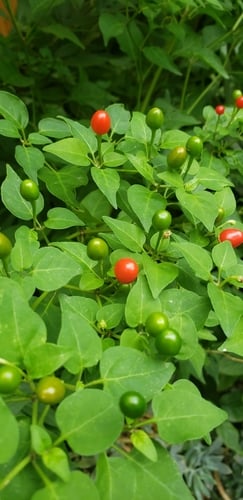
Capsicum annuum var. abbreviatum
Wrinkled peppers
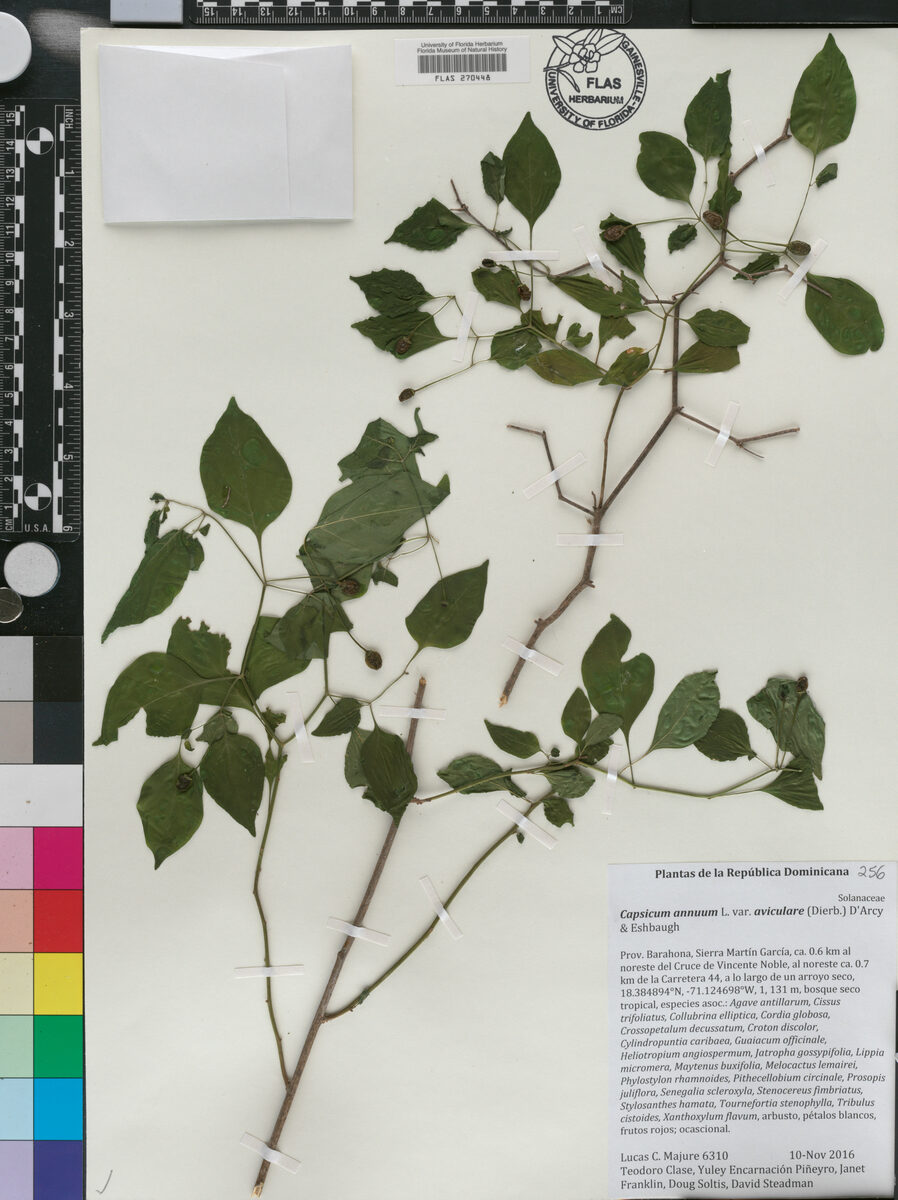
Capsicum annuum var. aviculare - (Dierb.) D'Arcy & Eschbaugh
Cayenne Pepper
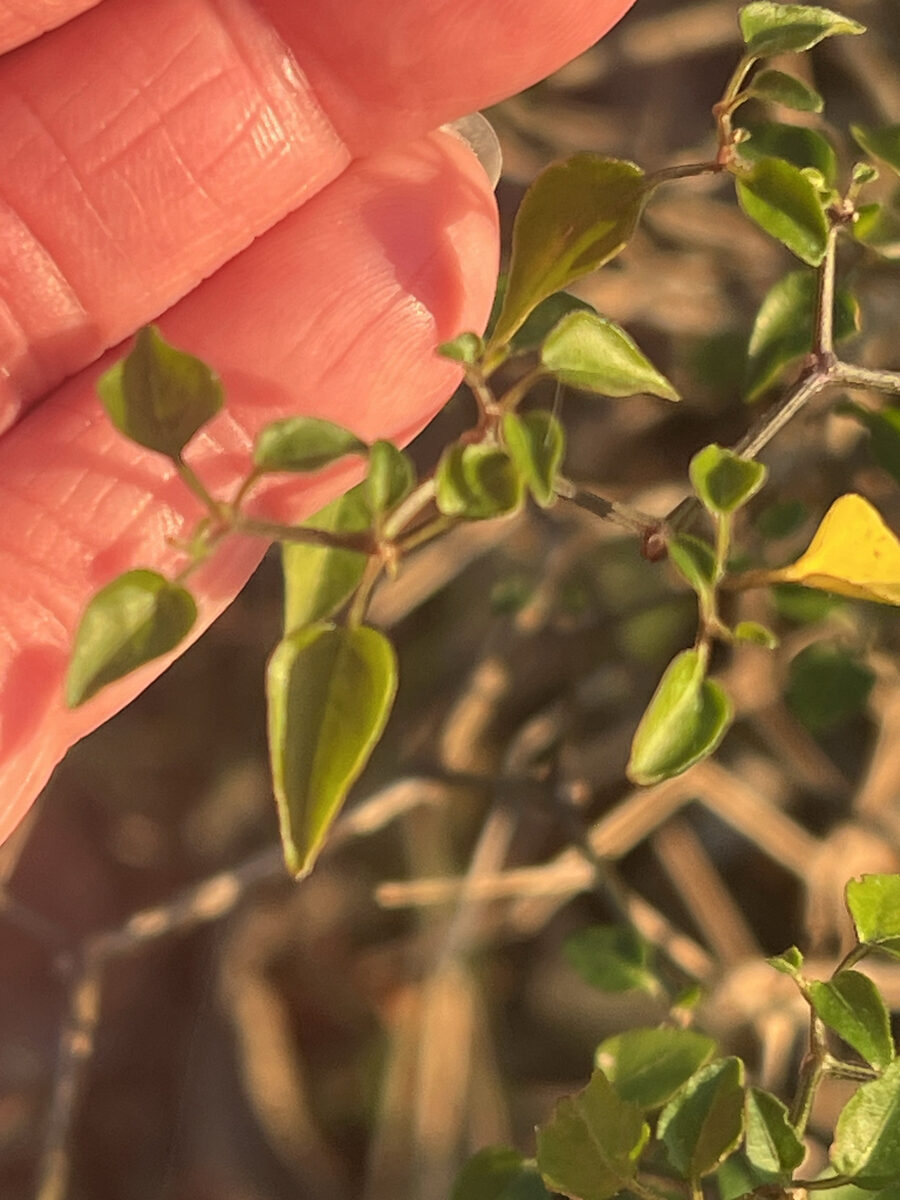
Capsicum annuum var. cerasiforme
Cherry peppers
Capsicum annuum var. conoides
Cone peppers, Tabasco
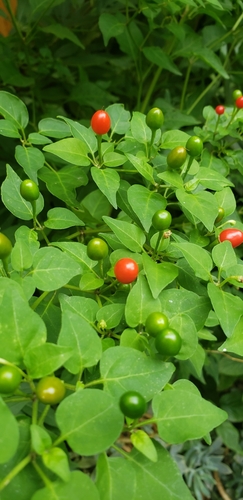
Capsicum annuum var. fasciculatum
Cluster pepper, Red cone pepper
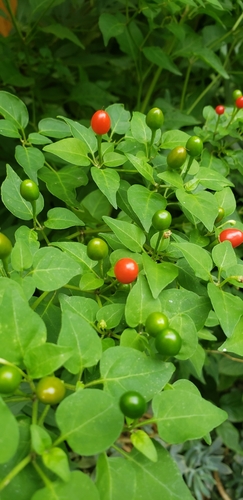
Capsicum annuum var. glabriusculium
Bird pepper