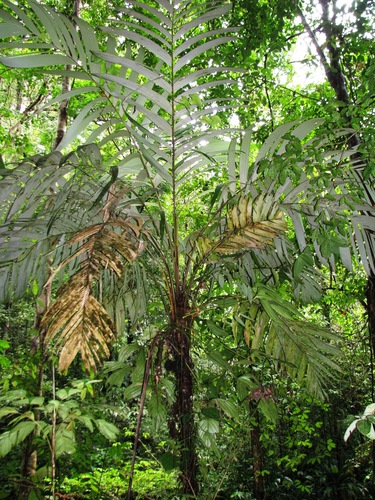
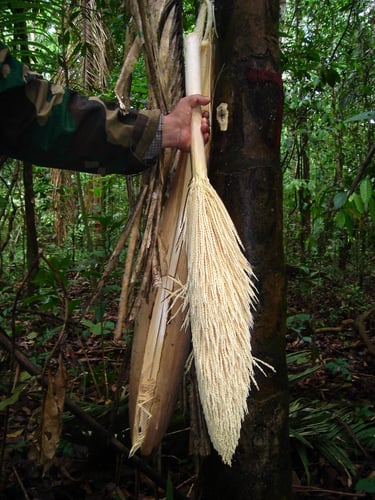
Pinanga negrosensis
Becc.
Negros abiki
wikimedia· cc0
Wikimedia Commons - National Museum of Natural History
gbif· cc-by-nc
Field Museum of Natural History - Botany Department | NSF/Mellon - GPI
Description
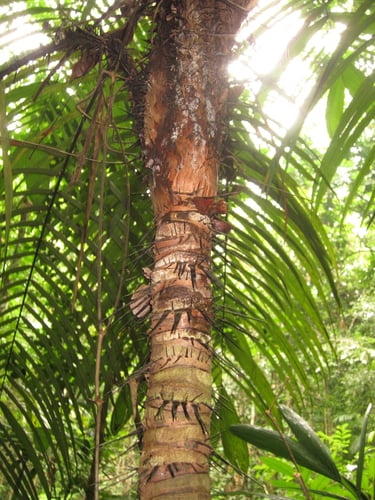
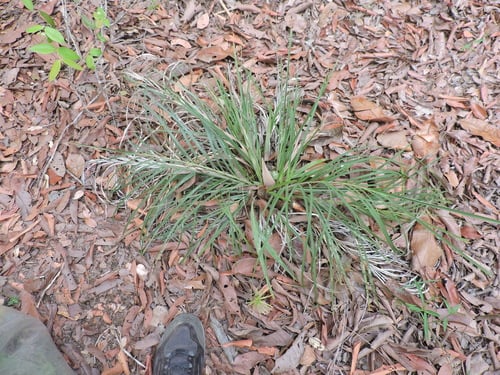
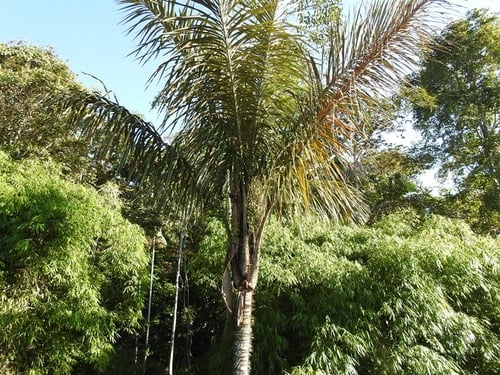
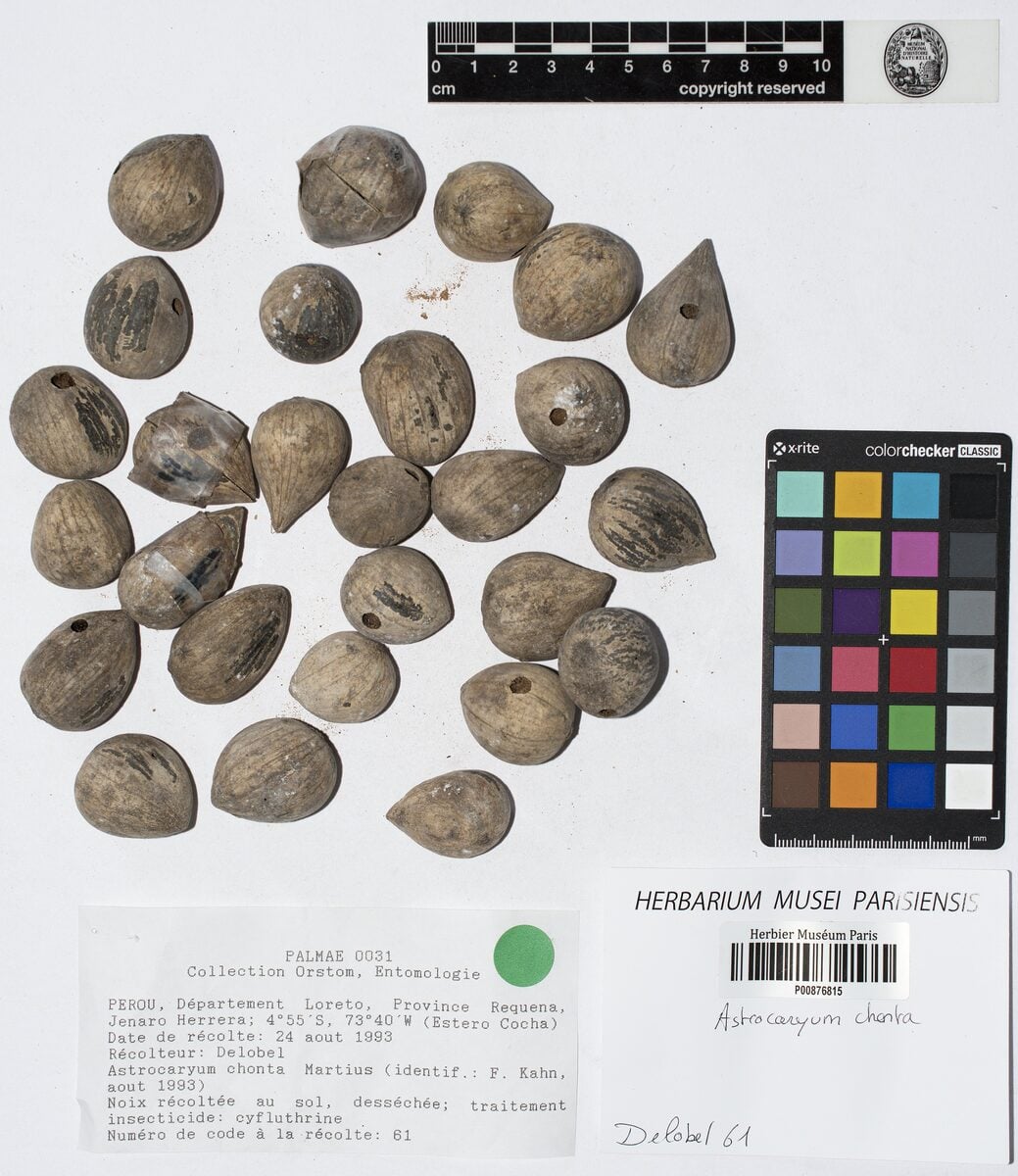
A small and slender palm. It forms clumps. It grows 8 cm tall. The trunk is 7 cm across. The crown-shaft is pale green. The leaves have numerous segments and are curved at their tip. They are at an equal distance, rigid, narrow and very long and tapering. They are 1- or 2-ribbed. The leaves are 2 m long. The flower arrangement is a flower spike arranged along a central axis with several branches in a spiral. The branches hang down. The fruit are in 3 layers in the lower part of the branches. They are 12 mm long and ripen from yellow to red. The seeds have a tail at the base.
Edible Uses
The unopened leaf bud is cooked and eaten as a vegetable, and palm heart is consumed as food.
Traditional Uses
The bud is cooked and eaten.
This uses section is brief — help expand it
Distribution
A tropical plant. They are found in damp forested valleys at altitudes of about 900 m. They occur only in Negros in the Philippines.
Where It Grows
Asia, Australia, Pacific, Philippines, SE Asia,
References (4)
- Jones, D.L., 1994, Palms throughout the World. Smithtonian Institution, Washington. p 304
- Monsalud, M.R., Tongacan, A.L., Lopez, F.R., & Lagrimas, M.Q., 1966, Edible Wild Plants in Philippine Forests. Philippine Journal of Science. p 523
- Riffle, R.L. & Craft, P., 2003, An Encyclopedia of Cultivated Palms. Timber Press. p 414
- World Checklist of Useful Plant Species 2020. Royal Botanic Gardens, Kew