Aiphanes linearis
Burret
Linear ruffle palm
iNaturalist· cc-by-nc
(c) alejandrobalbin, some rights reserved (CC BY-NC)
iNaturalist· cc-by-nc
(c) alejandrobalbin, some rights reserved (CC BY-NC)
gbif· cc-by-nc
Field Museum of Natural History - Botany Department | NSF/Mellon - GPI
Summary
Source: WikipediaAiphanes linearis is a species of flowering plant in the family Arecaceae. It is found only in Colombia.
Description
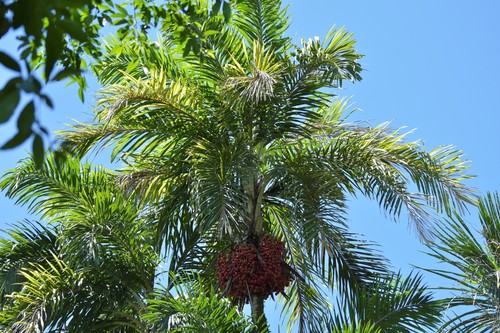
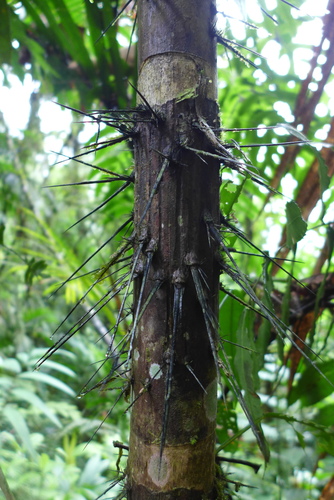
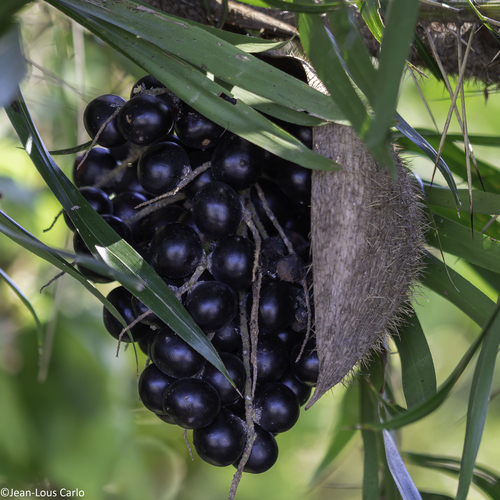
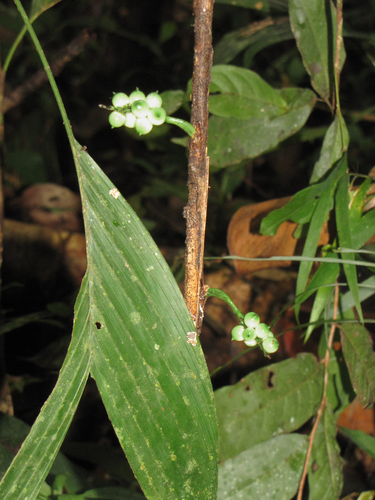
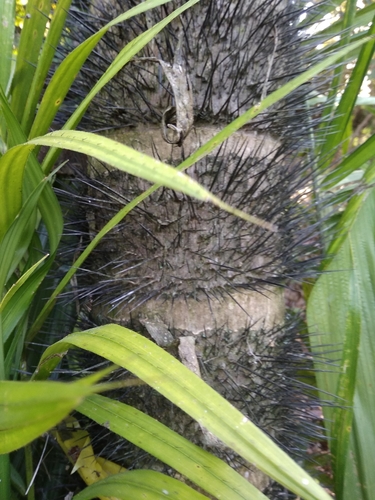
A clumping palm. The trunk can be 6 m high. It has long black spines which bend backwards. The fronds are about 2.5 m long. There can be 80 leaflets. The leaflets are narrow and rigid. They are 45 cm long by 3.5 cm across. They are clustered in groups of 2-4 along the stalk. The fruit have yellow hairs over them. The seeds are edible.
Edible Uses
The fruit and seeds are edible.
Distribution
It is a tropical plant. It grows in the high altitude rainforests at about 1800-2300 m altitude in Colombia.
Where It Grows
Colombia, South America,
Notes
This is a palm under threat of extinction. Plants should be cultivated before harvesting, not collected from the wild. There are about 38 Aiphanes species. They grow in tropical America.
Synonyms
Also Known As
Chirca, Cirqui, Corocito de agua, Corozo de aguita, Chascaray, Chirca, Chonta
References (9)
- Borchsenius, F., and Bernal, R., 1996, Aiphanes (Palmae) Flora Neotropica. Vol. 70, pp 1-94.
- Grandtner, M. M. & Chevrette, J., 2013, Dictionary of Trees, Volume 2: South America: Nomenclature, Taxonomy and Ecology. Academic Press p 18
- Henderson, A., Galeano, G and Bernal, R., 1995, Field Guide to the Palms of the Americas. Princeton. p 173
- Johnson, D.V., 1998, Tropical palms. Non-wood Forest products 10. FAO Rome. p 85
- Jones, D.L., 1994, Palms throughout the World. Smithtonian Institution, Washington. p 122
Show all 9 references Hide references
- Kermath, B. M., et al, 2014, Food Plants in the Americas: A survey of the domesticated, cultivated and wild plants used for Human food in North, Central and South America and the Caribbean. On line draft. p 36
- Marcia, M. J., et al, 2011, Palm Uses in Northwestern South America: A Quantitative Review. Bot. Rev. (2011) 77:462-570
- Roa, J. A. G. & Boada, D. S. G., 2018, Fundación para el Fortalecimiento de la Fruticultura y Plantas Alimenticias no Convencionales en Colombia.
- World Checklist of Useful Plant Species 2020. Royal Botanic Gardens, Kew