Bactris macana
(Mart.) Pittier
Chontilla, Pupunha brava, Chinamato, Pijuayo del monte, Chonta
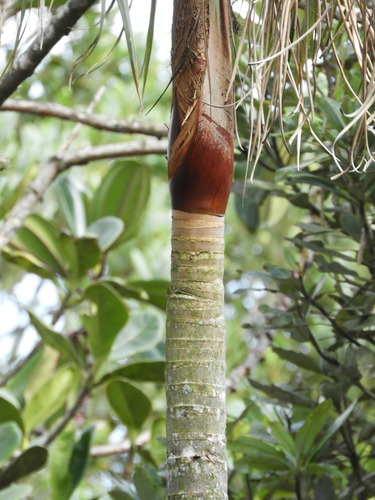
iNaturalist· cc-by-nc
(c) jcepedav, some rights reserved (CC BY-NC)
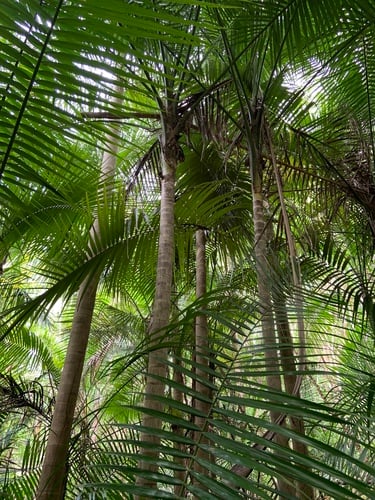
iNaturalist· cc-by-nc
(c) jcepedav, some rights reserved (CC BY-NC)
iNaturalist· cc-by-nc
(c) Richard Ortega, some rights reserved (CC BY-NC)
Description
A palm with many stems. It grows 9.5-12 m tall. The stems are 10-20 cm across. It has spines. These can be 1 cm long. There are 8-17 leaves. These have 92-141 leaflets along each side. The tips are divided and unequal. The leaflets are arranged irregularly and are in different planes. The flowering stalk has 40-70 flowering branches. The bract is covered with spines. The fruit are red to orange and 2 cm across. They are round.
Edible Uses
The fruit are cooked or roasted and the pulp eaten. The palm hearts are eaten raw or cooked and are also harvested as cabbage.
Traditional Uses
The fruit are cooked or roasted and the pulp eaten. The palm hearts are eaten raw or cooked.
This uses section is brief — help expand it
Distribution
A tropical plant. It grows in humid areas. It grows between 600 and 1300 m altitude in Ecuador.
Where It Grows
Amazon, Bolivia, Brazil, Colombia, Ecuador, Peru, South America, Venezuela,
Notes
There are 239 Bactris species. There are 75 species in tropical America. Most Bactris have fruit that are edible but many are not attractive.
Synonyms
References (11)
- Eynden, Van den, V., & Cueva E., Cebrera, O., 2004, Edible Palms of Southern Ecuador. Palms. Vol 48(3):141-147
- Haynes, J., & McLaughlin, J., 2000, Edible palms and Their Uses. University of Florida Fact sheet MCDE-00-50-1 p 3
- Henderson, A., Galeano, G and Bernal, R., 1995, Field Guide to the Palms of the Americas. Princeton. p 192, 269
- Hermandez Bermejo, J.E., and Leon, J. (Eds.), 1994, Neglected Crops. 1492 from a different perspective. FAO Plant Production and Protection Series No 26. FAO, Rome. p 215
- Hermandez Bermejo, J.E., and Leon, J. (Eds.), 1994, Neglected Crops. 1492 from a different perspective. FAO Plant Production and Protection Series No 26. FAO, Rome. p 215 (As Bactris caribea)
Show all 11 references Hide references
- Janick, J. & Paul, R. E. (Eds.), 2008, The Encyclopedia of Fruit & Nuts. CABI p 102
- Johnson, D.V., 1998, Tropical palms. Non-wood Forest products 10. FAO Rome. p 91
- Kermath, B. M., et al, 2014, Food Plants in the Americas: A survey of the domesticated, cultivated and wild plants used for Human food in North, Central and South America and the Caribbean. On line draft. p 116
- Man. pl. usual. Venez. 276. 1926
- Van den Eynden, V. et al, 2004, Edible Palms of Southern Ecuador. Palms Volume 48(3):142-148
- Van den Eynden, V., et al, 2004, Regional and ecological variations of wild edible plants in southern Ecuador. Lyonia. 7(2)