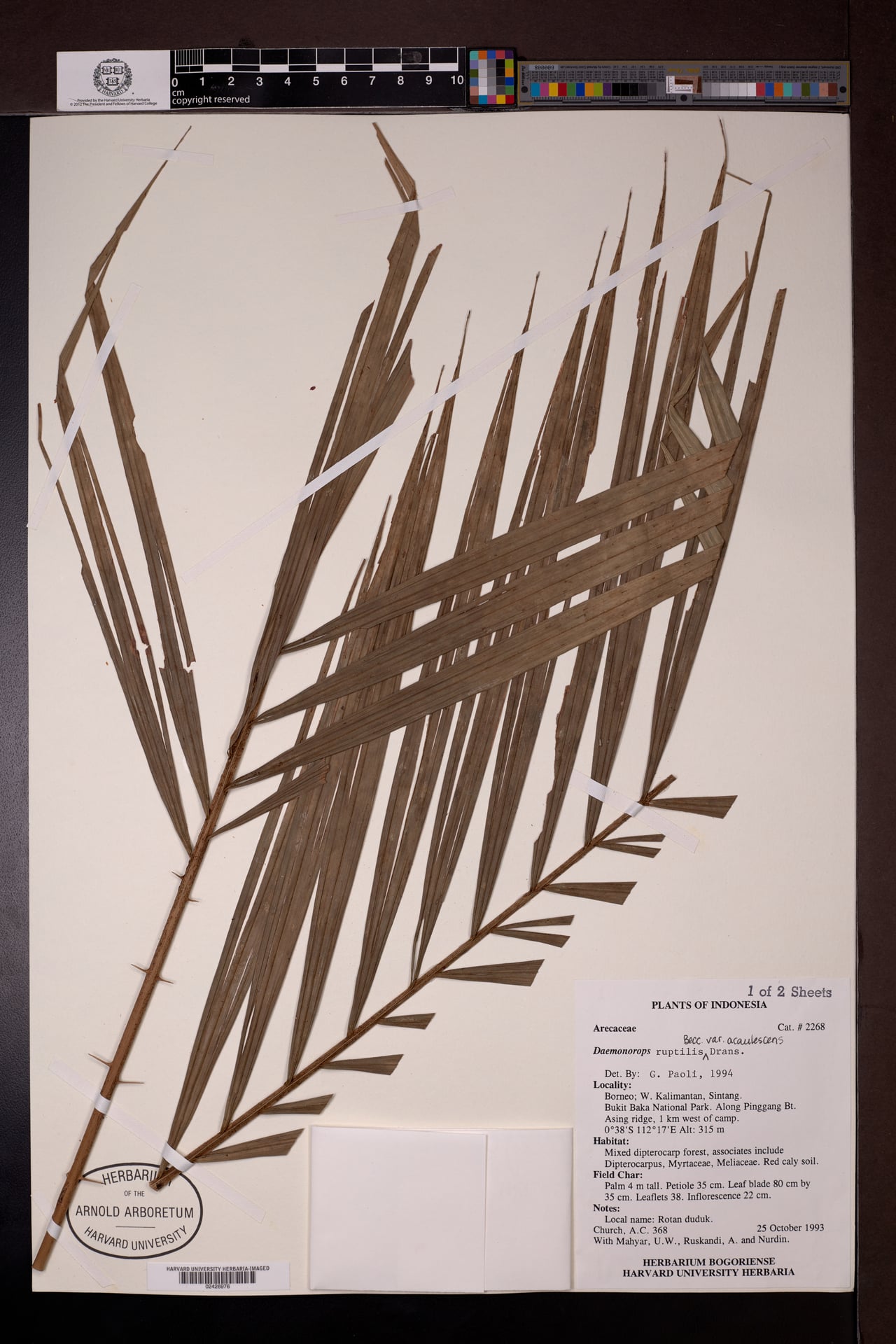
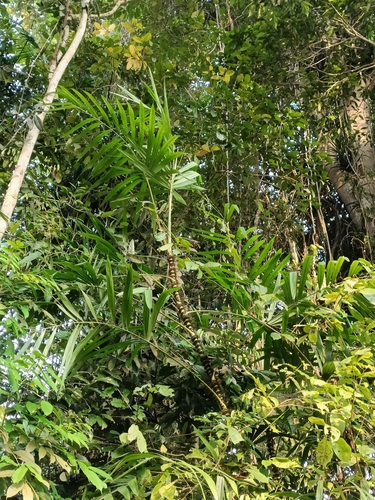
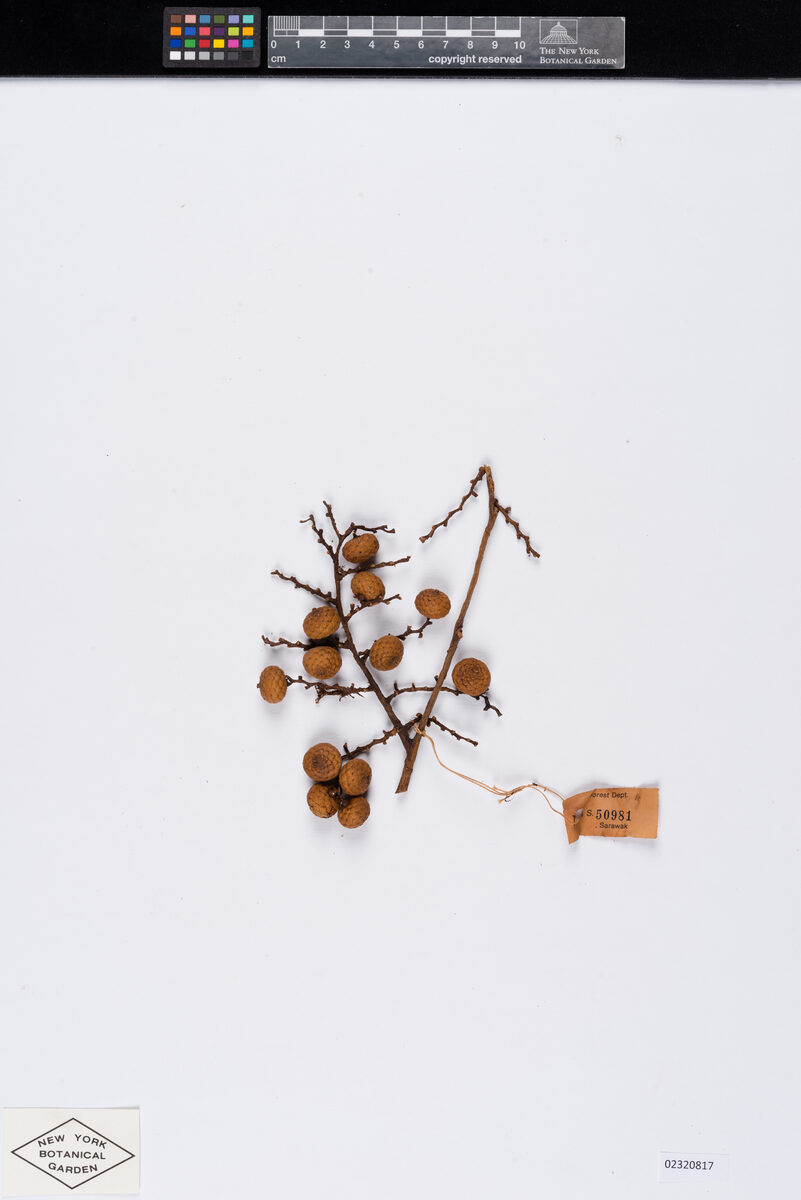
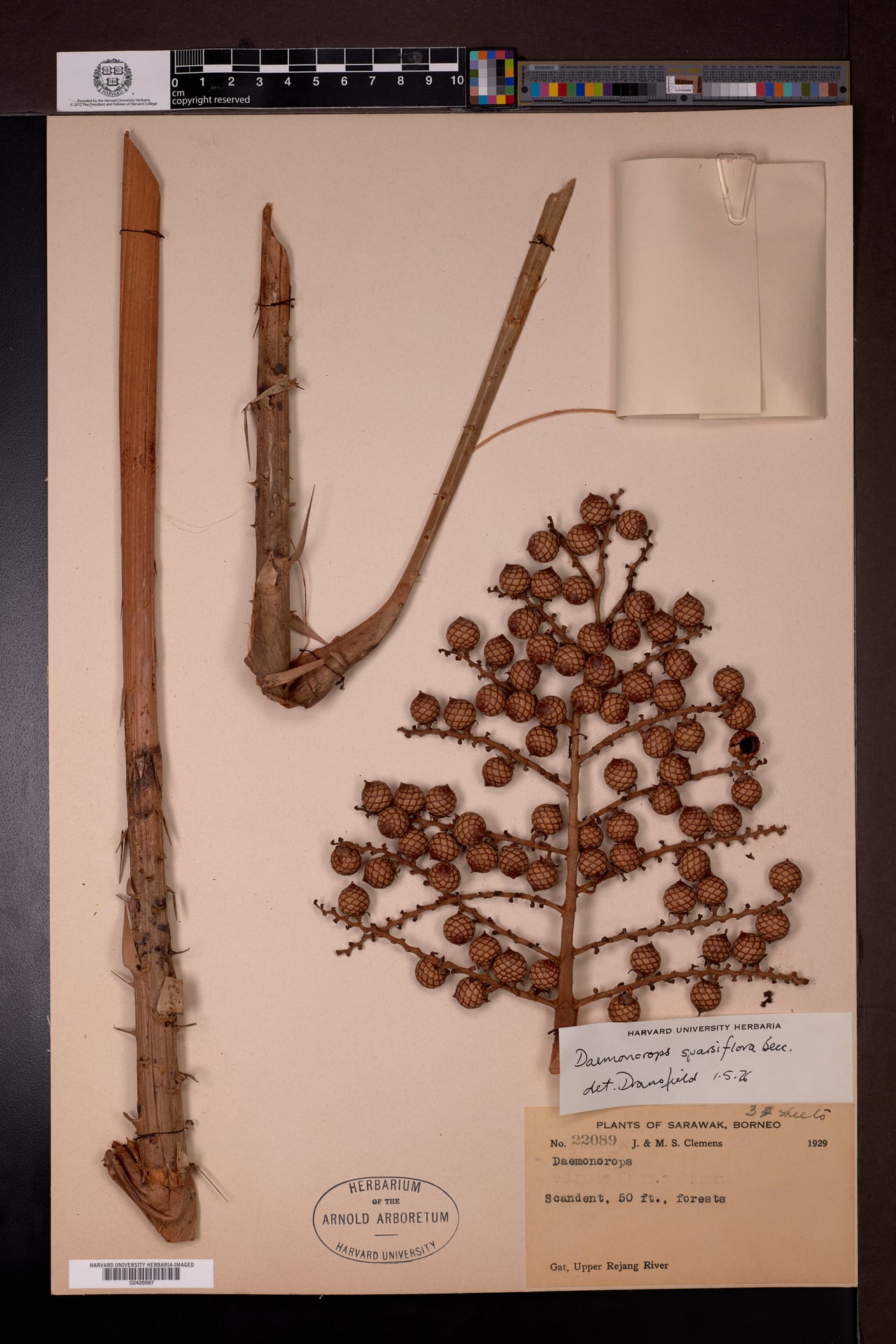
Bactris gasipaes
Kunth.
Peach palm
iNaturalist· cc-by-nc
(c) jorgebrito, some rights reserved (CC BY-NC), uploaded by jorgebrito
iNaturalist· cc-by
(c) Jens-Christian Svenning, some rights reserved (CC BY), uploaded by Jens-Christian Svenning
iNaturalist· cc-by-nc
(c) Maria Alejandra, some rights reserved (CC BY-NC), uploaded by Maria Alejandra
Summary
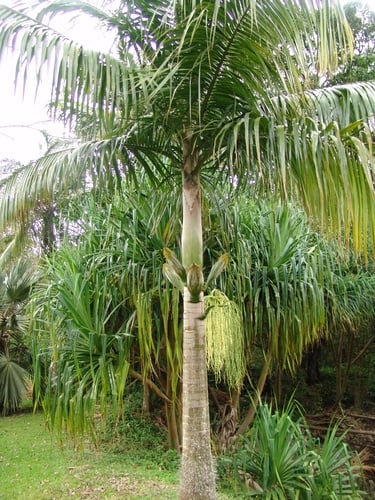
Source: WikipediaBactris gasipaes is a species of palm native to the tropical forests of Central and South America. It is well spread in these regions, where it is often cultivated by smallholders in agroforestry systems or more rarely, in monoculture. Common names include peach palm in English, among others used in South American countries. It is a long-lived perennial plant that is productive for 50 to 75 years on average. Its population has an important genetic diversity, leading to numerous fruits, colors, and qualities. The fruits are edible and nutritious but need to be cooked for 30 minutes to five hours. They also benefit many animals in the wild. Peach palms are also cultivated for the heart of palm, and the trunk can make valuable timber.
Description
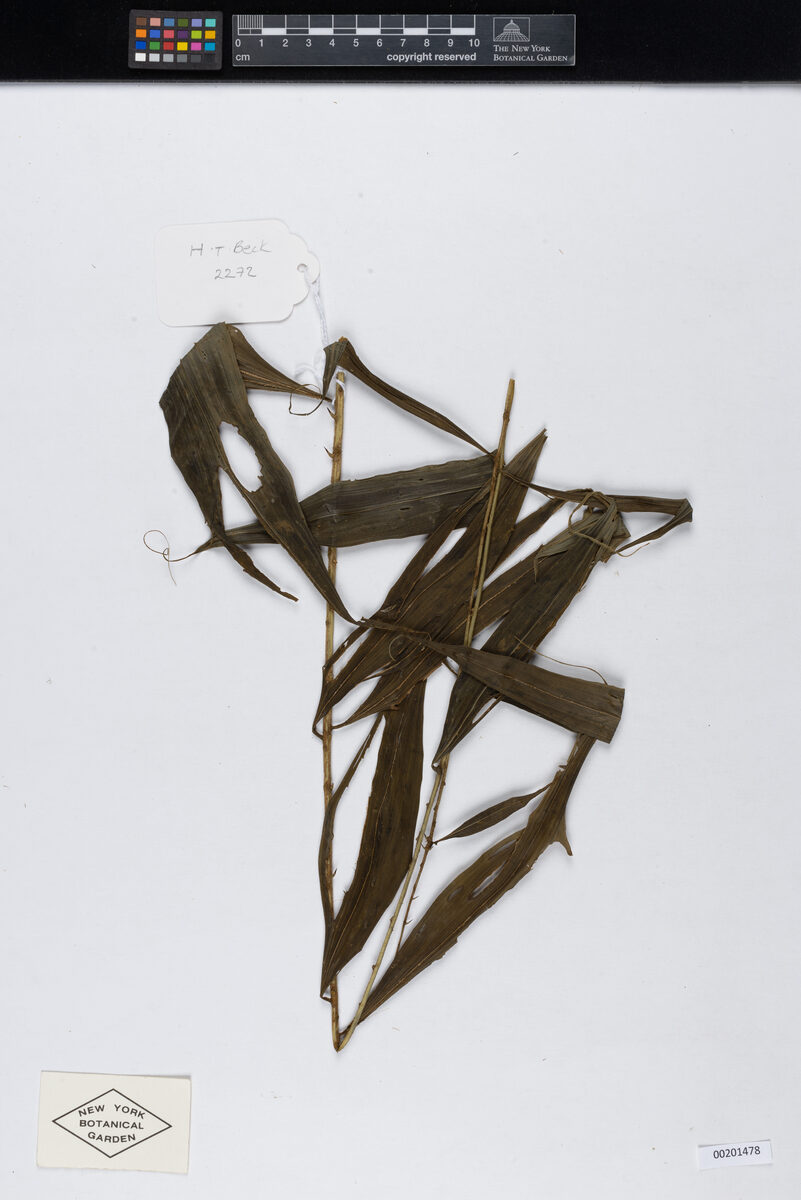
A tall slender palm with thorny trunk and suckers at the base. It often has between 1 and 13 stems. The stems are straight and un-branched. They are 6-24 m tall, 12-26 cm in diameter, with nodes 2-9 cm long and internodes 7-27 cm long at breast height. The canopy has 10-30 pinnate leaves which are spineless. The petiole-sheath is 49-179 cm long, the rachis is 179-396 cm long, and has 180-386 leaflets. The leaflets are twice forked and leaflets are 58-115 cm long, 3-6 cm wide. Flowers are separately male and female on the same stalk of the same palm. Female flowers are irregularly arranged among male flowers. Fruit are orange when ripe. and about 5-8 cm across. They have yellow oily flesh. Fruit without seeds often occur.
Edible Uses
Edible Parts: Flowers Fruit Oil Seed Shoots Edible Uses: Condiment Oil Salt Edible portion: Fruit, Flower shoots, Cabbage, Palm heart, Vegetable. Fruit - cooked. An acquired taste, mealy and nutty in flavour. The flavour is variable, ranging from bland to strong. Inedible raw, it is boiled in salt water for 30 - 60 minutes, when it becomes floury-textured, oily and pleasant tasting with good nutritious qualities. The fruit is always cooked, because of the presence of an alkaloid, pupunhadine. The fruit is highly nutritious, being very rich in carbohydrate and protein. The fruits are also ground into a flour for baking bread, cakes etc. The ovoid fruit is about 6cm long. The fruit palm is an energy-rich source of carbohydrates and oil; the pulp contains all the essential amino acids and is an excellent source of quality protein. The mesocarp is rich in beta-carotene. It is regarded as probably the most nutritionally balanced of tropical fruits; has twice the protein content of the banana and can produce more carbohydrate per ha than maize. An edible oil is obtained from the seed. It is called oil of macanilla. The mesocarp oil has a relatively high proportion of unsaturated fatty acids, notably oleic acid, and contains no cholesterol. It is used for cooking. Seed - eaten raw or made into a meal to flavour drinks. Consumed as nuts. A salt substitute is made by cooking the spadix. The cooked male flowers are used as a condiment. The apical bud is cooked and eaten as a vegetable. A delicacy, in some areas it is eaten as a salad. Fresh, dried and canned palmito is being marketed for use in salads, soups and fillings and as roasted chips. Eating the bud effectively kills the trunk since it is unable to produce side shoots. Some plants in this species form multi-trunks and so harvesting the apical bud will only kill one stem, not the plant. An important food in South America.
Traditional Uses
The fruit are used cooked or in preserves. The fruit is also dried and ground into flour. The flesh of the fruit is eaten raw. The fruit is boiled in salt water for 3 hours, the seeds removed then eaten. The kernel of the seeds is also edible. The palm cabbage is edible.
Medicinal Uses
Antirheumatic The oil from the seeds is used as a rub to ease rheumatic pains. The fruit are high in Vitamin A. The red variety has 2.76 mg of carotene while the yellow variety has 0.835 mg.
Known Hazards
The stems are usually heavily armed with rings of very sharp, black spines about 5 cm long.(Plant has spines or sharp edges; use extreme caution when handling )
Distribution
A tropical plant. It suits the hot, wet tropical lowlands. These palms have good wind resistance. They have a moderate tolerance of drought. They grow from sea level to 1200 m altitude in regions near the equator. It suits the wet tropics. It is grown from approximately 17°N to 16°S of the equator. It is most productive on deep well drained soils in the tropics below 800 m altitude and with a well distributed rainfall of 2000-5000 mm per year and a temperature above 24°C. It will grow on poor acid soils with low rainfall. It suits hardiness zones 11-12.
Where It Grows
Amazon, Andes, Argentina, Asia, Australia, Bolivia*, Brazil*, Central America, Colombia*, Costa Rica, Ecuador, French Guiana, Guam, Guatemala, Guyana, Hawaii, Honduras, India, Indonesia, Nicaragua, Pacific, Panama, Papua New Guinea, PNG, Paraguay, Peru*, Philippines, SE Asia, South America, Suriname, Trinidad and Tobago, USA, Venezuela,
Cultivation
Plants can be grown from seeds or suckers. Normally only 4 suckers per plant are kept and others removed. Before taking the suckers it is best to partly cut them off and allow roots to develop more strongly. A spacing of 5-6 m apart is suitable. Mycorrhizae attached to the roots give fast growth rates. Under subsistence conditions palms are often widely spaced but for intensive agriculture it is planted at 400-500 plants/ha for fruit and 3000 to 20 000 plants for heart-of-palm. Plants are pollinated by insects but can be pollinated by wind. Small beetles are attracted to the flower and pollinate the plant in Central America. If using seeds, fresh seed should be planted. They germinate in 3-5 months.
Propagation
Seed - pre-soak for 24 hours in warm water and sow in containers. Germination takes 2 months or more. The seed has a limited viability and needs to be sown as fresh as possible. Seedlings require about 6 - 9 months in the nursery; planting out should be done when the soil is humid and the potential evapotranspiration rate is low. Seeds are recalcitrant. They rapidly lose viability when dried and should not be exposed to direct sunlight during germination. Fresh seed has 45-50% mc, and if this falls below 38-40%, germination is reduced. Seed is rarely formed in this species. Division of suckers from a mature palm after it has produced four stems. Suckers should have produced roots and be 7 to 8 cm in diameter at the base and 1 to 1. 5 metres high. Mycorrhizae attached to the roots give fast growth rates.
Other Uses
Basketry Cosmetic Dye Fibre Needles Oil Paper Plant support Shelterbelt Soap making Thatching Wood Other uses rating: High (4/5). Other Uses An oil is obtained from the seed. This species may turn out to be a better economic option than most other American oil palms. Oil levels of up to 62% of the dry weight have been reported, and there are reports that a large pot of boiling fruit can produce 2-3 kg of oil. The oil separates easily when the fruits are cooked. As with other palms, it is a potential source of lauric oils. The seed is rich in saturated fatty acids, and could be used to manufacture cosmetics and soap. The leaves yield thatch for houses and basket materials. The spines of the plant are used in tattooing. (Probably as needles.) The leaves provide a green dye for colouring fabrics. The roots provide a vermicide. The whole plant, including the leaf and stem parts, produces a valuable fibre for manufacturing paper. Cellulose may be produced for cellophane paper and rayon. Wood - exceptionally hard and strong, it has many uses. Used in construction. It is a durable material for bows, arrows, fishing poles, harpoons and carvings. The Amerindians use the wood for flooring and panelling their houses and also fashion long spines into needles. In rural Amazonia, the stem is valued for parquet, furniture, carvings and home construction. Special Uses Carbon Farming Food Forest
Production
Seeds normally germinate in 30-90 days under normal conditions. Palms grow rapidly under the best conditions. Palms commence bearing after 5-8 years and may produce for 70-80 years. Fruit is produced in large clusters of 50-100 fruit. Four or five clusters are produced per year. Fruiting is seasonal. Fruit takes 6 months to mature and keeps well on the tree. The number of mature fruits per inflorescence (commonly referred to as raceme or bunch) varies from 0 to 764, with total fruit weight 0-20 kg. The palms can be harvested for palm hearts 2.5-4 years after planting. Each palm yields 1.3 kg of edible heart.
Other Information
It is a cultivated food plant. It has been introduced to Papua New Guinea. An important food in South America. In Papua New Guinea it occurs mostly only on research farms and knowledge of how to use the food is lacking.
Notes
There are 239 Bactris species. There are 75 species in tropical America. Most Bactris have fruit that are edible but many are not attractive. The fruit are high in Vitamin A. The red variety has 2.76 mg of carotene while the yellow variety has 0.835 mg.
Nutrition
| Part | Moisture | kJ | kcal | Protein | Vit A | Vit C | Iron | Zinc |
|---|---|---|---|---|---|---|---|---|
| Fruit | 50.5 | 820 | 196 | 0.5 | 280 | 35 | 1.5 | — |
| Flowers | — | — | — | — | — | — | — | — |
| Palm heart | — | 47.6 | 1.5 | — | 3.2 | 0.23 | — | — |
| Nuts | — | — | — | — | — | — | — | — |
Synonyms
Also Known As
Cachipay, Chenga, Chichaguay, Chima, Chonta de Castilla, Chontaduro, Chontilla, Chunda yura, Chunta, Daba, Dagenka, Gachipaes, Huanima, Jenga, Jijibre, Killu chunta, Macanilla palma, Nalup, Oma, Palem pejibaye, Paripoe, Paripou, Pawa chunta, Pejibaye, Pejibayu, Pejivalle chontaduro, Pewa palm, Pifayu, Pijiguao, Pijuayo, Pipire, Piraja-pupunha, Piriguao, Pisbae, Puka chunta, Pupunha-maraja, Pupunha, Pupunheira, Shalin chunta, Siri, Supa, Tembe, Uwi, Uyai, Yaun, Zhoras, Ziri
References (80)
- Ambasta S.P. (Ed.), 2000, The Useful Plants of India. CSIR India. p 65 (As Bactris utilis)
- Asprilla-Perea, J., & Diaz-Puente, J.M., 2018, Traditional use of wild edible food in rural territories within tropical forest zones: A case study from the northwestern Colombia. New Trends and Issues Proceedings on Humanities and Social Sciences [Online]. 5(1), 162–181.
- Balick, M.J. and Beck, H.T., (Ed.), 1990, Useful palms of the World. A Synoptic Bibliography. Colombia p 49, 57 (As Guilielma utilis), 61, 68, 70, 87, 153, 157 (As Guilielma insignis), 307, 311, 313, 317, 318, 419, 420, 421, 422, 473, 506, 561,
- Barfod, A. S. & Kvist, L. P., 1996, Comparative Ethnobotanical Studies of the Amerindian Groups in Coastal Ecuador. The Danish Academy of Sciences and Letters. p 77, 80
- Bennett, B. C., 1990, Useful Plants of Amazonian Ecuador. US Agency for International Development. Fifth Progress Report. New York Botanical Gardens. p 40
Show all 80 references Hide references
- Bircher, A. G. & Bircher, W. H., 2000, Encyclopedia of Fruit Trees and Edible Flowering Plants in Egypt and the Subtropics. AUC Press. p 51 (Also as Bactris insignis, Bactris microcarpa, )
- Blomberry, A. & Rodd, T., 1982, Palms. An informative practical guide. Angus & Robertson. p 61
- Brickell, C. (Ed.), 1999, The Royal Horticultural Society A-Z Encyclopedia of Garden Plants. Convent Garden Books. p 158
- Burkill, I.H., 1966, A Dictionary of the Economic Products of the Malay Peninsula. Ministry of Agriculture and Cooperatives, Kuala Lumpur, Malaysia. Vol 1 (A-H) p 284
- Caballero-Serrano, V., et al, 2019, Traditional ecological knowledge and medicinal plant diversity in Ecuadorian Amazon home gardens. Global Ecology and Conservation 17 (2019) e00524 p 8
- Chizmar Fernandez, C., et al, 2009, Plantas comestibles de Centroamerica. Instituto de Biodiversidad, Costa Rica. p 75
- Coe, F. G., and Anderson, G. J., 1996, Ethnobotany of the Garifuna of Eastern Nicaragua. Economic Botany 50(1) pp 71-107
- Coe, F. G. and Anderson, G. J., 1999, Ethnobotany of the Sumu (Ulwa) of Southeastern Nicaragua and Comparisons with Miskitu Plant Lore. Economic Botany Vol. 53. No. 4. pp. 363-386
- Coronel, R.E., 1982, Fruit Collections in the Philippines. IBPGR Newsletter p 6
- Creed-kanashiro, H., et al, Traditional food system of an Awajun community in Peru. Indigenous Peoples' food systems Chp. 4
- D'Ambrosio, U., & Puri, R. K., 2016, Foodways in transition: food plants, diet and local perceptions of change in a Costa Rican Ngäbe community. Journal of Ethnobiology and Ethnomedicine (2016) 12:3 p 22
- Darley, J.J., 1993, Know and Enjoy Tropical Fruit. P & S Publishers. p 82
- Duchelle, A. E., 2007, Observations on Natural Resource use and Conservation by the Shuar In Ecuador's Cordillera del Condor. Ethnobotany Research & Applications 5:005-023
- Etherington, K., & Imwold, D., (Eds), 2001, Botanica's Trees & Shrubs. The illustrated A-Z of over 8500 trees and shrubs. Random House, Australia. p 113
- Eynden, Van den, V., & Cueva E., Cabrera, O., 2004, Edible Palms of Southern Ecuador. Palms. Vol 48(3):141-147
- Facciola, S., 1998, Cornucopia 2: a Source Book of Edible Plants. Kampong Publications, p 29
- Flowerdew, B., 2000, Complete Fruit Book. Kyle Cathie Ltd., London. p 162
- French, B.R., 1986, Food Plants of Papua New Guinea, A Compendium. Asia Pacific Science Foundation p 301 (As Guilielma)
- Gibbons, M., 1993, Palms. Compact study Guide and Identifier. Sandstone. p 20
- Gibbons, M., 2003, A pocket guide to Palms. Chartwell Books. p 47
- Grandtner, M. M., 2008, World Dictionary of Trees. Wood and Forest Science Department. Laval University, Quebec, Qc Canada. (Internet database http://www.WDT.QC.ca)
- Grandtner, M. M. & Chevrette, J., 2013, Dictionary of Trees, Volume 2: South America: Nomenclature, Taxonomy and Ecology. Academic Press p 56 (Also as Bactris gasipaes var. chichagui)
- Hardwick, G., 2001, Economically Useful Plants for Northern Australia: Master Species List. Crusader eBooks. Haynes, J., & McLaughlin, J., 2000, Edible palms and Their Uses. University of Florida Fact sheet MCDE-00-50-1 p 3
- Hedrick, U.P., 1919, (Ed.), Sturtevant's edible plants of the world. p 89
- Henderson, A., Galeano, G and Bernal, R., 1995, Field Guide to the Palms of the Americas. Princeton. p 188
- Hermandez Bermejo, J.E., and Leon, J. (Eds.), 1994, Neglected Crops. 1492 from a different perspective. FAO Plant Production and Protection Series No 26. FAO, Rome. p16, 211
- Hermandez Bermejo, J.E., and Leon, J. (Eds.), 1994, Neglected Crops. 1492 from a different perspective. FAO Plant Production and Protection Series No 26. FAO, Rome. p 215 (As Bactris ciliata)
- Hermandez Bermejo, J.E., and Leon, J. (Eds.), 1994, Neglected Crops. 1492 from a different perspective. FAO Plant Production and Protection Series No 26. FAO, Rome. p 215 (As Bactris insignis)
- Hunter, D., et al, 2019, The potential of neglected and underutilized species for improving diets and nutrition. Planta (2019) 250:709-729
- Janick, J. & Paul, R. E. (Eds.), 2008, The Encyclopedia of Fruit & Nuts. CABI p 93
- Janos, D.P., 1977, Vesicular-arbuscular mycorrhizae affect the growth of Bactris gasipaes. Principes 21(1):12-18
- Johannessen, C.L. 1966, Pejibayes in commercial cultivation. Turrialba 16(2): 181-187
- Johnson, D.V., 1998, Tropical palms. Non-wood Forest products 10. FAO Rome. p 20, 125, 126
- Jones, D.L., 1994, Palms throughout the World. Smithtonian Institution, Washington. p 55, 57, 139
- Jones, D.L., 2000, Palms of Australia 3rd edition. Reed/New Holland. p 122
- Kiple, K.F. & Ornelas, K.C., (eds), 2000, The Cambridge World History of Food. CUP p 1831
- Leakey, R. R. B., 1999, Potential for novel food products from agroforestry trees: A review. Food Chemistry. 66:1-14
- Lorenzi, H., 2002, Brazilian Trees. A Guide to the Identification and Cultivation of Brazilian Native Trees. Vol. 01 Nova Odessa, SP, Instituto Plantarum p 291
- Macmillan, H.F. (Revised Barlow, H.S., et al) 1991, Tropical Planting and Gardening. Sixth edition. Malayan Nature Society. Kuala Lumpur. p 294
- Marcia, M. J., et al, 2011, Palm Uses in Northwestern South America: A Quantitative Review. Bot. Rev. (2011) 77:462-570
- Martin, F. W., et al, 1987, Perennial Edible Fruits of the Tropics. USDA Handbook 642 p 47
- Menninger, E.A., 1977, Edible Nuts of the World. Horticultural Books. Florida p 128 (As Guilielma)
- Mora-Urpí, Jorge, John C. Weber and Charles R. Clement. 1997. Peach palm. Bactris gasipaes Kunth. Promoting the conservation and use of underutilized and neglected crops. 20. Institute of Plant Genetics and Crop Plant Research, Gatersleben/ International Plant Genetic Resources Institute, Rome, Italy.
- Morton, J. F., 1987, Fruits of Warm Climates. Wipf & Stock Publishers p 12
- Paz, F. S., et al, 2021, Edible Fruit Plant Species in the Amazon Forest Rely Mostly on Bees and Beetles as Pollinators. Journal of Economic Entomology, XX(XX), 2021, 1–13
- Penafield Anchundia, D. D., 2017, Traditional food consumption and its nutritional contribution in Guasaganda, Central Ecuador. PhD Ghent University p 71
- PROSEA (Plant Resources of South East Asia) handbook, Volume 2, 1991, Edible fruits and nut. p 98
- Purseglove, J.W., 1972, Tropical Crops. Monocotyledons. Longmans p 424 (As Guilielma)
- Riffle, R.L. & Craft, P., 2003, An Encyclopedia of Cultivated Palms. Timber Press. p 267
- Roa, J. A. G. & Boada, D. S. G., 2018, Fundación para el Fortalecimiento de la Fruticultura y Plantas Alimenticias no Convencionales en Colombia.
- Rosero-Toro, et al, 2018, Cultural significance of the flora of a tropical dry forest in the Doche vereda (Villavieja, Huila, Colombia). Journal of Ethnobiology and Ethnomedicine (2018) 14:22 p 11
- Schneider, E., 2001, Vegetables from Amaranth to Zucchini: The essential reference. HarperCollins. p 462
- Smith, N., et al, 2007, Amazon River Fruits. Flavors for Conservation. Missouri Botanical Gardens Press. p 58
- Stone, B. C., 1970, The Flora of Guam. A Manual for the Identification of the Vascular Plants of the Island. Micronesica. Journal of the University of Guam. p 139
- Sukarya, D. G., (Ed.) 2013, 3,500 Plant Species of the Botanic Gardens of Indonesia. LIPI p 758
- Tankard, G., 1990, Tropical fruit. An Australian Guide to Growing and using exotic fruit. Viking p 113
- Tomchinsky, B., et al, 2021, Food Composition Data: Edible Plants from the Amazon. in M. C. M. Jacob, U. P. Albuquerque (eds.), Local Food Plants of Brazil, Ethnobiology, Springer p 275
- Torre, de la L., et al, 2008, Enciclopedia de las Plantas Útiles del Ecuador. Herbario QCA. Pontificia Universidad Católica del Ecuador. p 196
- Ulian, T., et al, 2020, Unlocking plant resources to support food security and promote sustainable agriculture. Plants, People, Planet. 2020;2:421–445.
- USDA, ARS, National Genetic Resources Program. Germplasm Resources Information Network - (GRIN). [Online Database] National Germplasm Resources Laboratory, Beltsville, Maryland. Available: www.ars-grin.gov/cgi-bin/npgs/html/econ.pl (10 April 2000)
- Vael, L., 2015, Ethnobotanical study of the plant use in the natural landscape of two mestizo communities in the Ucayali region of the Peruvian Amazon. Universiteit Gent.
- Van den Eynden, V., et al, 2003, Wild Foods from South Ecuador. Economic Botany 57(4): 576-603
- van Wyk, B., 2005, Food Plants of the World. An illustrated guide. Timber press. p 83
- Vasquez, R. and Gentry, A. H., 1989, Use and Misuse of Forest-harvested Fruits in the Iquitos Area. Conservation Biology 3(4): 350f
- Vasquez, Roberto Ch. & Coimbra, German S., 1996, Frutas Silvestres Comestibles de Santa Cruz. p 160
- Villachica, H., (Ed.), 1996, Frutales Y hortalizas promisorios de la Amazonia. FAO, Lima. p 217
- F. W. H. A. von Humboldt et al., Nov. gen. sp. 1:242[folio]; 1:302[quarto]. 1816, nom. cons.
- Wickens, G.E., 1995, Edible Nuts. FAO Non-wood forest products. FAO, Rome. p 88, 163
- Wiersema, J. H. & Leon, B., 2013, World Economic Plants. A Standard Reference CRC Press. 2nd Ed. p 89
- Wong, M., 2006, Edible Plants for Hawai'i Landscapes. College of Tropical Agriculture and Human Resources. Univ. of Hawai'i
- World Checklist of Useful Plant Species 2020. Royal Botanic Gardens, Kew
- www.colecionandofrutas.org
- Zaldivar, M. E., et al, 2002, Species Diversity of Edible Plants Grown in Homegardens of Chibehan Amerindians from Costa Rica. Human Ecology, Vol. 30, No. 3, pp. 301-316
- Zambrana, P, et al, 2017, Traditional knowledge hiding in plain sight – twenty-first century ethnobotany of the Chácobo in Beni, Bolivia. Journal of Ethnobiology and Ethnomedicine (2017) 13:57
- Zuchowski W., 2007, Tropical Plants of Costa Rica. A Zona Tropical Publication, Comstock Publishing. p 382