Daemonorops ingens
J. Dransf.
Keplar
gbif· cc0
President and Fellows of Harvard College
Description
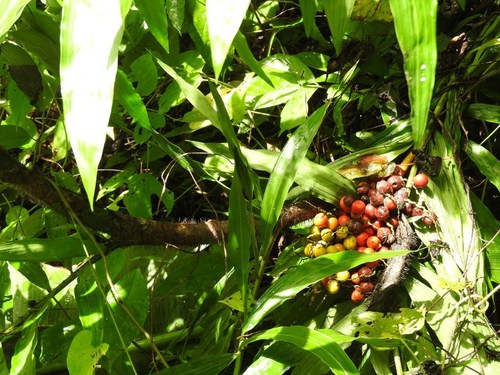
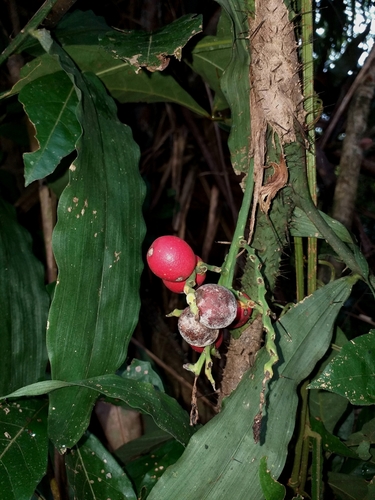
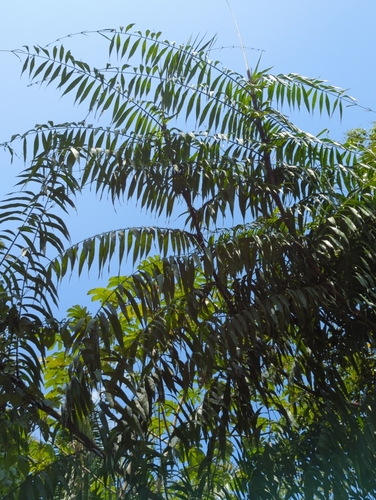
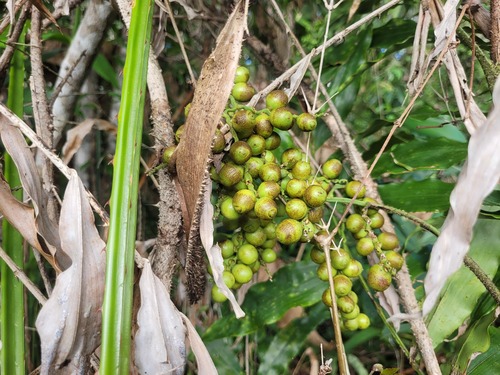
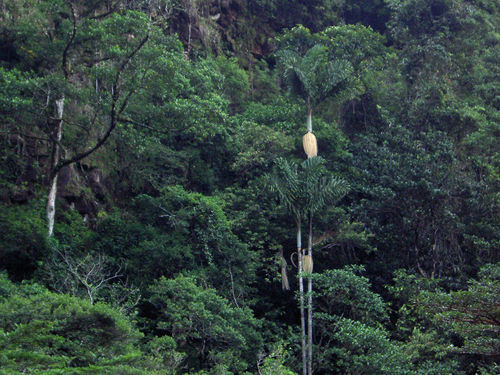
A cane or rattan. It is large and can occur singly or in a cluster. It is something like Salacca. The leaves are large and the last leaflet has a single fold.
Edible Uses
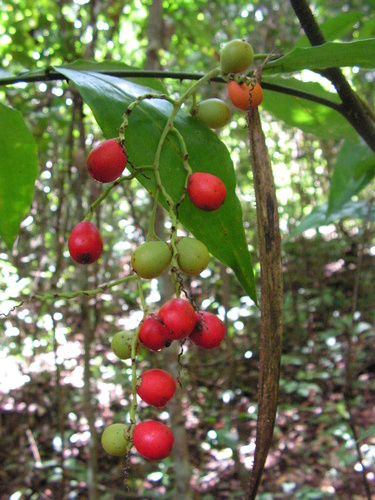
The fleshy layer of the fruit is sweet and eaten. The pith is also edible.
Traditional Uses
The fleshy layer of the fruit is sweet and is eaten.
This uses section is brief — help expand it
Distribution
A tropical plant. It grows in damp slopes and along streams.
Where It Grows
Asia, Indonesia, Malaysia, SE Asia,
Cultivation
Most species in this genus are more or less vigorous climbing plants in rainforests. In general, they are likely to grow best with their roots in the shade but with enough gap in the canopy to encourage their stems to grow up towards the light. They are also likely to grow best in a humus-rich soil. A dioecious species, both male and female forms need to be grown if fruit and seed are required.
Other Uses
The leaves are used for thatching.
Notes
There are 115 Daemonorops species.
Also Known As
Belikakau, Wi darum, Wi seruing
References (6)
- Chai, P. P. K. (Ed), et al, 2000, A checklist of Flora, Fauna, Food and Medicinal Plants. Lanjak Entimau Wildlife Sanctuary, Sarawak. Forestry Malaysia & ITTO. p 163
- Dransfield, J., 1992, The Rattans of Sarawak, Kew. p 88
- Hoare, A., 2003, Food use of the Lundayeh SW Sabah. Borneo Research Council.
- Johnson, D.V., 1998, Tropical palms. Non-wood Forest products 10. FAO Rome. p 66
- Milow, P., et al, 2013, Malaysian species of plants with edible fruits or seeds and their evaluation. International Journal of Fruit Science. 14:1, 1-27
Show all 6 references Hide references
- PROSEA (Plant Resources of South East Asia) handbook, Volume 6, 1993, Rattans