Pinanga scortechinii
Becc.
iNaturalist· cc-by-nc
(c) Vatcharavee Sriprasertsil, some rights reserved (CC BY-NC), uploaded by Vatcharavee Sriprasertsil
gbif· cc0
President and Fellows of Harvard College
Description
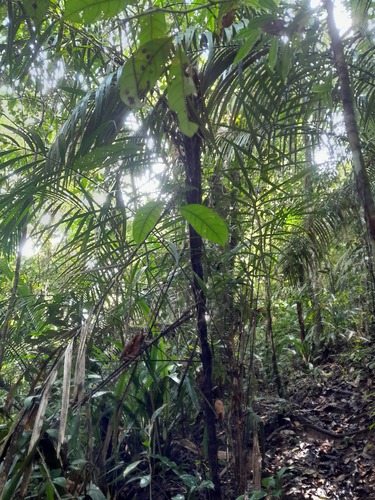
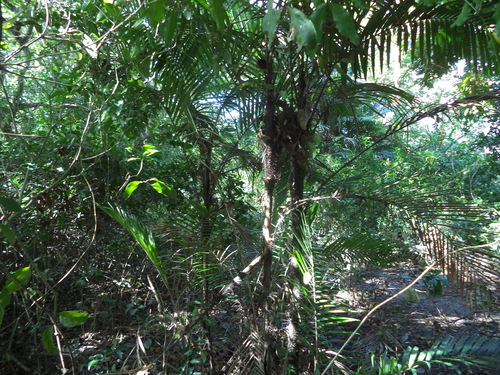
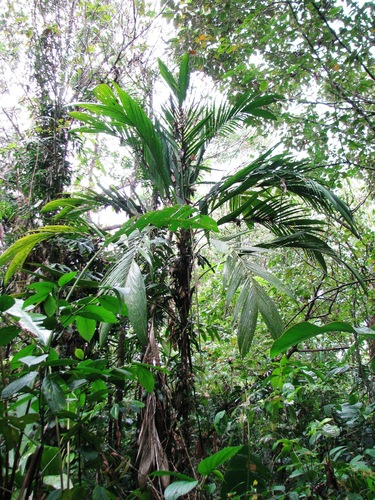
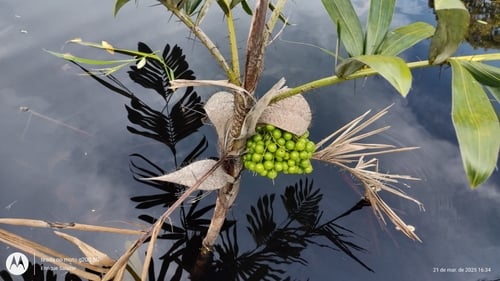
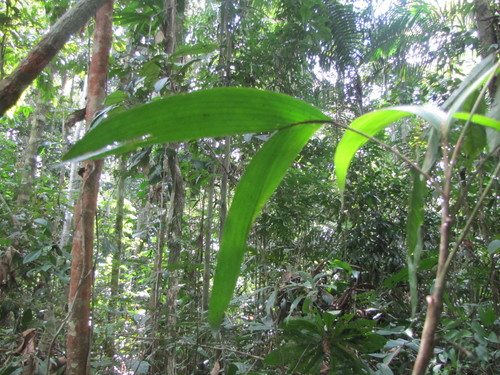
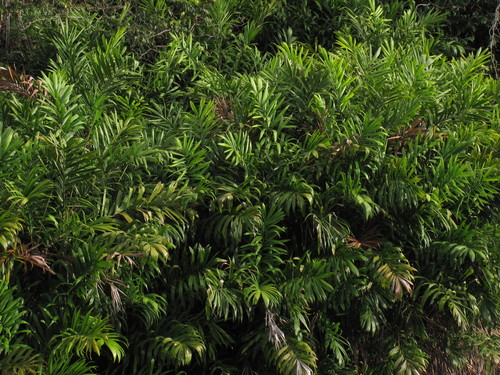
A clustering palm. It grows 5 m tall. The stems can be 2.5 cm across. The stems are deep olive green with widely spaced reddish-brown scars from old leaf bases. The crown-shaft is 60 cm tall. They are plump and golden-orange. The leaf crowns are sparse and open. The leaves are 2-2.3 m long on 60 cm long leaf stalks. The leaflets are dull green and widely spaced. They are 45 cm long. They have a long tip and are slightly S shaped. The flowering stalk is golden, erect and short. The fruit are congested together. They start white but turn pink then black.
Edible Uses
The nuts are sometimes used as a betel nut substitute and are chewed as a masticatory.
Traditional Uses
Nut sometimes used as a betel nut substitute.
This uses section is brief — help expand it
Distribution
A tropical plant. It grows in mountainous rainforest between 300-1000 m altitude.
Where It Grows
Asia, Australia, Hawaii, Indochina, Malaysia, SE Asia, Thailand,
Cultivation
Pinanga scortechinii is a plant of the humid tropics, where it is found at low to moderate elevations. Species in this genus generally require a warm, sheltered position with at least moderate shade, especially when young. They grow best in a circumneutral, moist but well-drained soil and strongly dislike dry conditions.
Propagation
Seed - Division of new growths at the base
Other Uses
The leaves are used for thatching. The tough outer portions of the stems are used as laths.
References (3)
- Hibbert, M., 2002, The Aussie Plant Finder 2002, Florilegium. p 234
- Johnson, D.V., 1998, Tropical palms. Non-wood Forest products 10. FAO Rome. p 48
- Riffle, R.L. & Craft, P., 2003, An Encyclopedia of Cultivated Palms. Timber Press. p 416