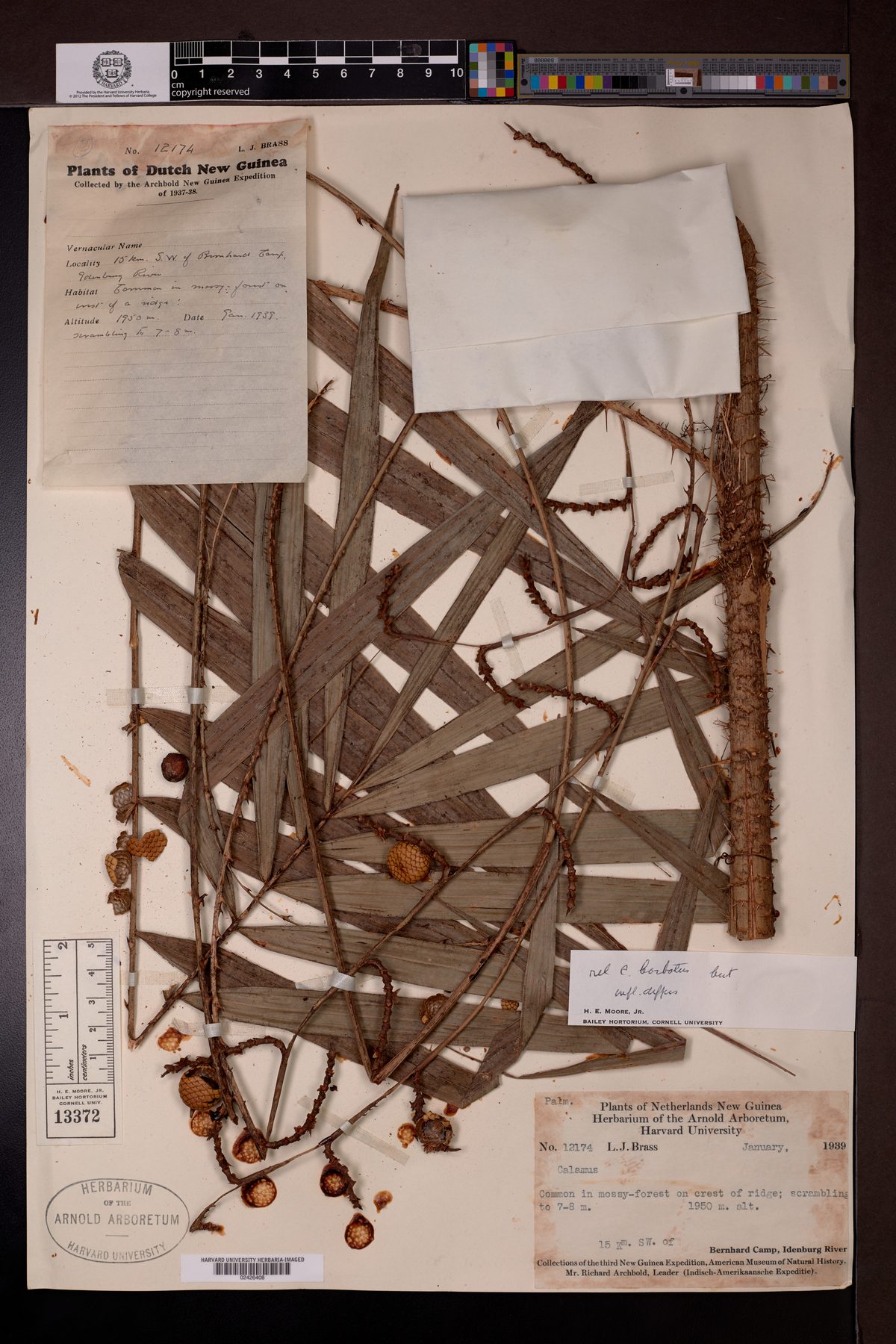
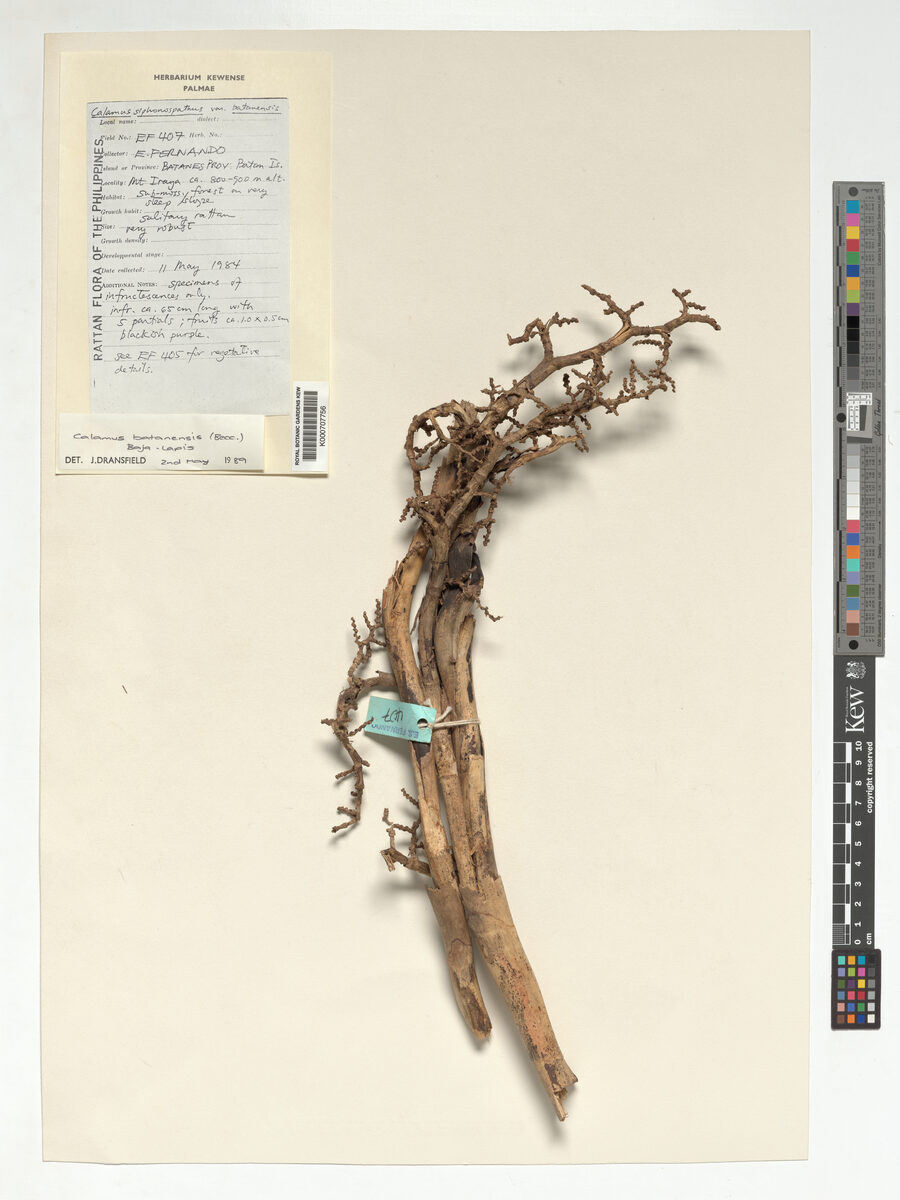
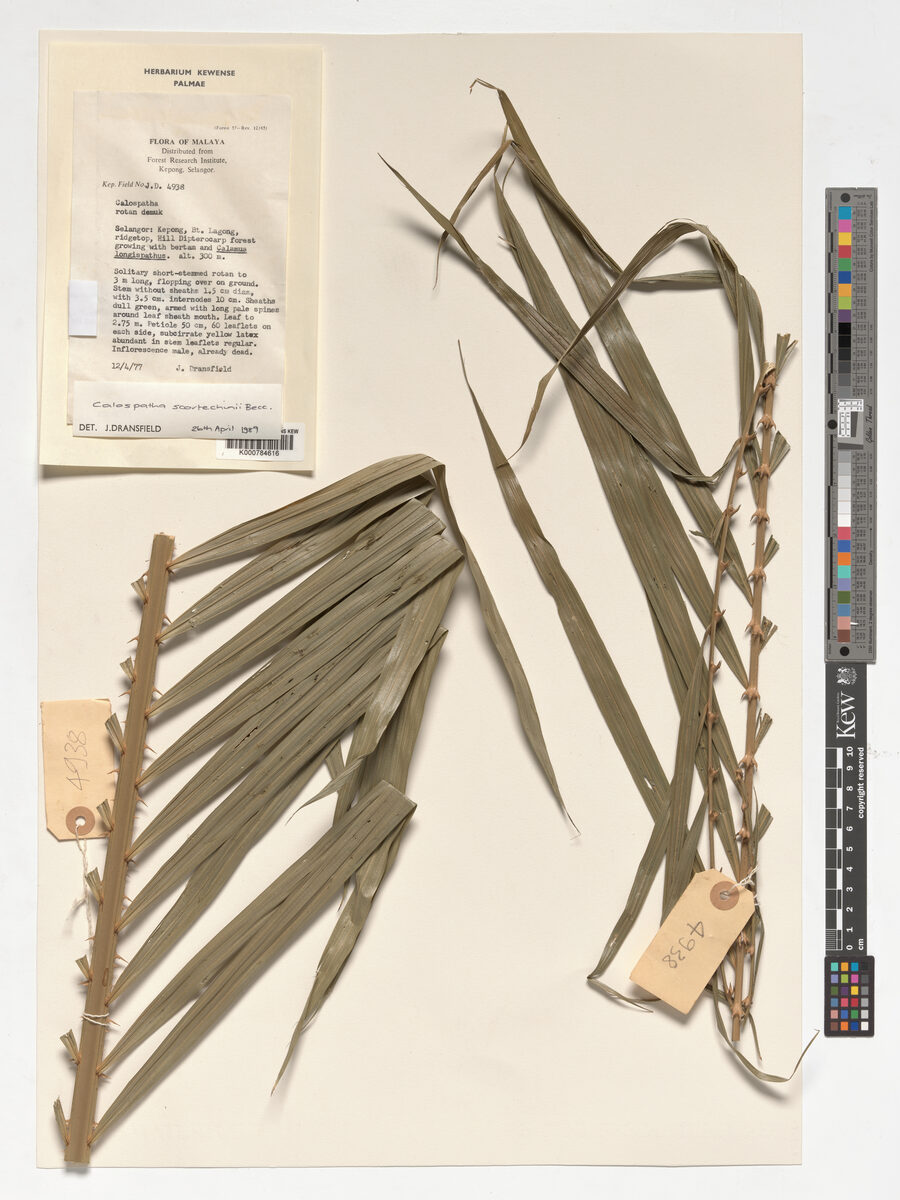
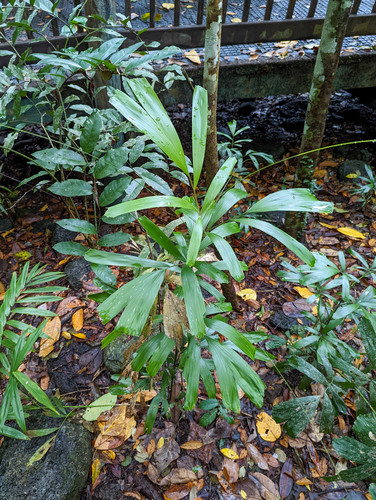
Calamus paspalanthus
Becc.
Rotan tingkas, Rotan semiang
iNaturalist· cc-by
(c) Ong Jyh Seng, some rights reserved (CC BY), uploaded by Ong Jyh Seng
iNaturalist· cc-by
(c) Ong Jyh Seng, some rights reserved (CC BY)
Description
A climbing palm or rattan. It can grow 20 m tall. Roots develop from the lower nodes that are near the ground. The stem without the leaf sheath is 10-15 mm across.
Edible Uses
The palm heart is eaten raw as a vegetable. The sour fruit are eaten fresh or used for pickles. Young shoots are also eaten.
Traditional Uses
The palm heart is edible. The fruit is eaten and used for pickles. The fruit are sour.
This uses section is brief — help expand it
Distribution
A tropical plant. It grows in primary forests and up to 1,300 m altitude.
Where It Grows
Asia, Indonesia, Malaysia, SE Asia,
Cultivation
Most species in this genus are more or less vigorous climbing plants in rainforests. Leaves of young plants are normally damaged if exposed to too much light, though leaves of older plants will usually tolerate full sun. In general, plants are likely to grow best with their roots in the shade but with enough gap in the canopy to encourage their stems to grow up towards the light. They are also likely to grow best in a humus-rich soil. Many of the species require fairly moist conditions for good growth, in fact several of them grow in wet soils or in areas with seasonal inundation - where we have the information it will be included under the plant’s habitat. Overhead shade should be manipulated at about 6-monthly intervals for the first 2 - 3 years of a young plant’s life to ensure they receive sufficient light to grow vigorously. About 40 - 50% light penetration is generally considered to be ideal for promoting stem growth. Little care is needed once the seedlings are established. It is important, however, to weed the area surrounding the seedlings occasionally until the plants are more than 2 metres tall. A dioecious species, both male and female forms need to be grown if fruit and seed are required.
Propagation
Seed - it has a fairly short viability and is best sown as soon as it is ripe.
Other Uses
The exudate from the burnt cane can be used to blacken and strengthen teeth. The stems are considered to be unsuitable for use in basketry etc because of the plants habit of creeping along the ground and forming adventitious roots at each node.
Notes
There are 375-400 Calamus species. There are 175 species in tropical Asia.
Synonyms
Also Known As
Rotan sirikis, Wi lohong, Wi tingkow
References (7)
- Burkill, I.H., 1966, A Dictionary of the Economic Products of the Malay Peninsula. Ministry of Agriculture and Cooperatives, Kuala Lumpur, Malaysia. Vol 1 (A-H) p 404
- Chai, P. P. K. (Ed), et al, 2000, A checklist of Flora, Fauna, Food and Medicinal Plants. Lanjak Entimau Wildlife Sanctuary, Sarawak. Forestry Malaysia & ITTO. p 162, 169
- Dransfield, J., 1992, The Rattans of Sarawak, Kew. p 146
- Haynes, J., & McLaughlin, J., 2000, Edible palms and Their Uses. University of Florida Fact sheet MCDE-00-50-1 p 4
- Johnson, D.V., 1998, Tropical palms. Non-wood Forest products 10. FAO Rome. p 18, 66
Show all 7 references Hide references
- Milow, P., et al, 2013, Malaysian species of plants with edible fruits or seeds and their evaluation. International Journal of Fruit Science. 14:1, 1-27
- PROSEA (Plant Resources of South East Asia) handbook, Volume 6, 1993, Rattans.