Pelagodoxa henryana
Becc. ex Bois
Enu palm, Marquesas palm, Pelagodoxa palm
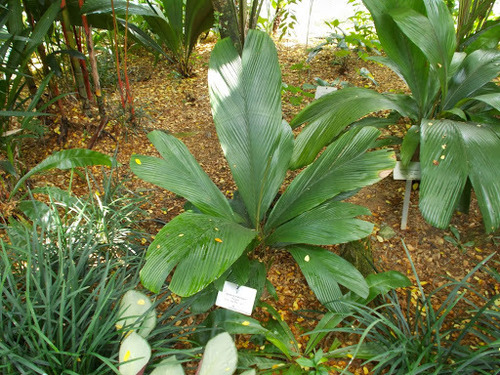
iNaturalist· cc-by-nc
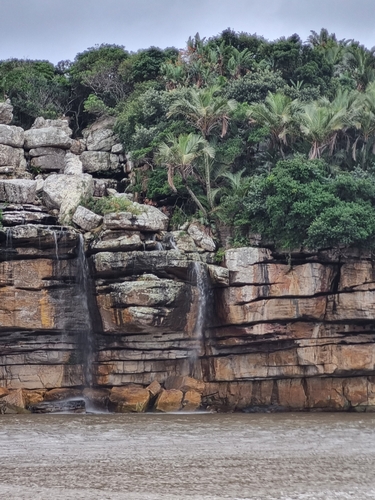
(c) Hubert Szczygieł, some rights reserved (CC BY-NC), uploaded by Hubert Szczygieł
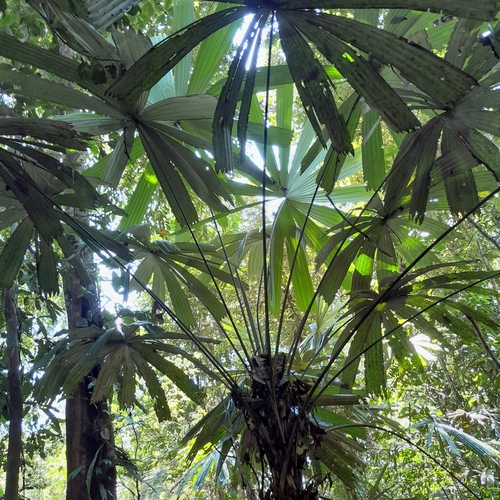
iNaturalist· cc-by-nc
(c) Hubert Szczygieł, some rights reserved (CC BY-NC), uploaded by Hubert Szczygieł
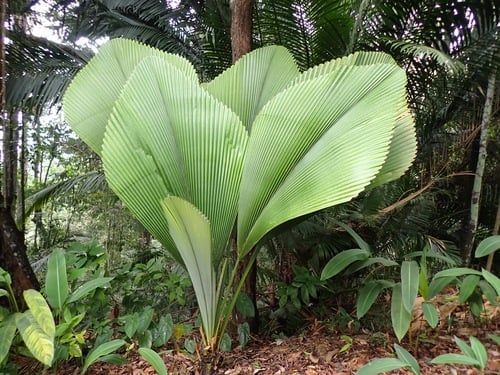
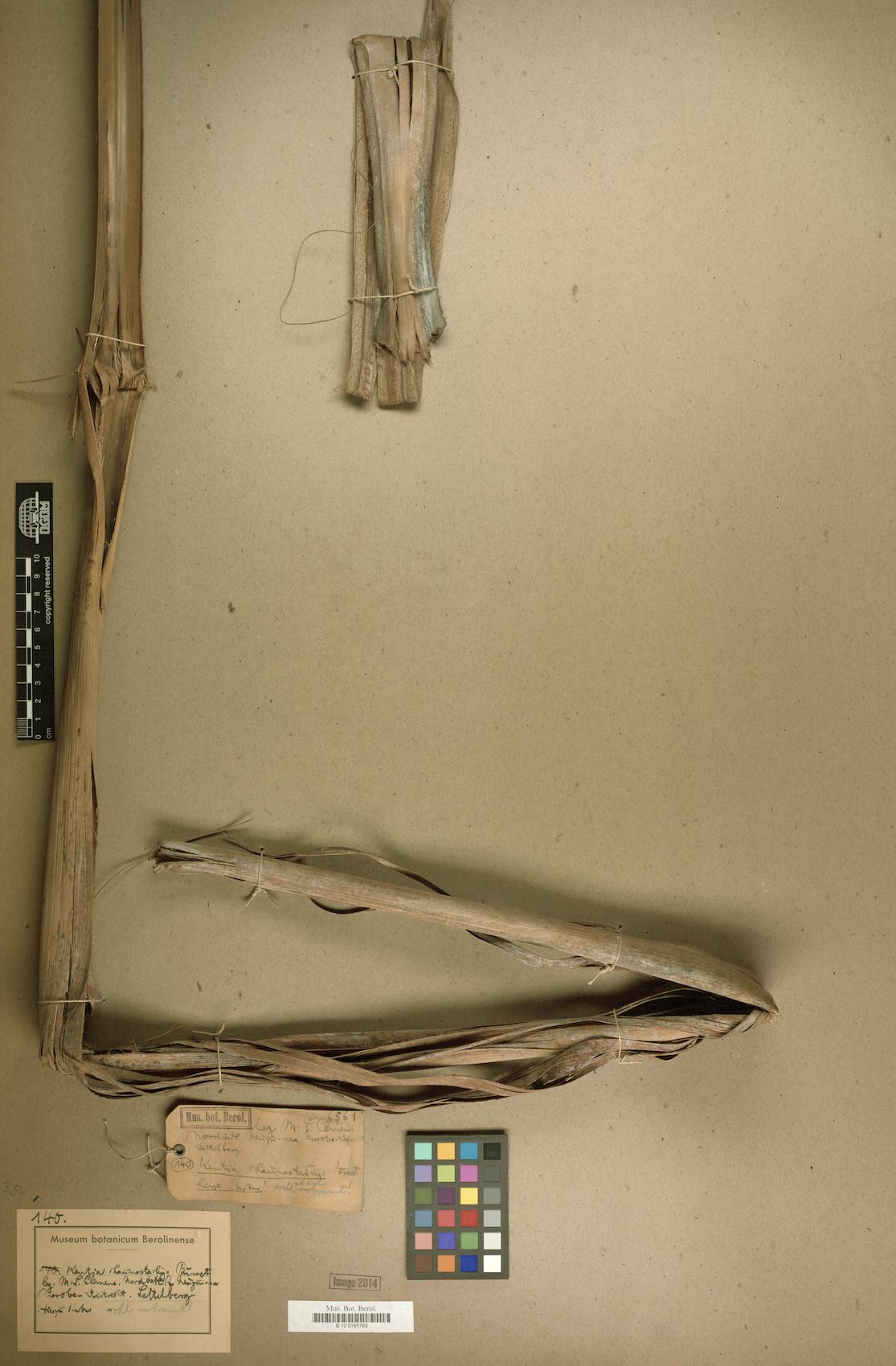
iNaturalist· cc-by-nc-sa
(c) 106611639464075912591, some rights reserved (CC BY-NC-SA), uploaded by 106611639464075912591
Summary
Source: WikipediaPelagodoxa henryana is a species of palm tree. It is native to French Polynesia, where it survives on Nuku Hiva in the Marquesas Islands. A population on Raivavae in the Tubuai Islands is presumed extinct. The species is threatened by habitat loss.
Description
A large palm. It can be 7 m high. It is fairly slender. The trunk is about 15 cm across. The leaves are entire and 2 m long by 1 m wide. They are bright green above and whitish underneath. The leaves are undivided but they may get shredded by the wind. The leaf stalks are covered by scaly, felt like hairs. The flowering stalks are among the leaf bases. They are 50-60 cm long. The male and female flowers are yellow and separate but occur on the one stalk. The fruit are large. They can be 10 cm across and covered with rough corky projections. Single plants can set seed.
Distribution
It is a tropical plant. It grows in dense lowland rainforests up to 135 m above sea level. It is very sensitive to cold. It needs a somewhat protected position. It needs a well drained soil. It suits hot humid conditions. In Cairns Botanical Gardens. In Brisbane Botanical Gardens hothouse. In Townsville palmetum.
Where It Grows
Asia, Australia, French Polynesia, Hawaii, Indonesia, Marquesas Islands*, Pacific, SE Asia, South America, Tahiti, Venezuela,
Cultivation
Plants are grown from seed. Seed are slow and erratic to germinate. To assist, the fruit are left on the ground until the corky outer layer rots away. The hard covering of the seed is cracked.
Notes
There is only one Pelagodoxa species. It is an endangered plant.
Also Known As
Palem enu, Palem pelago
References (11)
- Blomberry, A. & Rodd, T., 1982, Palms. An informative practical guide. Angus & Robertson. p 136
- Dowe, J.L., 1989, Palms of the South-West Pacific. Palm and Cycad Society of Australia. p 89
- Gibbons, M., 2003, A pocket guide to Palms. Chartwell Books. p 155
- Haynes, J., & McLaughlin, J., 2000, Edible Palms and their uses.
- http://www.ntbg.org/plants/plant details.php
Show all 11 references Hide references
- Johnson, D.V., 1998, Tropical palms. Non-wood Forest products 10. FAO Rome. p 79
- Jones, D.L., 1994, Palms throughout the World. Smithtonian Institution, Washington. p 56, 284
- Jones, D.L., 2000, Palms of Australia 3rd edition. Reed/New Holland. p 192
- Rev. Hort. 89:302. 1917
- Riffle, R.L. & Craft, P., 2003, An Encyclopedia of Cultivated Palms. Timber Press. p 399
- Sukarya, D. G., (Ed.) 2013, 3,500 Plant Species of the Botanic Gardens of Indonesia. LIPI p 799