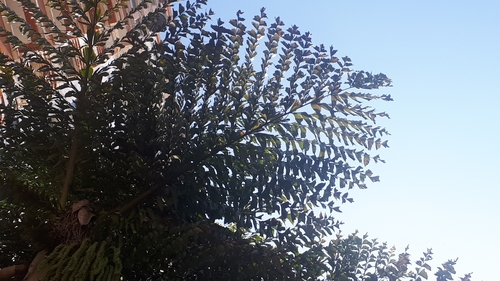
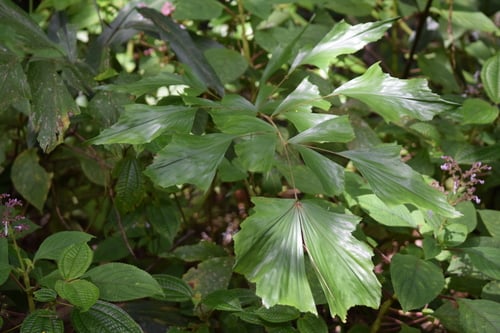
Cyphosperma tanga
(H.E. Moore) H.E.Moore
Tangga
gbif· cc-by
Royal Botanic Gardens, Kew
gbif· cc-by
Royal Botanic Gardens, Kew
gbif· cc-by
Royal Botanic Gardens, Kew
Summary
Source: WikipediaCyphosperma tanga is a species of flowering plant in the family Arecaceae. It is found only in Fiji. Cutting by the Forestry Department resulted in the serious depletion of one subpopulation in 1970 and also continues to affect another more recently discovered subpopulation. Seed crops of reasonable size appear to be extremely infrequent and it is threatened by habitat loss.
Description
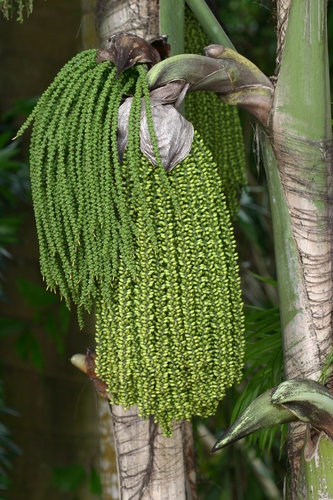
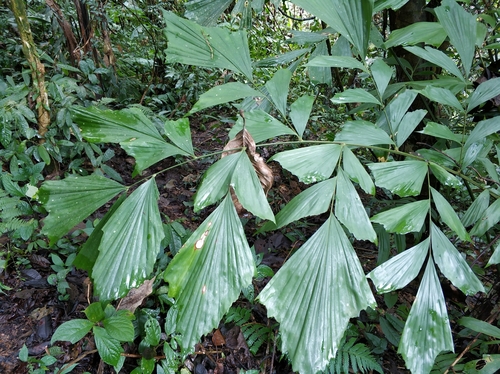
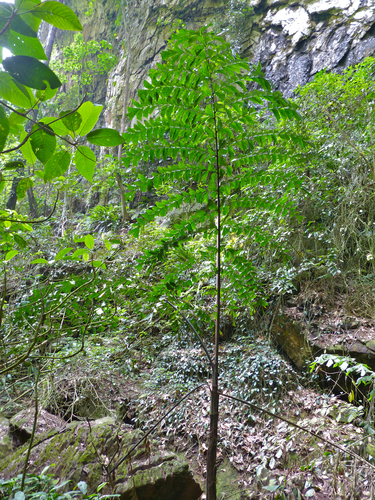
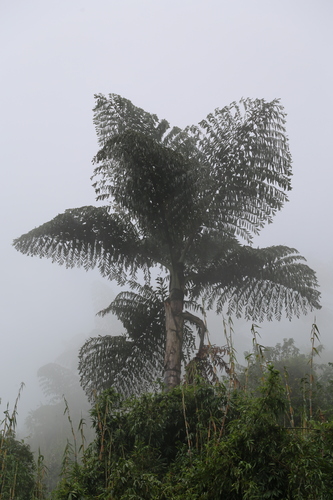
A solitary palm. It grows 6 m high and is 12 cm across the trunk. The trunk is chocolate brown with yellow rings from the leaf bases. The leaves are large. They are 2 m long and stand erect. They are deep green above and pale green underneath. They are undivided or split at irregular spaces towards the tip. The flowering stalk has a few branches. It is 2 m long and erect. At the tip there are 60 cm long thin branches with greenish yellow flowers. These are of both sexes. The fruit are yellow and 12 cm across.
Edible Uses
The seeds are eaten, and the palm heart (cabbage) is edible.
Traditional Uses
The seed is eaten. The palm heart is edible.
This uses section is brief — help expand it
Distribution
A tropical plant. It grows in Fiji as an understorey palm in rainforest. It needs constant warmth and moisture. The soil should be rich in humus and be slightly acid. It can stand full sun after the seedling stage.
Where It Grows
Fiji, Pacific,
Notes
There are 4 Cyphosperma species.
Synonyms
References (6)
- Haynes, J., & McLaughlin, J., 2000, Edible palms and Their Uses. University of Florida Fact sheet MCDE-00-50-1 p 5
- Johnson, D.V., 1998, Tropical palms. Non-wood Forest products 10. FAO Rome. p 79
- Jones, D.L., 1994, Palms throughout the World. Smithtonian Institution, Washington. p 204
- Riffle, R.L. & Craft, P., 2003, An Encyclopedia of Cultivated Palms. Timber Press. p 318
- Smith, A.C., 1979, Flora Vitiensis Nova: A New flora of Fiji, Hawai Botanical Gardens, USA Vol 1 p 433
Show all 6 references Hide references
- Watling, D., 2005, Palms of the Fiji Islands. Environmental Consultants (Fiji) Ltd. p 164