Frangula caroliniana
(Walter) A, Gray
Indian cherry, Carolina Buckthorn, Redberry, Yellowwood, Yellow buckthorn
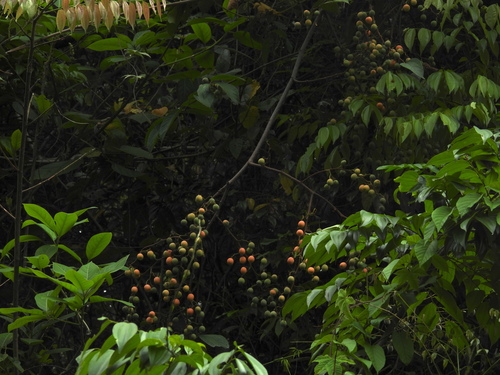
iNaturalist· cc-by-nc
(c) rockybranch, some rights reserved (CC BY-NC), uploaded by rockybranch
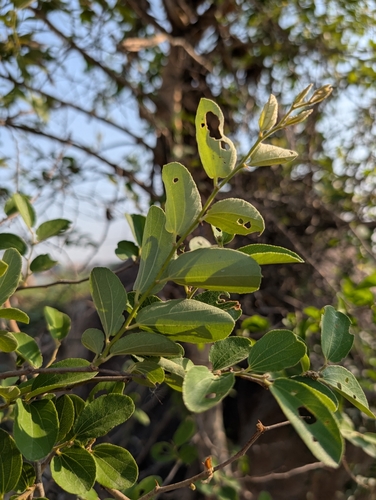
iNaturalist· cc-by-nc
(c) Mikey, some rights reserved (CC BY-NC), uploaded by Mikey
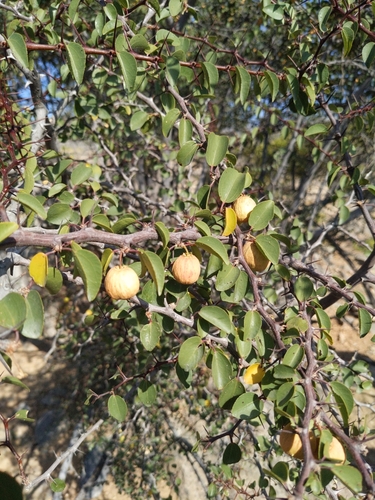
iNaturalist· cc-by-sa
(c) Douglas Goldman, some rights reserved (CC BY-SA), uploaded by Douglas Goldman
Summary
Source: WikipediaFrangula caroliniana, commonly called the Carolina buckthorn, is a deciduous upright shrub or small tree native to the southeastern, south-central, and mid-western parts of the United States, from Texas east to Florida and north as far as Maryland, Ohio, Missouri, and Oklahoma. There is also an isolated population in the State of Nuevo León in northeastern Mexico. It is found in a wide variety of habitats, including barrens, forests, and limestone bluffs.
Description
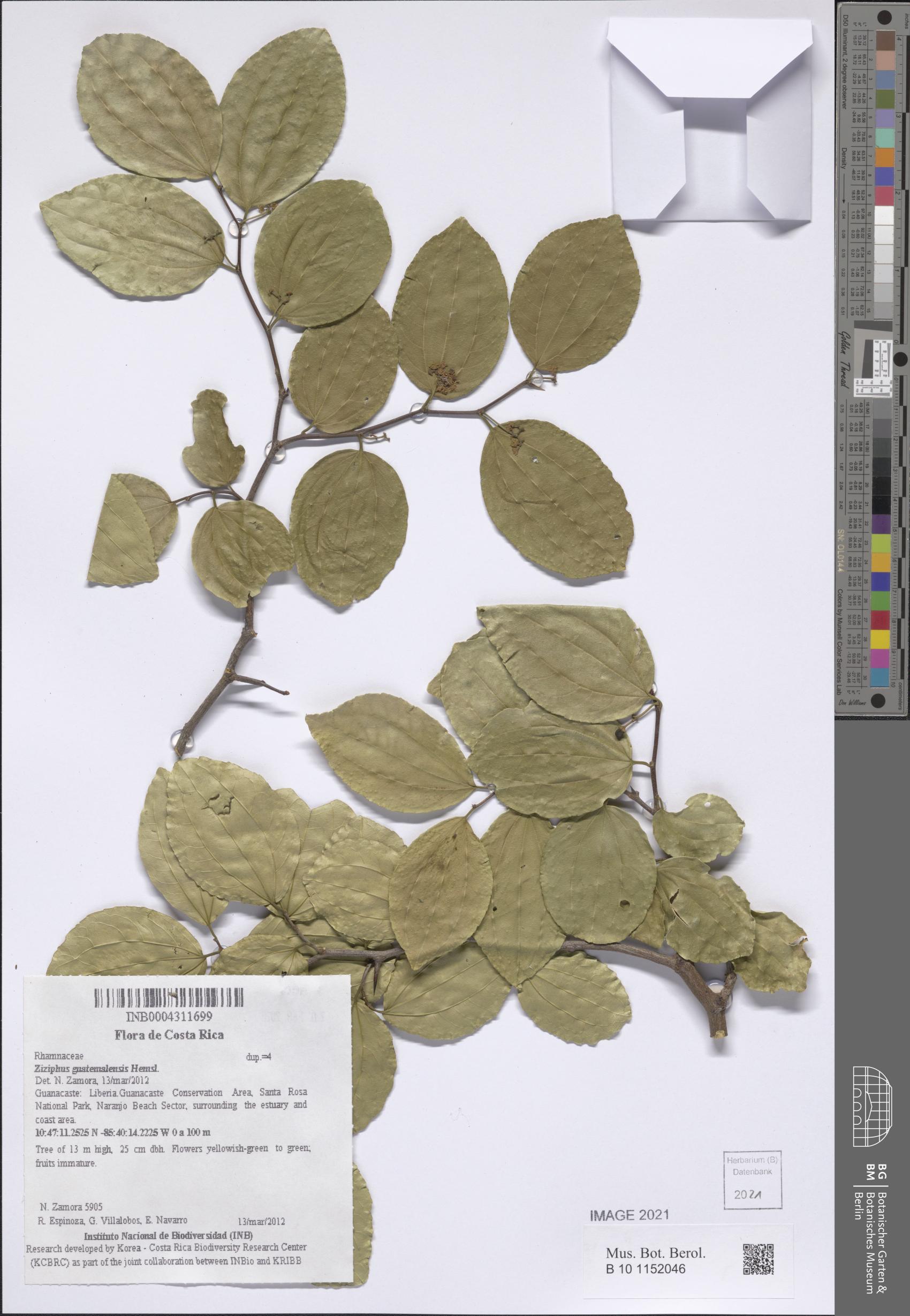
A shrub or small tree. The crown is spreading. The branches are slender. It grows 9 m high. The trunk is 15 cm across. The bark is grey and often with black patches. The leaves are 5-13 cm long and 2-4 cm wide. They are narrowly oval and have fine wavy teeth along the edge. The veins are almost straight. The leaves have rust coloured hairs when young. The mature leaves are dark green above and paler underneath. The leaves turn yellow in autumn. The flowers are 5 mm wide. They are bell shaped. There are 5 pointed greenish-yellow sepals. The flowers occur in clusters at the base of the leaves. The fruit are 10 mm across. They are berry like and turn from red to black. They contain 3 seeds.
Edible Uses
The fruit is edible.
Distribution
It is a temperate plant. It grows well on wet soils in stream valleys and on limestone ridges. It grows up to 600 m altitude in the southern USA. It suits hardiness zones 5 to 9. Hobart Botanical Gardens.
Where It Grows
Australia, Britain, Europe, Mexico, North America, USA, Tasmania,
Cultivation
It can be used as a hedge.
Notes
There are over 100 Rhamnus species.
Synonyms
Also Known As
Yellow buckthorn
References (10)
- Plants For a Future. (As Rhamnus caroliniana)
- Fl. carol. 101. 1788
- Grandtner, M. M., 2008, World Dictionary of Trees. Wood and Forest Science Department. Laval University, Quebec, Qc Canada. (Internet database http://www.wdt.qc.ca)
- GRIN
- Hedrick, U.P., 1919, (Ed.), Sturtevant's edible plants of the world. p 555
Show all 10 references Hide references
- Kiple, K.F. & Ornelas, K.C., (eds), 2000, The Cambridge World History of Food. CUP p 1739
- Little, E.L., 1980, National Audubon Society Field Guide to North American Trees. Alfred A. Knopf. p 593
- Plants for a Future database, The Field, Penpol, Lostwithiel, Cornwall, PL22 0NG, UK. http://www.scs.leeds.ac.uk/pfaf/
- USDA, ARS, National Genetic Resources Program. Germplasm Resources Information Network - (GRIN). [Online Database] National Germplasm Resources Laboratory, Beltsville, Maryland. Available: www.ars-grin.gov/cgi-bin/npgs/html/econ.pl (10 April 2000) (As Frangula caroliniana)
- Wiersema, J. H. & Leon, B., 2013, World Economic Plants. A Standard Reference CRC Press. 2nd Ed. p 311