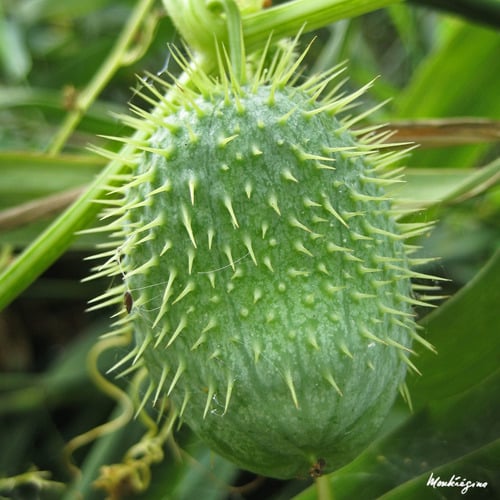
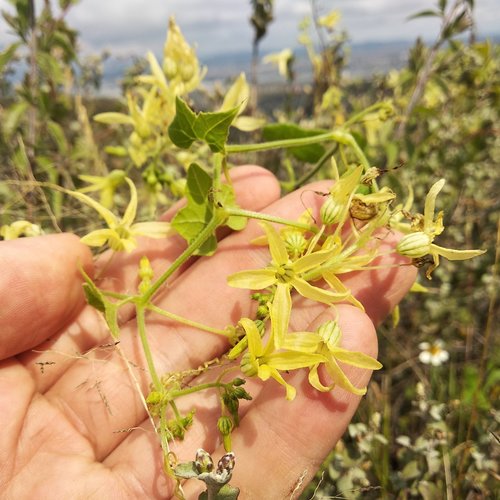
Zehneria japonica
(Thunb.) H. Y. Liu
Chum-thang, Cauqua trai-trang
iNaturalist· cc-by-nc
(c) 蒋迪(涂璟), some rights reserved (CC BY-NC), uploaded by 蒋迪(涂璟)
iNaturalist· cc-by-nc
(c) chanwanghoi_kyle, some rights reserved (CC BY-NC)
iNaturalist· cc-by-nc
(c) Charles, some rights reserved (CC BY-NC), uploaded by Charles
Description
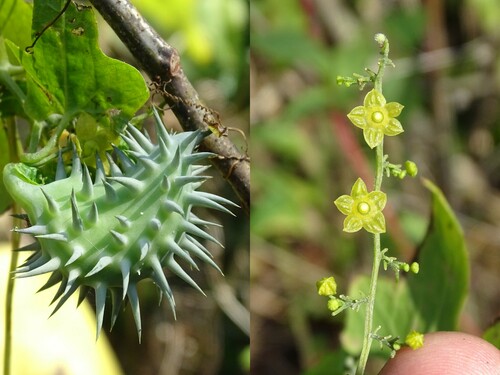
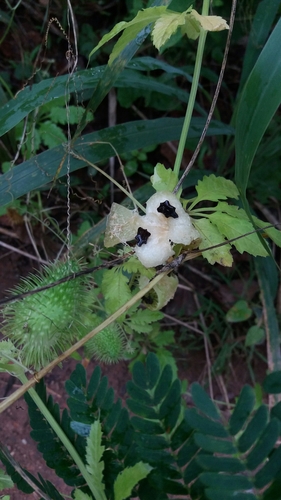
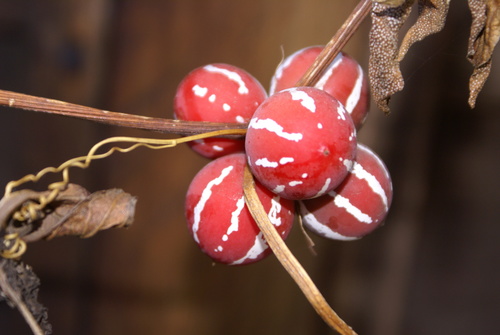
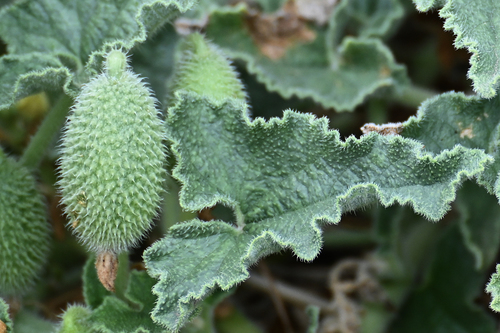
A pumpkin family plant. It is a fine climbing plant. It has fleshy thickened roots. There are fine hairs underneath the stems. The stems are much branched and 1-2 m long. The tendrils are not branched. The leaves are oval or triangle shaped and 3-8 cm long. They taper to the tip and have lobes at the base. They are irregularly rounded or scalloped along the edge. The flowers are white and of one sex but with both sexes on the same plant. They are 5 mm across. The fruit are oval and 1-2 cm long. The fruit are whitish berries.
Edible Uses
The ripe fruit are eaten raw, and the root is boiled with chicken and eaten. The leaves are also edible.
Traditional Uses
The ripe fruit are eaten raw. The fruit are purgative. They are recorded as eaten. The root is boiled with chicken and eaten.
This uses section is brief — help expand it
Medicinal Uses
The fruit have a purgative effect.
Distribution
A tropical plant.
Where It Grows
Asia, China, India, Indochina, Laos, Myanmar, Nepal, SE Asia, Tibet, Vietnam,
Notes
There are about 30 Zehneria species. They grow in the tropics and subtropics. Check name Neoachmandra indica (Lour.) W. J. de Wilde & Duyfjes;
Synonyms
Also Known As
Chum-thang, Cauqua trai-trang, Dudur, Golka-kri, Indian zehneria, Ka-gyi, Ma die er, Mao bao er, Ye shao gua
References (10)
- Acharya K. P. and Acharya, R., 2010, Eating from the Wild: Indigenous knowledge on wild edible plants in Parroha VDC of Rupandehi District, Central Nepal. International Journal of Social Forestry. 3(1):28-48 (As Zehneria indica)
- Ambasta, S.P. (Ed.), 2000, The Useful Plants of India. CSIR India. p 698 (As Zehneria indica)
- Dangol, D. R. et al, 2017, Wild Edible Plants in Nepal. Proceedings of 2nd National Workshop on CUAOGR, 2017.
- Gautam, R. S., et al, 2020, Wild Edible Fruits of Nepal. Int. J. Appl. Sci. Biotechnol. Vol 8(3): 289-304
- Gautam, R. S., et al, 2022, Ethnobotanical Review of Wild Edible Plants of Nepal. Journal of Natural History Museum Volume 32, 2021-22 p 111
Show all 10 references Hide references
- Hu, Shiu-ying, 2005, Food Plants of China. The Chinese University Press. p 712 (As Zehneria indica)
- Li, S., et al, 2020, Monpa, memory, and change: an ethnobotanical study of plant use in Mêdog County, South-east Tibet, China. Journal of Ethnobiology and Ethnomedicine. (2020) 16:5 p 17
- Lim, T. K., 2015, Edible Medicinal and Non Medicinal Plants. Volume 9, Modified Stems, Roots, Bulbs. Springer p 87 (As Zehneria indica)
- Pham-Hoang Ho, 1999, An Illustrated Flora of Vietnam. Nha Xuat Ban Tre. p 566 (As Zehneria indica)
- Yang, Si-Lin and Walters, T. W., 1992, Ethnobotany and the Economic role of the Cucurbitaceae of China. Economic Botany, Vol. 46, No. 4, pp. 349-367 (As Zehneria indica)