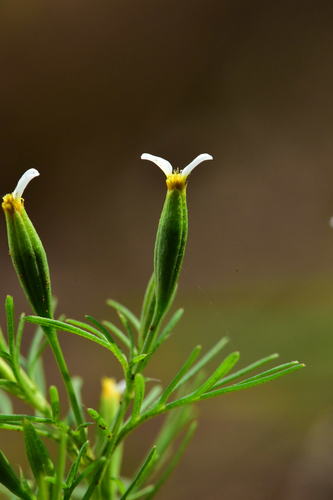
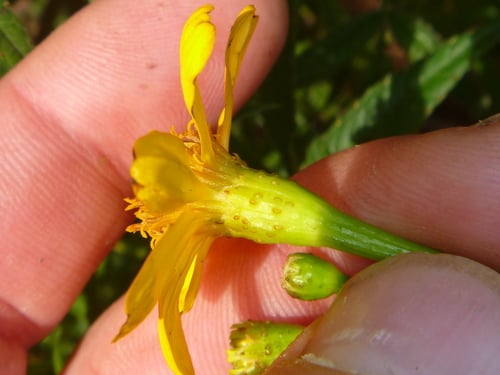
Xanthium commune
Britton
Abrojo, Canada Cockleburr
wikimedia· cc-by-sa
Wikimedia Commons - Oceancetaceen - Alice Chodura
wikimedia· cc-by-sa
Wikimedia Commons - Didier Descouens
Summary
Source: WikipediaXanthium commune is a tall annual reaching 1.5 m (5 ft). Flowering occurs from July to October with seeds ripening from August to October. The plant is monoecious and self-fertile, pollinated by insects. It adapts to light sandy, medium loamy, or heavy clay soils across mildly acidic to basic pH ranges. It needs full sun and prefers moist soil.
Description
Xanthium commune is a tall annual reaching 1.5 m (5 ft). Flowering occurs from July to October with seeds ripening from August to October. The plant is monoecious and self-fertile, pollinated by insects. It adapts to light sandy, medium loamy, or heavy clay soils across mildly acidic to basic pH ranges. It needs full sun and prefers moist soil.
Edible Uses
The seeds are dried, ground into a powder, and mixed with cereal flours to make bread, biscuits, and similar products. Some caution is advised regarding toxicity.
Traditional Uses
The seeds are ground into a meal.
This uses section is brief — help expand it
Medicinal Uses
None known
Known Hazards
Poisonous. Most members of this genus are toxic to grazing animals and are usually avoided by them. The seed also contains toxins.
Distribution
It is a temperate plant.
Where It Grows
Canada, North America, USA,
Cultivation
We have very little information on this species and do not know if it will be hardy in Britain, though judging by its native range it is likely to succeed outdoors in many parts of the country. The following notes are based on the general needs of the genus. An easily grown plant, it succeeds in most soils but requires a sunny position. Plants often self sow.
Propagation
Sow seed in spring in situ. The seed requires plenty of moisture to germinate.
Other Uses
None known
References (4)
- Beckstrom-Sternberg, Stephen M., and James A. Duke. "The Foodplant Database." http://probe.nalusda.gov:8300/cgi-bin/browse/foodplantdb.(ACEDB version 4.0 - data version July 1994)
- Kiple, K.F. & Ornelas, K.C., (eds), 2000, The Cambridge World History of Food. CUP p 1759
- Man. fl. n. states 912. 1901
- Plants for a Future database, The Field, Penpol, Lostwithiel, Cornwall, PL22 0NG, UK. http://www.scs.leeds.ac.uk/pfaf/