Wahlenbergia androsacea
A. DC.
Hare-bell
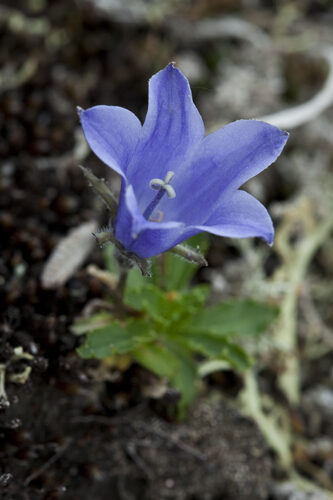
iNaturalist· cc-by-nc
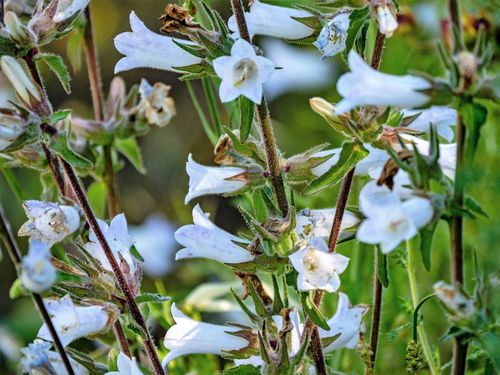
(c) Felix Riegel, some rights reserved (CC BY-NC), uploaded by Felix Riegel
iNaturalist· cc-by-sa
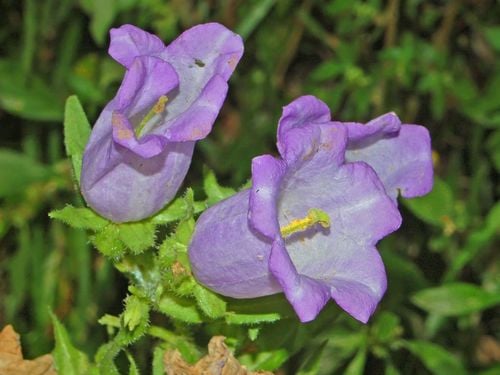
(c) Brian du Preez, some rights reserved (CC BY-SA)
Description
An annual herb. It loses its leaves. It grows up to 55 cm tall. It has a white taproot. The leaves are 3-13 cm long by 1-2 cm wide. They are flat and narrowly sword shaped or spoon shaped. The flower arrangements are short, broad and almost flat-topped. They are on branched stalks. The fruit is a round capsule with 3 chambers.
Edible Uses
The leaves are cooked and eaten as a spinach.
Traditional Uses
The leaves are cooked and eaten as a spinach.
This uses section is brief — help expand it
Distribution
It is a subtropical plant. It grows in places that are sometimes waterlogged. It can grow in arid places.
Where It Grows
Africa, Botswana, East Africa, Eswatini, Lesotho, Mozambique, Namibia, South Africa, Southern Africa, Swaziland, Zimbabwe,
Synonyms
Also Known As
Setanane, Tenane
References (12)
- Fox, F. W. & Young, M. E. N., 1982, Food from the Veld. Delta Books. p 142
- Gillarmod, J., 1966, 1971,
- Jardin, C., 1970, List of Foods Used In Africa, FAO Nutrition Information Document Series No 2.p 111
- Letsela, T., et al, 2003, Plant Resources Used for Subsistence in Tsehlanyane and Boking in Lesotho. Economic Botany 57(4): 619-639
- Long, C., 2005, Swaziland's Flora - siSwati names and Uses http://www.sntc.org.sz/flora/
Show all 12 references Hide references
- Martin, F.W. & Ruberte, R.M., 1979, Edible Leaves of the Tropics. Antillian College Press, Mayaguez, Puerto Rico. p 180
- Matlhare, T., et al, Vegetables in Botswana. p 21 Bioversity website.
- Peters, C. R., O'Brien, E. M., and Drummond, R.B., 1992, Edible Wild plants of Sub-saharan Africa. Kew. p 74
- Royal Botanic Gardens, Kew (1999). Survey of Economic Plants for Arid and Semi-Arid Lands (SEPASAL) database. Published on the Internet; http://www.rbgkew.org.uk/ceb/sepasal/internet [Accessed 5th April 2011]
- Ruiters-Welcome, A. K., 2019, Food plants of southern Africa. Ph.D. thesis. Univ. of Johannesburg p 41
- Welcome, A. K. & Van Wyk, B.-E., 2019, An inventory and analysis of the food plants of southern Africa. South African Journal of Botany 122 (2019) 136–179
- World Checklist of Useful Plant Species 2020. Royal Botanic Gardens, Kew