Phyteuma spicatum
L.
Spiked rampion
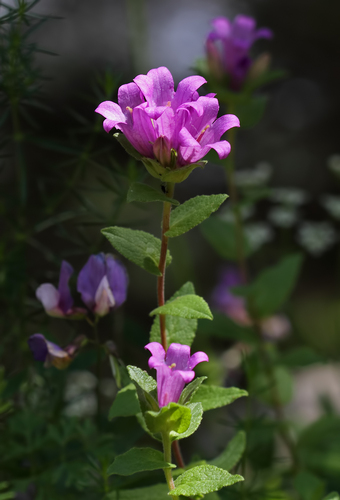
iNaturalist· cc-by-nc
(c) Vlasta Loya, some rights reserved (CC BY-NC), uploaded by Vlasta Loya
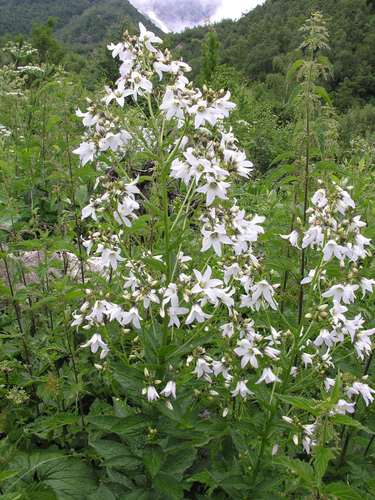
iNaturalist· cc-by-nc
(c) Martin A. Prinz, some rights reserved (CC BY-NC), uploaded by Martin A. Prinz
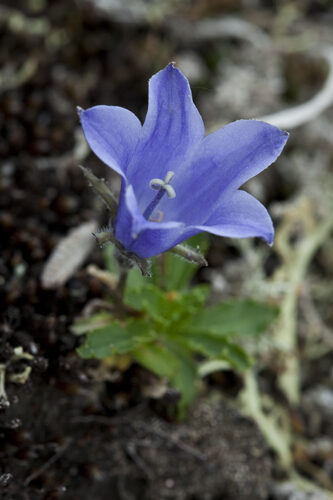
iNaturalist· cc0
no rights reserved, uploaded by Klaus Wehrlin
Summary
Source: WikipediaPhyteuma spicatum, the spiked rampion, is a herbaceous perennial plant in the family Campanulaceae. It is common across much of Europe. Its common names include raiponce en épi (French), Ährige Teufelskralle (German), Ährige Rapunzel (Swiss German), and Raponzolo giallo (Italian). Found in diverse types of forest, especially broadleaf beech forests, but also coniferous forests, as well as prairies, along forest roads, in logging clearings. The leaves, roots, and flowers are edible, and can be eaten raw. Flowers before blooming can for instance be prepared by steaming or boiling briefly, then seasoned (see photo).
Description
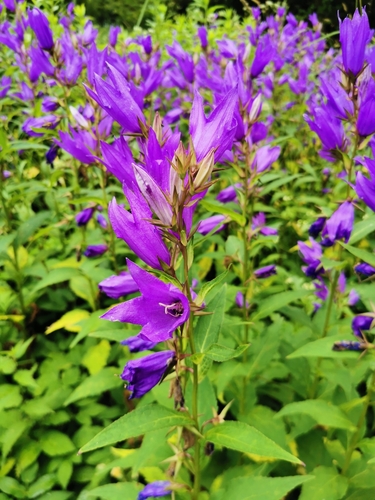
An erect herb. It keeps growing from year to year. The leaves are oval or heart shaped. They have teeth along the edge. The flowers are in cylinder shaped flower heads. The flower corollas are blue and the bracts narrow.
Edible Uses
The root is thick and fleshy and can be eaten raw in salads or boiled as a vegetable.
Traditional Uses
The thick fleshy roots can be boiled and eaten or eaten in salads. The young shoots are cooked and eaten as a vegetable.
This uses section is brief — help expand it
Medicinal Uses
None known
Distribution
It is a temperate plant. It suits hardiness zones 6-8.
Where It Grows
Australia, Balkans, Bosnia, Britain, Czech Republic, Europe, France, Germany, Italy, Luxembourg, Mediterranean, Switzerland,
Cultivation
Succeeds in almost any moderately good soil in sun or light shade. Succeeds in a woodland garden.
Propagation
Seed is best sown in a greenhouse as soon as it ripens in late summer, though a spring sowing in a cold frame also works. Only just cover the seed; germination is usually very quick. Prick out seedlings into individual pots when large enough to handle and plant out in early summer. Can also be propagated by division in spring or autumn.
Other Uses
None known
Synonyms
Also Known As
Zecica
References (12)
- Abbet, C., et al, 2014, Ethnobotanical survey on wild alpine food plants in Lower and Central Valais (Switzerland). Journal of Ethnopharmacology 151 (2014) 624–634
- Cundall, P., (ed.), 2004, Gardening Australia: flora: the gardener's bible. ABC Books. p 1038
- Facciola, S., 1998, Cornucopia 2: a Source Book of Edible Plants. Kampong Publications, p 70
- Hedrick, U.P., 1919, (Ed.), Sturtevant's edible plants of the world. p 493
- Lim, T. K., 2015, Edible Medicinal and Non Medicinal Plants. Volume 9, Modified Stems, Roots, Bulbs. Springer p 65, 73
Show all 12 references Hide references
- Łukasz Łuczaj and Wojciech M Szymański, 2007, Wild vascular plants gathered for consumption in the Polish countryside: a review. J Ethnobiol Ethnomedicine. 3: 17
- Paoletti, M.G., Dreon, A.L., and Lorenzoni, G.G., 1995, Pistic, Traditional Food from Western Friuli, NE Italy. Economic Botany 49(1) pp 26-30
- PARMENTIER, (As Rapunculus spicatus)
- Plants for a Future database, The Field, Penpol, Lostwithiel, Cornwall, PL22 0NG, UK. http://www.scs.leeds.ac.uk/pfaf/
- Redzic, S. J., 2006, Wild Edible Plants and their Traditional Use in the Human Nutrition in Bosnia-Herzegovina. Ecology of Food and Nutrition, 45:189-232
- Simkova, K. et al, 2014, Ethnobotanical review of wild edible plants used in the Czech Republic. Journal of Applied Botany and Food Quality 88, 49-67
- Turner, N. J. et al, 2011, Edible and Tended Wild Plants, Traditional Ecological Knowledge and Agroecology. Critical Reviews in Plant Sciences, 30:198-225