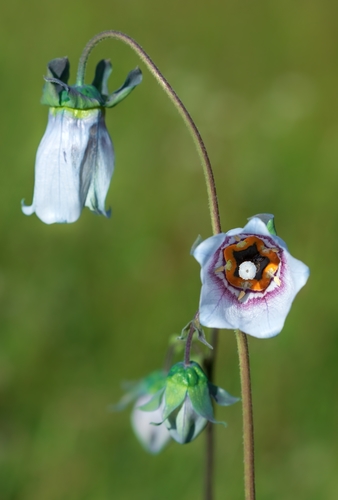
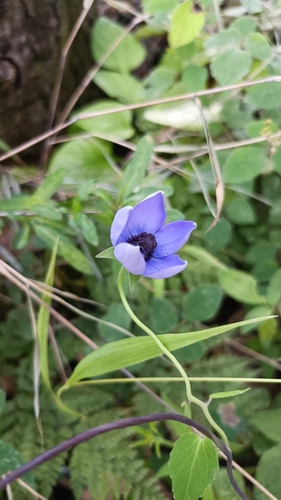
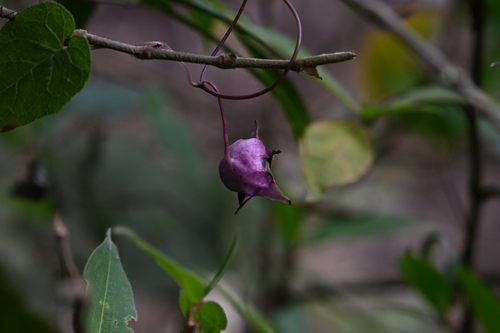
Phyteuma orbiculare
L.
Roundheaded rampion
iNaturalist· cc-by-sa
(c) Jerzy Opioła, some rights reserved (CC BY-SA)
iNaturalist· cc-by-nc
(c) Luca Boscain, some rights reserved (CC BY-NC)
Summary
Source: WikipediaPhyteuma orbiculare, common name round-headed rampion or Pride of Sussex, is a herbaceous perennial plant of the genus Phyteuma belonging to the family Campanulaceae.
Description
Perennial reaching 0.5m tall. Flowers from June to August with seeds ripening August to September. Hermaphrodite and self-fertile, pollinated by insects. Grows in light, medium, or heavy well-drained soils with neutral to basic pH. Requires full sun and tolerates both dry and moist conditions.
Edible Uses
The root can be eaten raw or cooked. Young leaves are also edible raw or cooked.
Traditional Uses
The leaves and fleshy roots are eaten in salads and also cooked as a vegetable. Also the flowers.
This uses section is brief — help expand it
Medicinal Uses
None known
Distribution
It is a temperate plant. It grows between 600-2,400 m above sea level.
Where It Grows
Balkans, Britain, Czech Republic, Europe, Italy, Switzerland,
Cultivation
Succeeds in almost any moderately good soil in sun or light shade. Plants are somewhat calcicole. Succeeds in thin meadow grass. There is some confusion over the correct name of this species. According to Flora Europaea it is found in S. Britain, though it is not in the Flora of the British Isles which mentions P. tengrum (synonym P. orbiculare. non L.)
Propagation
Seed is best sown in a greenhouse as soon as it is ripe in late summer, though it can also be sown in spring in a cold frame. Only just cover the seed. Germination is usually very quick. Prick seedlings out into individual pots when large enough to handle and plant out in early summer. The plant can also be divided in spring or autumn.
Other Uses
None known Special Uses
Synonyms
Also Known As
Grif, Zvonecnik hlavaty
References (7)
- Abbet, C., et al, 2014, Ethnobotanical survey on wild alpine food plants in Lower and Central Valais (Switzerland). Journal of Ethnopharmacology 151 (2014) 624–634
- Mattalia, G., et al, 2012, Traditional uses of wild food and medicinal plants among Brigasc, Kye ́, and Provenc ̧al communities on the Western Italian Alps. Genet Resour Crop Evol. Springer
- Plants for a Future database, The Field, Penpol, Lostwithiel, Cornwall, PL22 0NG, UK. http://www.scs.leeds.ac.uk/pfaf/
- Facciola, S., 1998, Cornucopia 2: a Source Book of Edible Plants. Kampong Publications, p 70
- Lim, T. K., 2015, Edible Medicinal and Non Medicinal Plants. Volume 9, Modified Stems, Roots, Bulbs. Springer p 65
Show all 7 references Hide references
- Simkova, K. et al, 2014, Ethnobotanical review of wild edible plants used in the Czech Republic. Journal of Applied Botany and Food Quality 88, 49-67
- Uphof,