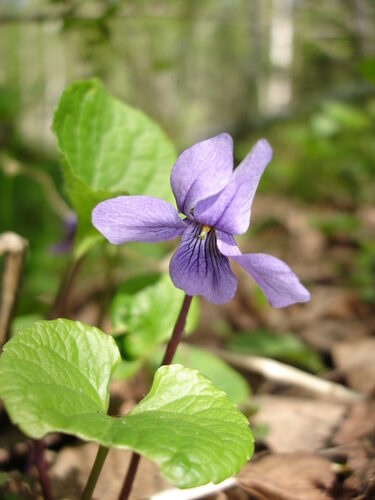
Viola sororia
Willd.
Woolly blue violet, Sister violet
iNaturalist· cc-by-nc
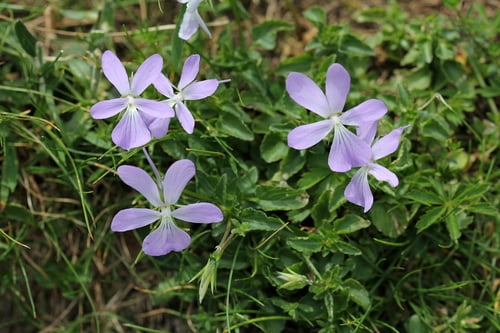
(c) Erika Betts, some rights reserved (CC BY-NC), uploaded by Erika Betts
iNaturalist· cc-by
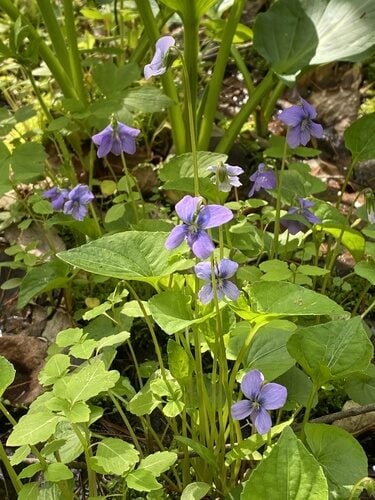
(c) Alison Northup, some rights reserved (CC BY), uploaded by Alison Northup
iNaturalist· cc-by-sa
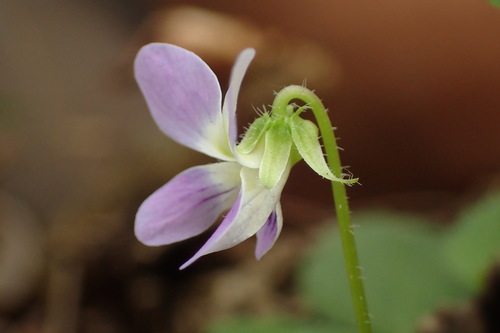
(c) Douglas Goldman, some rights reserved (CC BY-SA), uploaded by Douglas Goldman
Summary
Source: WikipediaViola sororia ( vy-OH-lə sə-ROR-ee-ə), known commonly as the common blue violet, is a short-stemmed herbaceous perennial plant native to eastern North America. It is known by a number of common names, including common meadow violet, purple violet, woolly blue violet, hooded violet, and wood violet. This perennial plant is distributed in the eastern half of the United States, Canada, and a part of eastern Mexico. Its native habitats are rich, moist woods, and swamps located in the eastern half of the United States and Canada. Its cultivar 'Albiflora' has gained the Royal Horticultural Society's Award of Garden Merit. Self-seeding freely in lawns and gardens, it can be considered a weed by some. Cleistogamous seed heads may also appear on short stems in late summer and early autumn.
Description
A perennial plant. It grows 10-15 cm high and 15-20 cm wide. It does not have a stem. It has underground stems or rhizomes. The leaves are scalloped and thick. They are 10 cm long. The leaves are hairy underneath. The flowers are violet-blue or white with streaks and speckles. They have short spurs.
Edible Uses
Young leaves and flower buds are mild in flavour and can be eaten raw or cooked, making an acceptable addition to mixed salads — often combined with stronger-tasting brassica leaves. Stirred into soups, they thicken in a similar way to okra. The leaves are rich in vitamins A and C. The flowers are also mild and make an attractive garnish for salads; they are rich in vitamin C and can be made into jams and jellies. Both leaves and flowers can be brewed into a tea.
Traditional Uses
The tender young leaves and flowers can be added to salads or cooked as potherbs. The leaves can be used to thicken soups.
This uses section is brief — help expand it
Medicinal Uses
A poultice of the leaves has been used to relieve headache pain. An infusion of the plant has been used to treat dysentery, coughs, and colds. A poultice of crushed root has been applied to boils.
Known Hazards
Viola sororia leaves and flowers are edible in moderation and also safe to plant around pets.
Distribution
It is a temperate plant. It is frost hardy. It suits hardiness zones 4-9.
Where It Grows
Australia, Canada, North America*, Slovenia, Tasmania, USA,
Cultivation
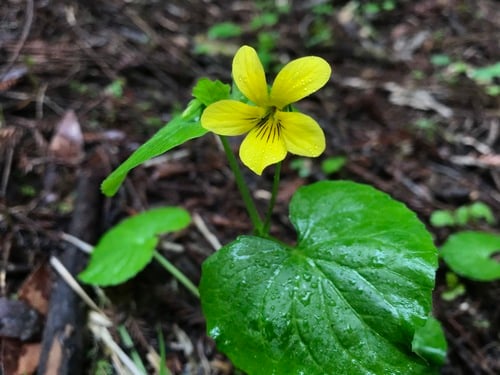
Prefers a cool moist well-drained humus-rich soil in partial or dappled shade and protection from scorching winds. Tolerates sandstone and limestone soils but becomes chlorotic if the pH is too high. Prefers a pH between 6 and 6.5. There are a number of named varieties selected for their ornamental value. Plants produce cleistogamous flowers as well as the usual insect pollinated flowers. All members of this genus have more or less edible leaves and flower buds, though those species with yellow flowers can cause diarrhoea if eaten in large quantities. Sometimes misspelt as Viola sororaria
Propagation
Sow seed in autumn in a cold frame for best results; stored seed can be sown in early spring in a cold frame. Prick seedlings into individual pots once large enough to handle and plant out in summer. Divide plants in autumn or just after flowering. Larger divisions can go directly into their permanent positions, but smaller divisions are best potted up and grown on in light shade in a greenhouse or cold frame until established, then planted out in summer or the following spring.
Other Uses
An infusion of the root has been used to soak corn seeds before planting to deter insects. The plant functions as a dynamic accumulator, drawing minerals and nutrients from the soil and storing them in a more bioavailable form, making it useful as a fertilizer or mulch improver. The flowers are not often visited by insects but occasionally attract bees (Mason, Halictid), skippers, Syrphid flies, and others; Syrphid flies feed only on stray pollen and do not pollinate. Caterpillars of several Fritillary butterflies feed on the foliage, including Speyeria diane (Diana), Euptoieta claudia (Variegated Fritillary), Speyeria aphrodite (Aphrodite Fritillary), Boloria bellona (Meadow Fritillary), and Boloria selene myrina (Silver-Border Fritillary). Seeds have soft appendages that attract ants, which help distribute them. Upland gamebirds and small mammals occasionally eat the seeds, including Wild Turkey, Bobwhite, Mourning Dove, and White-Footed Mouse. Wild Turkeys also eat the leaves and fleshy roots. Mammalian herbivores such as White-Tailed Deer, Cottontail Rabbit, and livestock occasionally browse the foliage, though it is not a preferred food source.
Notes
There are about 500 Viola species.
Synonyms
Also Known As
Ameriška vijolica
References (9)
- Cundall, P., (ed.), 2004, Gardening Australia: flora: the gardener's bible. ABC Books. p 1474
- Enum. pl. 1:72. 1809
- Facciola, S., 1998, Cornucopia 2: a Source Book of Edible Plants. Kampong Publications, p 245
- Hibbert, M., 2002, The Aussie Plant Finder 2002, Florilegium. p 307
- http://www.botanic-gardens-ljubljana.com/en/plants
Show all 9 references Hide references
- Jackes, D. A., 2007, Edible Forest Gardens
- Joyce, D., 1998, The Garden Plant Selector. Ryland, Peters and Small. p 278
- Kermath, B. M., et al, 2014, Food Plants in the Americas: A survey of the domesticated, cultivated and wild plants used for Human food in North, Central and South America and the Caribbean. On line draft. p 915
- Plants for a Future database, The Field, Penpol, Lostwithiel, Cornwall, PL22 0NG, UK. http://www.scs.leeds.ac.uk/pfaf/