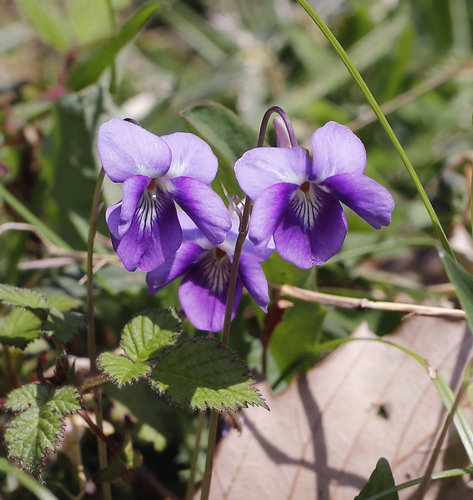
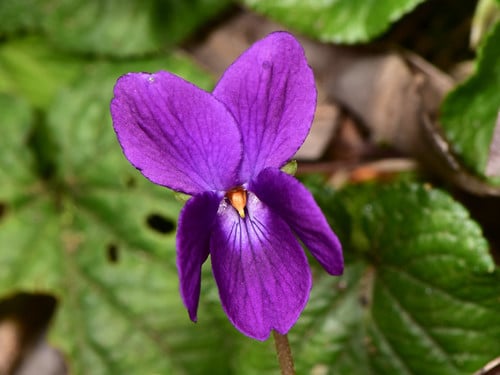
Viola riviniana
Rchb.
Wood violet, Common violet
iNaturalist· cc-by-sa
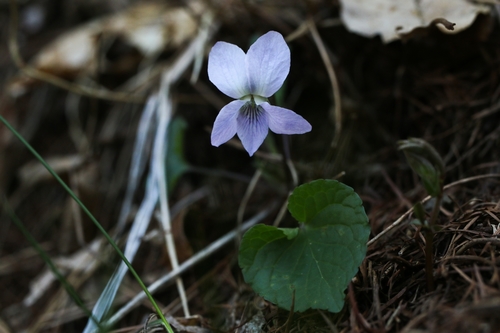
(c) Fabien Piednoir, some rights reserved (CC BY-SA), uploaded by Fabien Piednoir
iNaturalist· cc-by
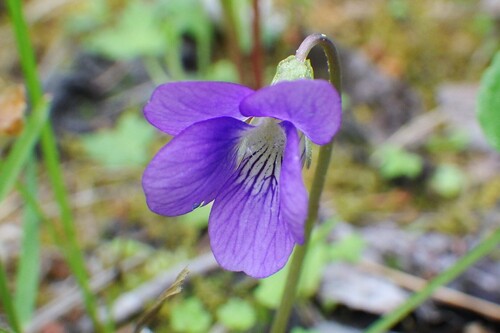
(c) Ulrika, some rights reserved (CC BY)
iNaturalist· cc-by-nc
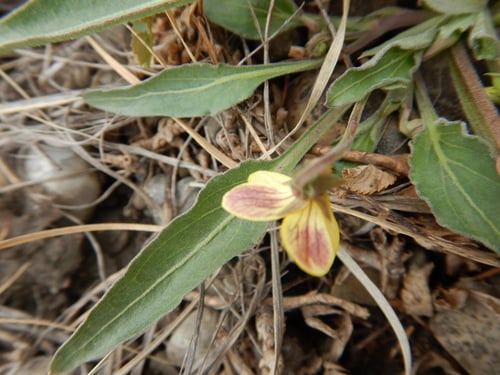
(c) irinazupan, some rights reserved (CC BY-NC), uploaded by irinazupan
Summary
Source: WikipediaViola riviniana, the common dog-violet, is a species of flowering plant in the family Violaceae, native to Eurasia and Africa. It is also called wood violet and dog violet. It inhabits woodland edges, grassland and shady hedge banks. It is found in all soils except those which are acid or very wet. Growing to 10 cm (3.9 in) tall and 50 cm (20 in) broad, this prostrate perennial has dark green, heart-shaped leaves and produces multiple violet coloured flowers in May and June. Viola riviniana was voted the county flower of Lincolnshire in 2002, following a poll by the wild plant conservation charity Plantlife.
Description
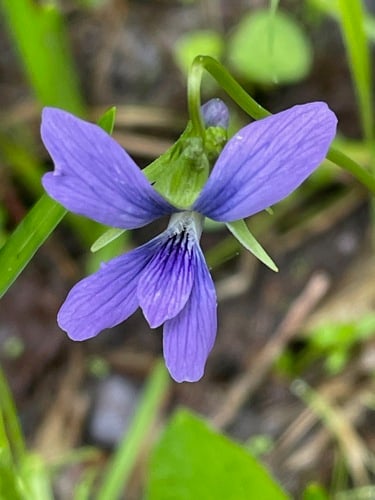
A perennial plant. It grows 10-20 cm high and 25-40 cm wide. The leaves are heart-shaped. The flowers are purple-blue and without a scent.
This description is brief — help expand it
Edible Uses
Young leaves and flower buds can be eaten raw or cooked. Flowers and buds are also good eaten raw. When added to soup, the leaves act as a thickener much like okra. A tea can be brewed from the leaves.
Medicinal Uses
None known
Distribution
It is a temperate plant. It is frost hardy. It suits hardiness zones 5-9.
Where It Grows
Africa, Australia, Britain, Europe, Luxembourg, Mediterranean, Morocco, North Africa, Norway, Romania, Scandinavia, Slovenia, Switzerland,
Cultivation
Prefers a cool moist well-drained humus-rich soil in partial or dappled shade and protection from scorching winds. Tolerates sandstone and limestone soils but becomes chlorotic if the pH is too high. Prefers a pH between 6 and 6.5. A good butterfly plant. The plant flowers mainly during April to June but also produces cleistogomous flowers during the summer. These flowers do not open but fertilize themselves and produce viable seed. All members of this genus have more or less edible leaves and flower buds, though those species with yellow flowers can cause diarrhoea if eaten in large quantities.
Propagation
Seed is best sown in autumn in a cold frame. Stored seed can be sown in early spring in a cold frame. Prick out seedlings into individual pots when large enough to handle and plant out in summer. Divide plants in autumn or just after flowering. Larger divisions can go straight into permanent positions, but smaller divisions are better potted up and grown on in light shade in a greenhouse or cold frame until establishing well, then planted out in summer or the following spring.
Other Uses
Plants make good ground cover when spaced about 30 cm apart each way. This species is a food plant of the pearl-bordered fritillary, small pearl-bordered fritillary, silver-washed fritillary, and high brown fritillary butterflies.
Notes
There are about 500 Viola species.
Also Known As
Rivinova vijolica, Skogfiol
References (9)
- Cundall, P., (ed.), 2004, Gardening Australia: flora: the gardener's bible. ABC Books. p 1474
- Girard, N. J., 2020, Sustainable Foraging of Wild Edible Plants in Norway. A Biocultural Approach. M. Sc. thesis Norwegian University. p 136
- Hibbert, M., 2002, The Aussie Plant Finder 2002, Florilegium. p 307
- http://www.botanic-gardens-ljubljana.com/en/plants
- Iconogr. bot. pl. crit. 1:81. 1823
Show all 9 references Hide references
- Jack, M., Wild Foods and Medicines of Forest Garden Transylvania. http://www.forestgardentransylvania.org/ p10
- Joyce, D., 1998, The Garden Plant Selector. Ryland, Peters and Small. p 278
- Morley, B. & Everard, B., 1970, Wild Flowers of the World. Ebury press. Plate 18
- Plants for a Future database, The Field, Penpol, Lostwithiel, Cornwall, PL22 0NG, UK. http://www.scs.leeds.ac.uk/pfaf/