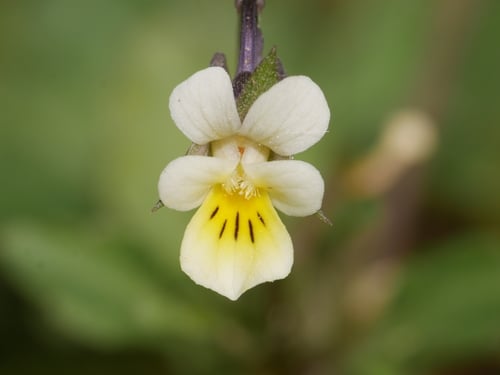
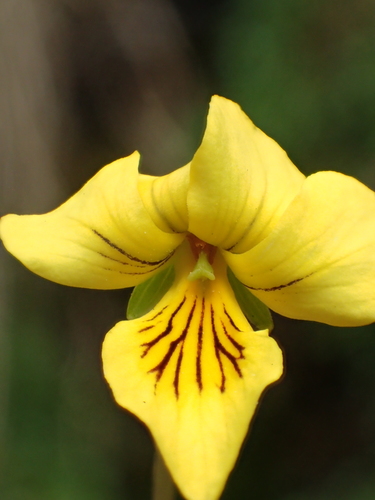
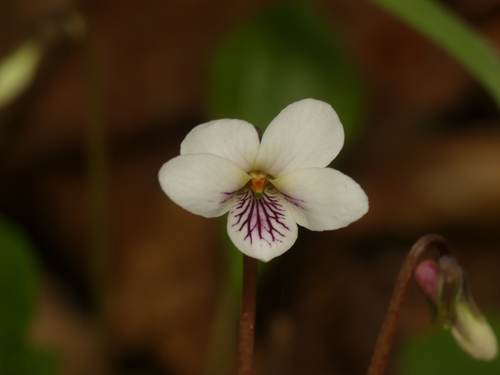
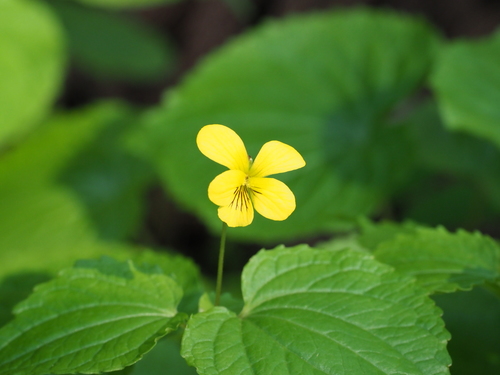
Viola labradorica
Schrank
Labrador violet
iNaturalist· cc-by
(c) Jon, some rights reserved (CC BY)
iNaturalist· cc-by-nc
(c) ulsterbotany, some rights reserved (CC BY-NC)
iNaturalist· cc-by-nc
(c) ulsterbotany, some rights reserved (CC BY-NC)
Summary
Source: WikipediaViola labradorica, commonly known as alpine violet, American dog violet, dog violet or Labrador violet, is a perennial herbaceous flowering plant. It is native to Greenland, eastern Canada, and the eastern United States. The plant sold as Viola labradorica by nurseries is Viola riviniana.
Description
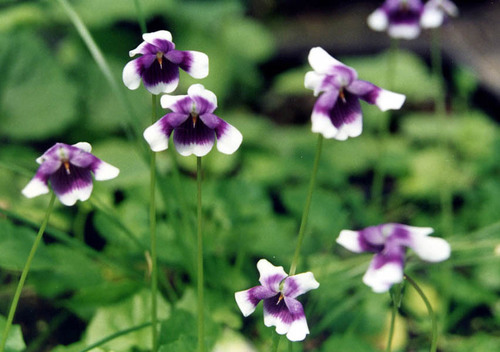
A low spreading herb. It grows 7-15 cm tall and wide. The leaves are heart shaped. The flowers are purple. They are at the end of short leafy stalks.
Edible Uses
Young leaves and flower buds can be eaten raw or cooked. They have a mild flavour, though the leaves become quite tough fairly quickly. The leaves make a very acceptable addition to salads, and when added to soup they thicken it in much the same way as okra. A tea can also be made from the leaves.
Medicinal Uses
None known
Distribution
It is a temperate plant. It suits hardiness zones 2-8.
Where It Grows
Australia, Canada, Greenland, North America, USA,
Cultivation
Succeeds in dense shade. Tolerates sandstone and limestone soils but becomes chlorotic if the pH is too high. Prefers a pH between 6 and 6.5. Hardy to about -25°c. There are some named varieties selected for their ornamental value. All members of this genus have more or less edible leaves and flower buds, though those species with yellow flowers can cause diarrhoea if eaten in large quantities. An evergreen.
Propagation
Sow seed in autumn in a cold frame for best results, or sow stored seed in early spring in a cold frame. Prick out seedlings into individual pots once large enough to handle, then plant out during summer. Divide plants in autumn or just after flowering. Larger divisions can go directly into their permanent positions, but smaller divisions are best potted up and grown on in light shade in a greenhouse or cold frame until establishing well, then planted out in summer or the following spring.
Other Uses
Makes a good ground cover plant — fast spreading but slow to thicken up, so may need weeding during the first year or so. Space plants about 30cm apart in each direction. Acts as a dynamic accumulator, gathering minerals and nutrients from the soil and storing them in a more bioavailable form, making it useful as a fertilizer or mulch improver.
Notes
There are about 500 Viola species.
Synonyms
References (4)
- Denkschr. Koenigl.-Baier. Bot. Ges. Regensburg 1(2):12. 1818
- Hibbert, M., 2002, The Aussie Plant Finder 2002, Florilegium. p 307
- Jackes, D. A., 2007, Edible Forest Gardens
- Plants for a Future database, The Field, Penpol, Lostwithiel, Cornwall, PL22 0NG, UK. http://www.scs.leeds.ac.uk/pfaf/