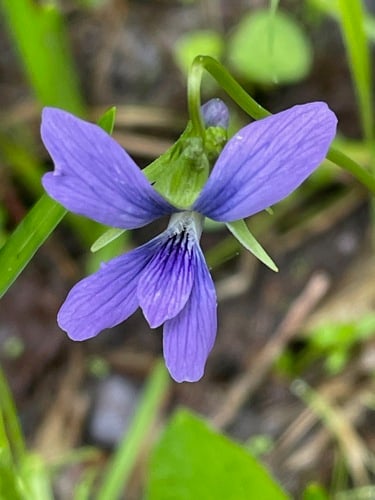
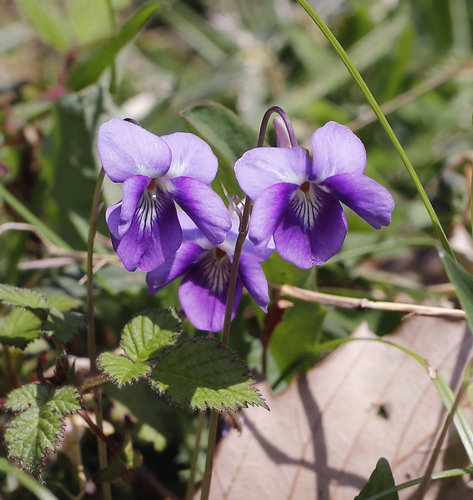
Viola langsdorffii
(Regel.) Fisch. ex Ging.
Alaska violet, Aleutian Violet
iNaturalist· cc-by-nc
(c) Eva Ullström, some rights reserved (CC BY-NC)
iNaturalist· cc-by-nc
(c) Eva Ullström, some rights reserved (CC BY-NC)
iNaturalist· cc-by-nc
(c) Eva Ullström, some rights reserved (CC BY-NC)
Summary
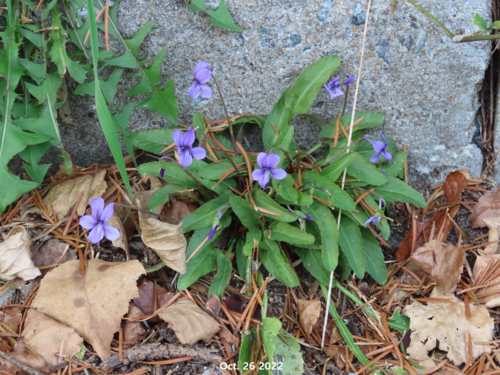
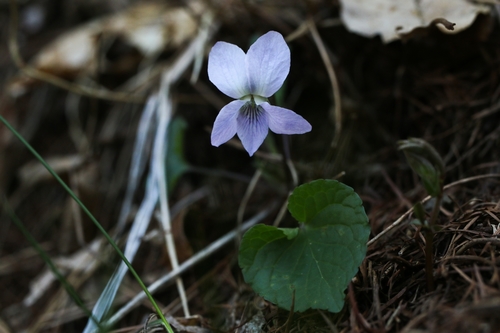
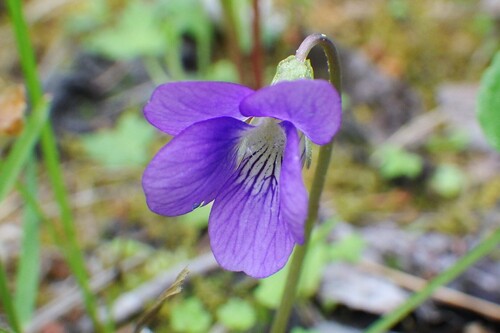
Source: WikipediaViola langsdorffii is a species of Viola. Commonly known as Alaskan violet and Aleutian violet, it is a plant from rather stout creeping rootstocks, glabrous, the stems ascending 5–30 cm long. V. langsdorffii has leaves that are long-petioled, round-cordate, and anywhere from 2.5 to 4 cm broad, crenate; stipules foliaceous, lanceolate, the lower usually incised. The flowers are pale violet, with petals 12–16 mm long, the three lower white at base, the lateral pair bearded; spur very short and stout, as broad as long; the head of styles not bearded. Alaskan and Aleutian specimens, with petals 20 mm long, are more robust than specimens from further south in it range.
Description
A compact perennial viola growing to 10cm tall with hermaphroditic insect-pollinated flowers blooming April to May. Suited to well-drained light sandy, medium loamy, or heavy clay soils with mildly acidic to neutral pH. Grows in semi-shade or full sun and prefers moist soil conditions.
Edible Uses
Young leaves and flower buds can be eaten raw or cooked. Added to soup, they thicken it in much the same way as okra. The flowers can be eaten raw. The leaves can also be brewed into a tea.
Medicinal Uses
None known
Distribution
It is a temperate plant.
Where It Grows
Canada, North America, USA,
Propagation
Sow seed in autumn in a cold frame for best results, or sow stored seed in early spring in a cold frame. Prick out seedlings into individual pots once large enough to handle, then plant out during summer. Divide plants in autumn or just after flowering. Larger divisions can go directly into their permanent positions, but smaller divisions are best potted up and grown on in light shade in a greenhouse or cold frame until establishing well, then planted out in summer or the following spring.
Other Uses
None known
Notes
There are about 500 Viola species.
References (2)
- A. P. de Candolle, Prodr. 1:296. 1824
- Plants for a Future database, The Field, Penpol, Lostwithiel, Cornwall, PL22 0NG, UK. http://www.scs.leeds.ac.uk/pfaf/