Viola patrinii
Ging.
China violet
iNaturalist· cc-by-nc
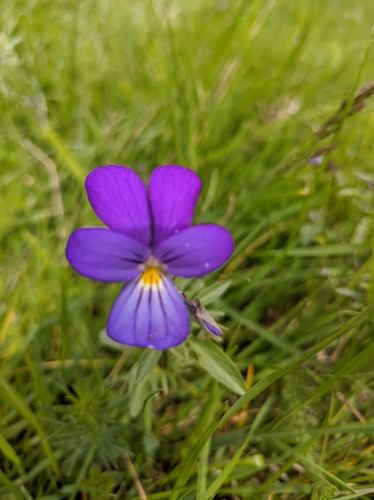
(c) V.S. Volkotrub, some rights reserved (CC BY-NC), uploaded by V.S. Volkotrub
iNaturalist· cc-by
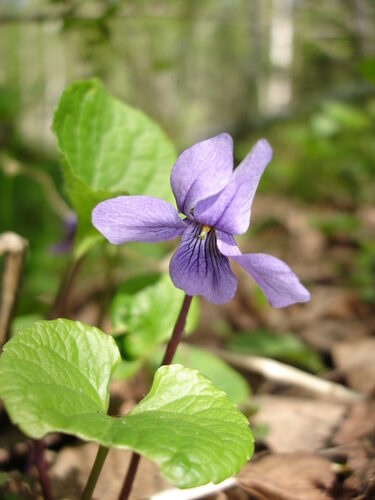
(c) Zihao Wang, some rights reserved (CC BY)
iNaturalist· cc-by
(c) Zihao Wang, some rights reserved (CC BY)
Summary
Viola patrinii is a perennial reaching 20cm tall, hardy to UK zone 5. It flowers May to June with seeds ripening July to September. Hermaphroditic flowers are insect-pollinated. It tolerates light sandy, medium loamy, and heavy clay soils, preferring well-drained conditions. It grows in semi-shade or full sun with mildly acidic to neutral pH, requiring moist soil.
Description
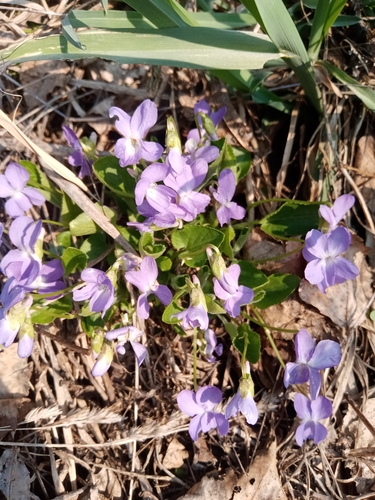
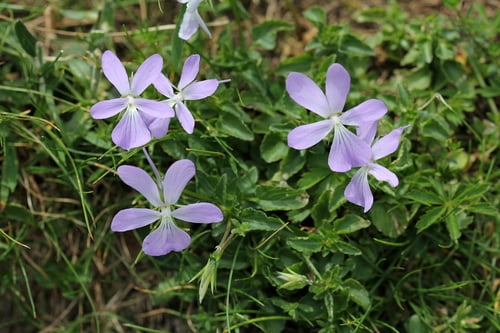
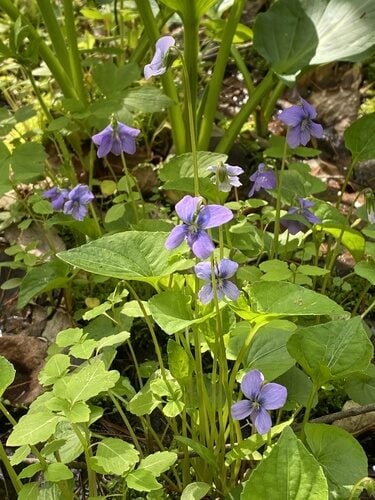
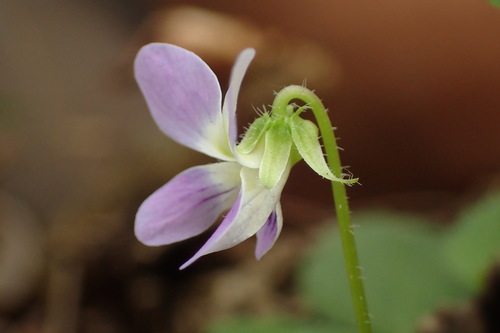
A herb. It keeps growing from year to year. It grows 20 cm tall. The rhizomes are erect and dark brown. There are 3-5 leaves at the base. They are narrowly sword shaped with teeth towards the tip. The leaf stalks are 2-12 cm long. The leaf blade is 2-6 cm long by 1-2 cm wide. The flowers are white with purple veins. The fruit capsules are 1 cm long with yellow to brown seeds.
Edible Uses
Young leaves and flower buds can be eaten raw or cooked. When added to soup, they act as a thickener much like okra. A tea can be brewed from the leaves.
Traditional Uses
The shoots and leaves are eaten. They can be added to soups to thicken the soup.
This uses section is brief — help expand it
Medicinal Uses
This species has a long history of folk use in the treatment of cancer and other diseases. Fresh roots are mashed and applied as a poultice for abscesses. The plant is suppurative for abscesses, cancer, inflammations, and ulcers.
Distribution
It is a temperate plant. It grows in forests between 1,900-2,700 m above sea level in the Himalayas. It suits moist shady places.
Where It Grows
Asia, China, India, Indochina, Japan, Korea, Manchuria, Mongolia, Myanmar, Russia, SE Asia, Siberia, Vietnam,
Cultivation
Prefers a cool moist well-drained humus-rich soil in partial or dappled shade and protection from scorching winds. Tolerates sandstone and limestone soils but becomes chlorotic if the pH is too high. Prefers a pH between 6 and 6.5. All members of this genus have more or less edible leaves and flower buds, though those species with yellow flowers can cause diarrhoea if eaten in large quantities.
Propagation
Seed is best sown in autumn in a cold frame. Stored seed can be sown in early spring in a cold frame. Prick out seedlings into individual pots when large enough to handle and plant out in summer. Divide plants in autumn or just after flowering. Larger divisions can go straight into permanent positions, but smaller divisions are better potted up and grown on in light shade in a greenhouse or cold frame until establishing well, then planted out in summer or the following spring.
Other Uses
No other uses known.
Notes
There are about 500 Viola species.
Synonyms
Also Known As
Hoa-tim
References (6)
- Ambasta, S.P. (Ed.), 2000, The Useful Plants of India. CSIR India. p 680
- BARANOV,
- Pham-Hoang Ho, 1999, An Illustrated Flora of Vietnam. Nha Xuat Ban Tre. p 549
- Plants for a Future database, The Field, Penpol, Lostwithiel, Cornwall, PL22 0NG, UK. http://www.scs.leeds.ac.uk/pfaf/
- Prodr. 1:293. 1824
Show all 6 references Hide references
- READ,