Vigna vexillata
(Benth.) A. Rich.
Wild cowpea, Pencil yam
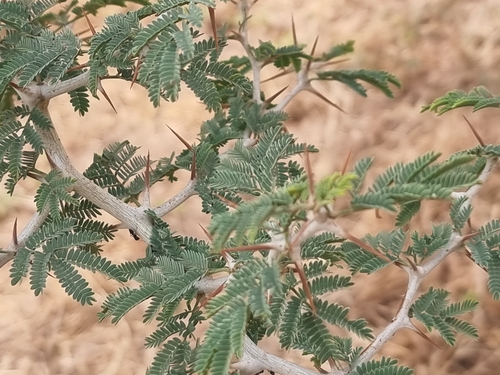
iNaturalist· cc-by-sa
(c) Margaret Burger, some rights reserved (CC BY-SA), uploaded by Margaret Burger
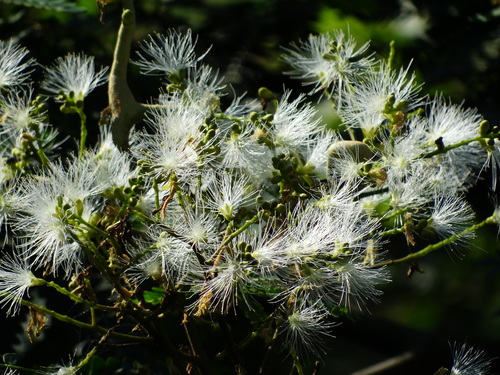
iNaturalist· cc-by-nc
(c) swanand kesari, some rights reserved (CC BY-NC), uploaded by swanand kesari
iNaturalist· cc0
no rights reserved, uploaded by Peter Warren
Summary
Source: WikipediaVigna vexillata, the Zombi pea or wild cowpea, is a variable, perennial climbing plant that is pantropical, found in regions such as Ethiopia, Nigeria, and Venezuela.
Description
A variable climbing herb. It keeps growing from year to year. It has a narrow woody rootstock. This is dull white and wrinkled. The vines are 30 cm to 3 m long. They are hairy. The leaves have 3 leaflets and these are oval or long. They can be 3-16 cm long by 0.4-8 cm wide. They taper towards the tip and are rounded at the base. They leaf stalk is 2-11 cm long. The flowering stalks are in the axils of leaves and have 2-6 flowers. The flowering stalk is 5-36 cm long. The pea like flower has a standard which is 2-3 cm long and not the same on both sides. Flowers are pink or purple. The keel is paler with a beak curved back at the end and twisted to one side. The fruit are pods which are held erect. They are 4-14 cm long by 3-4 mm wide and covered with short brown hairs. There are 10-18 seeds. The seeds are light brown to black. They are kidney shaped and 3-4 mm long by 2 mm wide.
Edible Uses
The plant is a very important food crop in several areas, such as Namibia, where it is commonly harvested from the wild for local use. Its use has spread beyond its native range and the plant is now sometimes cultivated for its edible tubers. It is also grown as a green manure and ground cover crop, especially in poor soils. The root is consumed raw or cooked. The tubers have a soft, easily peeled skin and creamy flesh. They are boiled or roasted and are particularly rich in protein. The young leaves, young pods, and seeds are also cooked and eaten as a vegetable.
Traditional Uses
The tuberous roots are eaten raw or cooked. They can be boiled or roasted. The young seeds are cooked and eaten. The leaves can be eaten as a vegetable and also dried.
Medicinal Uses
The plant is used medicinally.
Distribution
It is a tropical plant. It mostly grows naturally in open woodland on sandstone soils. It will grow in dry, acid, high aluminium soils that are infertile. It can grow in arid places. In Sichuan and Yunnan.
Where It Grows
Africa, Angola, Asia, Australia, Belize, Bhutan, Botswana, Brazil, Burkina Faso, Burundi, Cambodia, Cameroon, Caribbean, Central Africa, Central America, Chad, China, Colombia, Congo DR, Costa Rica, Côte d'Ivoire, Cuba, Dominican Republic, East Africa, Ecuador, El Salvador, Equatorial Guinea, Eswatini, Ethiopia, French Guiana, Gambia, Ghana, Guatemala, Guianas, Guinea, Guinée, Guinea-Bissau, Guyana, Haiti, Himalayas, Honduras, India, Indochina, Indonesia, Ivory Coast, Jamaica, Japan, Kenya, Korea, Laos, Liberia, Madagascar, Malawi, Malaysia, Mali, Mexico, Middle East, Mozambique, Myanmar, Niger, Nigeria, North America, Northeastern India, Pacific, Pakistan, Panama, Papua New Guinea, PNG, Peru, Puerto Rico, Rwanda, SE Asia, Senegal, Sierra Leone, Somalia, South Africa, Southern Africa, South America, Sri Lanka, Sudan, Suriname, Swaziland, Taiwan, Tanzania, Togo, Uganda, Venezuela, Vietnam, West Africa, West Indies, Yemen, Zambia, Zimbabwe,
Cultivation
Plants can be grown from seed or tubers.
Propagation
Seed - it takes 8 - 10 days to germinate.
Other Uses
The plant is grown as a green manure, cover crop and for erosion-control. The plant is an excellent pioneer plant for growing on poor land in order to conserve and improve it.
Production
Seeds are produced about 90 days after planting.
Other Information
The roots are popular with hill tribes in India.
Notes
There are about 150 Vigna species. They are mostly in the tropics. The tubers have been shown to be 15% protein.
Nutrition
| Part | Moisture | kJ | kcal | Protein | Vit A | Vit C | Iron | Zinc |
|---|---|---|---|---|---|---|---|---|
| Tubers | 79.6 | 302 | 72 | 2.1 | — | 11.6 | 0.8 | 0.5 |
| Root | 68.9 | 287 | 69 | 2.3 | — | — | 10 | 1.7 |
Synonyms
Also Known As
Bejuco marrullero, Bir ghangra, Bonoria urahi, Cam-demba-uri, Chandor, Chaoli, Dau co, Hadunda, Halgia, Halunda, Kaadu taguni, Mgcenga, Mukundulela, Munawana, Murudji, Musivha, Nkasa zimadeso, Nyemba, Obhombo, Qwruh-dibela, Wild mung, Wilde-ertjie, Wuliwirranga
References (68)
- Ambasta, S.P. (Ed.), 2000, The Useful Plants of India. CSIR India. p 678
- Bodkin, F., 1991, Encyclopedia Botanica. Cornstalk publishing, p 1017
- Brock, J., 1993, Native Plants of Northern Australia, Reed. p 327
- Burkill, H. M., 1985, The useful plants of west tropical Africa, Vol. 3. Kew.
- Cherikoff V. & Isaacs, J., The Bush Food Handbook. How to gather, grow, process and cook Australian Wild Foods. Ti Tree Press, Australia p 201
Show all 68 references Hide references
- Cribb, A.B. & J.W., 1976, Wild Food in Australia, Fontana. p 144
- Dakora, F. D., 2013, Biogeographic Distribution, Nodulation and Nutritional Attributes of Underutilized Indigenous Agrican Legumes. Acta Horticulturae Number 979 Vol. 1. p 53
- Dunlop, C.R., Leach, G.J. & Cowie, I.D., 1995, Flora oforld http:www:ildis.org/Legume/Web
- Dutta, U., 2012, Wild Vegetables collected by the local communities from the Churang reserve of BTD, Assam. International Journal of Science and Advanced Technology. Vol. 2(4) p 124
- Fox, F. W. & Young, M. E. N., 1982, Food from the Veld. Delta Books. p 223 (As Vigna phaseoloides)
- Hardwick, G., 2001, Economically Useful Plants for Northern Australia: Master Species List. Crusader eBooks.
- IRVINE 1952, 1957,
- Jackes, B.R., 2001, Plants of the Tropics. Rainforest to Heath. An Identification Guide. James Cook University. p 55
- Jardin, C., 1970, List of Foods Used In Africa, FAO Nutrition Information Document Series No 2.p 109 (As Vigna phaseoloides) and (As Vigna dinteri)
- Kenneally, K.E., Edinger, D. C., and Willing T., 1996, Broome and Beyond, Plants and People of the Dampier Peninsula, Kimberley, Western Australia. Department of Conservation and Land Management. p 163
- Kumar, G.M., & Shiddamallayya, N., 2014, Documentation of Wild Plant Tubers as Food Resources in Hassan District, Karnataka, International Journal of Applied Biology and Pharmaceutical Technology. 5(2) p 92
- Latham, P & Mbuta, A., 2017, Useful Plants of Central Province, Democratic Republic of Congo. Volume 2. Salvation Army p 241
- Levitt, D., 1981, Plants and people. Aboriginal uses of plants on Groote Eylandt. Australian Institute of Aboriginal Studies, Canberra. p 116
- Lim, T. K., 2015, Edible Medicinal and Non Medicinal Plants. Volume 9, Modified Stems, Roots, Bulbs. Springer p 85
- Long, C., 2005, Swaziland's Flora - siSwati names and Uses http://www.sntc.org.sz/flora/
- Low, T., 1991, Wild Food Plants of Australia. Australian Nature FieldGuide, Angus & Robertson. p 162
- Low, T., 1992, Bush Tucker. Australia’s Wild Food Harvest. Angus & Robertson. p 99
- Lulekal, E., et al, 2011, Wild edible plants in Ethiopia: a review on their potential to combat food insecurity. Afrika Focus - Vol. 24, No 2. pp 71-121
- Magwede, K., van Wyk, B.-E., & van Wyk, A. E., 2019, An inventory of Vhavenḓa useful plants. South African Journal of Botany 122 (2019) 57–89
- Martin, F.W. & Ruberte, R.M., 1979, Edible Leaves of the Tropics. Antillian College Press, Mayaguez, Puerto Rico. p 201 (As Vigna phaseoloides)
- Mutie, F. G., 2020, Conservation of Wild Food Plants and Their Potential for Combatting Food Insecurity in Kenya as Exemplified by the Drylands of Kitui County. Plants 2020, 9, 1017
- Mutie, F. M., et al, 2023, Important Medicinal and Food Taxa (Orders and Families) in Kenya, Based on Three Quantitative Approaches. Plants 2023, 12, 1145
- Nilegaonkar, S., et al, 1985, Nutritional Evaluation of some wild food plants from the Pune and Nieghbouring districts, Maharashtra state: Part 1. J. Econ. Tax. Bot. Vol. 6 No. 3 pp 629-635
- Paczkowska, G . & Chapman, A.R., 2000, The Western Australian Flora. A Descriptive Calatogue. Western Australian Herbarium. p 453
- Patiri, B. & Borah, A., 2007, Wild Edible Plants of Assam. Geethaki Publishers. p 41 (As Vigna vaxillata Benth.)
- Pearson, S. & A., 1992, Rainforest Plants of Eastern Australia. Kangaroo Press p 209
- Peekel, P.G., 1984, (Translation E.E.Henty), Flora of the Bismarck Archipelago for Naturalists, Division of Botany, Lae, PNG. p 261, 262
- Pegu, R., et al, 2013, Ethnobotanical study of Wild Edible Plants in Poba Reserved Forest, Assam, India. Research Journal of Agriculture and Forestry Sciences 1(3):1-10
- Peters, C. R., O'Brien, E. M., and Drummond, R.B., 1992, Edible Wild plants of Sub-saharan Africa. Kew. p 140
- Pham-Hoang Ho, 1999, An Illustrated Flora of Vietnam. Nha Xuat Ban Tre. p 962
- Plants of Haiti Smithsonian Institute http://botany.si.edu/antilles/West Indies
- Prakash, V., & Megrotra B.N., 1987, Ethnobotanical Studies on the Flora of Khandala, Maharashtra State. J. Econ. Tax. Bot. Vol. 9 No. 1 pp 205-208 (As Vigna capensis)
- PROSEA handbook Volume 9 Plants yielding non-seed carbohydrates. p 190
- Royal Botanic Gardens, Kew (1999). Survey of Economic Plants for Arid and Semi-Arid Lands (SEPASAL) database. Published on the Internet; http://www.rbgkew.org.uk/ceb/sepasal/internet [Accessed 1st May 2011]
- Ruiters-Welcome, A. K., 2019, Food plants of southern Africa. Ph.D. thesis. Univ. of Johannesburg p 63
- Sadhale, A., et al, 1991, Ethnobotanical studies of sacred grove at Ajiwali, Pune district. J. Econ. Tax. Bot. Vol. 15 No. 1 pp 167-172
- Sarma, H., et al, 2010, Updated Estimates of Wild Edible and Threatened Plants of Assam: A Meta-analysis. International Journal of Botany 6(4): 414-423
- Sawian, J. T., et al, 2007, Wild edible plants of Meghalaya, North-east India. Natural Product Radiance Vol. 6(5): p 423
- Singh, H.B., Arora R.K.,1978, Wild edible Plants of India. Indian Council of Agricultural Research, New Delhi. p 83 (As Vigna capensis)
- Smith, N and Wightman, G.M., 1990, Ethnobotanical Notes from Belyuen Northern Territory Australia. Northern Territory Botanical Bulletin No 10. Parks and Wildlife Commission of the Northern Territory. p 25
- Sprent, J. I., et al, 2009, African legumes: a vital but under-utilized resource. Journal of Experimental Botany. Vol. 61 No. 5 pp. 1257-1265
- Swaziland's Flora Database http://www.sntc.org.sz/flora
- Teklehaymanot, T., and Mirutse Giday, M., 2010, Ethnobotanical study of wild edible plants of Kara and Kwego semi-pastoralist people in Lower Omo River Valley, Debub Omo Zone, SNNPR, Ethiopia Journal of Ethnobiology and Ethnomedicine 2010, 6:23
- Terra, G.J.A., 1973, Tropical Vegetables. Communication 54e Royal Tropical Institute, Amsterdam, p 80 (As Vigna phaseoloides)
- Tiwi Plants and Animals. 2001, Aboriginal flora and fauna knowledge from Bathurst and Melville Islands, northern Australia. Northern Territory Botanical Bulletin; No. 24 p 88
- Townsend, K., 1994, Across the Top. Gardening with Australian Plants in the tropics. Society for Growing Australian Plants, Townsville Branch Inc. p 361
- Uprety, Y., et al, 2016, Traditional use and management of NTFPs in Kangchenjunga Landscape: implications for conservation and livelihoods. Journal of Ethnobiology and Ethnomedicine (2016) 12:19
- USDA, ARS, National Genetic Resources Program. Germplasm Resources Information Network - (GRIN). [Online Database] National Germplasm Resources Laboratory, Beltsville, Maryland. Available: www.ars-grin.gov/cgi-bin/npgs/html/econ.pl (10 April 2000)
- van Wyk, B., 2005, Food Plants of the World. An illustrated guide. Timber press. p 383
- van Wyk, Be, & Gericke, N., 2007, People's plants. A Guide to Useful Plants of Southern Africa. Briza. p 30
- van Wyk, B-E., 2011, The potential of South African plants in the development of new food and beverage products. South African Journal of Botany 77 (2011) 857–868
- van Wyk, Ben-Erik, 2019, The diversity and multiple uses of southern African legumes. Australian Systematic Botany, 2019, 32, 519–546
- Verdcourt, B., 1979, Manual of New Guinea Legumes. Botany Bulletin No 11, Division of Botany, Lae, Papua New Guinea. p 527
- Vigilante, T., et al, 2013, Island country: Aboriginal connections, values and knowledge of the Western Kimberley islands in the context of an island biological survey. Records of the Western Australian Museum Supplement 81: 145-182
- Wehmeyer, A. S, 1986, Edible Wild Plants of Southern Africa. Data on the Nutrient Contents of over 300 species (As Vigna lobatifolia)
- Wheeler, J.R.(ed.), 1992, Flora of the Kimberley Region. CALM, Western Australian Herbarium, p 457
- Yunupinu Banjgul, Laklak Yunupinu-Marika, et al. 1995, Rirratjinu Ethnobotany: Aboriginal Plant Use from Yirrkala, Arnhem Land, Australia. Northern Territory Botanical Bulletin No 21. Parks and Wildlife Commission of the Northern Territory. p 76, N., 2007, People's plants. A Guide to Useful Plants of Southern Africa. Briza. p 30
- Verdcourt, B., 1979, Manual of New Guinea Legumes. Botany Bulletin No 11, Division of Botany, Lae, Papua New Guinea. p 527
- Welcome, A. K. & Van Wyk, B.-E., 2019, An inventory and analysis of the food plants of southern Africa. South African Journal of Botany 122 (2019) 136–179
- Wheeler, J.R.(ed.), 1992, Flora of the Kimberley Region. CALM, Western Australian Herbarium, p 457
- Wiersema, J. H. & Leon, B., 2013, World Economic Plants. A Standard Reference CRC Press. 2nd Ed. p 721
- World Checklist of Useful Plant Species 2020. Royal Botanic Gardens, Kew
- Yunupinu Banjgul, Laklak Yunupinu-Marika, et al. 1995, Rirratjinu Ethnobotany: Aboriginal Plant Use from Yirrkala, Arnhem Land, Australia. Northern Territory Botanical Bulletin No 21. Parks and Wildlife Commission of the Northern Territory. p 76