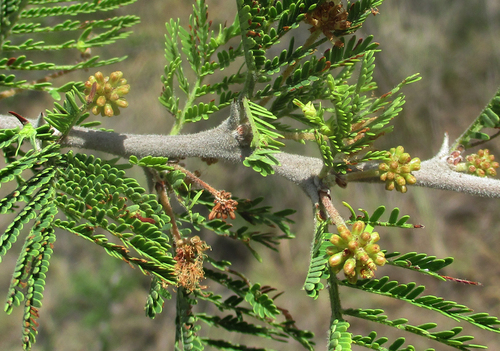
Pueraria montana
(Lour.) Merr.
Taiwan kudzu
iNaturalist· cc-by-nc-sa
(c) Alex Krohn, some rights reserved (CC BY-NC-SA), uploaded by Alex Krohn
iNaturalist· cc-by-nc
(c) 方伊琳(阿鈣), some rights reserved (CC BY-NC), uploaded by 方伊琳(阿鈣)
iNaturalist· cc-by-sa
(c) Douglas Goldman, some rights reserved (CC BY-SA), uploaded by Douglas Goldman
Summary
Source: WikipediaPueraria montana, more commonly known as kudzu, is a species of plant in the botanical family Fabaceae. At least three sub-species (alternatively called varieties) are known. It is closely related to other species in the genus Pueraria (P. edulis and P. phaseoloides) and the common name is used for all of these species and hybrids between them. The morphological differences between them are subtle, they can breed with each other, and it appears that introduced kudzu populations in the United States have ancestry from more than one of the species.
Description
A robust climbing bean. It has tuberous roots. The stems are 8 m long and woody at the base. There are yellow hairs. The leaves have leaflets and these have 3 lobes. The end leaflet is broadly oval and 7-15 cm long by 5-12 cm wide. The side leaflets are smaller and are oblique. The flowering stalks are 15-30 cm long with flowers in groups of 2 or 3 at each node. The flowers are purple. The pods are 4-14 cm long by 6-13 mm wide and flattened.
Edible Uses
The root is eaten cooked and is rich in starch. It can grow up to 1.8 metres long and has been recorded weighing 35 kilograms or more. The root yields around 10% fine-quality starch, which can be used as a crispy coating in deep-fried foods, as a thickening agent in soups, made into noodles, or used as a gelling agent for salads in the manner of agar or gelatine. The root is a staple food in Japan; the peeled root contains approximately 2.1% protein, 0.1% fat, 27.1% carbohydrate, and 1.4% ash. Per 100g, the starch contains 340 calories, 16.5% moisture, 0.2g protein, 0.1g fat, 83.1g total carbohydrate, 0.1g ash, 35mg calcium, 18mg phosphorus, 2.0mg iron, and 2mg sodium. Fresh whole root per 100g provides 113 calories, 68.6% water, 2.1g protein, 0.1g fat, 27.8g carbohydrate, 0.7g fibre, and 1.4g ash, with 15mg calcium, 18mg phosphorus, and 0.6mg iron. The flowers are edible cooked or made into pickles. Young stems and leaves can be eaten raw or cooked — the fresh young shoots have a flavour described as a cross between a bean and a pea, and are considered very nutritious. Per 100g, the cooked leaves provide 36 calories, 89.0% moisture, 0.4g protein, 0.1g fat, 9.7g total carbohydrate, 7.7g fibre, 0.8g fat, 34mg calcium, 20mg phosphorus, 4.9mg iron, 0.03mg thiamine, 0.91mg riboflavin, and 0.8mg niacin.
Traditional Uses
An extract of the root is used as a health tonic. Starch is extracted from the root.
This uses section is brief — help expand it
Medicinal Uses
Known in China as Ge Gen, kudzu is considered one of the 50 fundamental herbs in Chinese herbalism. Recent research has identified compounds called daidzin and daidzein in the roots and flowers that offer a safe and effective approach to treating alcohol abuse by suppressing the appetite for alcohol — unlike existing treatments, which interfere with alcohol metabolism and can cause toxic build-up. The plant is often combined with Chrysanthemum x morifolium for this purpose. The flowers and roots are antidote, antiemetic, antipyretic, antispasmodic, demulcent, diaphoretic, digestive, febrifuge, hypoglycaemic, and hypotensive. A preparation of flowers and tubers is used to treat alcoholism, fever, colds, diarrhoea, dysentery, and acute intestinal obstruction, and is useful in managing angina pectoris and migraine. The root is frequently used to treat measles, often in combination with Cimicifuga foetida, and contains puerarin, which increases blood flow to the coronary artery and protects against acute myocardial ischaemia caused by pituitrin injection. The root can be harvested from autumn through spring and used fresh or dried. Flowers are harvested just before fully opening and dried for later use. The stems are galactagogue and are applied as a poultice to incipient boils, swellings, and sore mouths. The seed is used to treat hangover and dysentery. The leaves are styptic.
Known Hazards
Although no specific mention has been found for this species, the leaves of the closely related Pueraria hirsuta (which might be no more than a synonym for this species) have barbed hairs and these can cause severe irritation.
Distribution
It is a tropical plant. It grows in mountain forests and open places.
Where It Grows
Asia, Australia, China, India, Indochina, Korea, Northeastern India, SE Asia, Vietnam,
Cultivation
Kudzu vine can be grown in a wide range of climates from milder areas in the temperate zone to the subtropics and higher elevations in the tropics. It grows best in areas where annual daytime temperatures are within the range 18 - 28°c, but can tolerate 9 - 32°c. When dormant, the plant can survive temperatures down to about -6°c, but young growth can be severely damaged at -1°c. Plants are hardy to about -15°c, they can resprout from the base if they are cut down by frosts. It prefers a mean annual rainfall in the range 1,200 - 1,400mm, but tolerates 950 - 2,200mm. Succeeds in most well-drained soils in a sunny position, though it does not make good growth on very light poor sand or on poorly drained heavy clay. Grows best on well-drained loam soil of good fertility. Plants cannot stand waterlogging on any soil. Prefers a pH in the range 5.5 - 6.5, tolerating 5 - 7.1. A deep-rooted pant, once established it is very drought resistant. When grown in warm climates, the root can be invasive and plants have become weeds. Introduced into the southern N. American states in 1876 as a soil stabilizer, the var lobata has spread very widely (it can grow up to 30cm in a day), and has swamped out native vegetation, including large trees. It is considered to be one of the most obnoxious weeds in that region. The tubers can be harvested about 1 year after planting, if grown from cuttings. If left longer in the soil they can become very large, with weights of up to 180 kilos. Pueraria montana has three varieties, all of which can be used more or less interchangeably:- Pueraria montana montana. This form has the smallest flowers. Pueraria montana lobata (Willd.) Maesen & S.M.Almeida ex Sanjappa & Predeep. This is the form most commonly cultivated outside its native range. It has become an extremely invasive weed in southeastern USA, though it has not yet become invasive elsewhere. It is also the form most commonly mentioned for its medicinal and other uses. Pueraria montana thomsonii (Benth.) M.R.Almeida. This form has the largest flowers. The flowers have a sweet vanilla scent. This species has a symbiotic relationship with certain soil bacteria, these bacteria form nodules on the roots and fix atmospheric nitrogen. Some of this nitrogen is utilized by the growing plant but some can also be used by other plants growing nearby.
Propagation
Pre-soak seed for 12 hours in warm water and sow in a warm greenhouse in early spring; germination should occur within 2 weeks. Prick seedlings into individual pots when large enough to handle and plant out after the last expected frosts, protecting young plants with a frame or cloche until they are growing well. Division of young shoots from the crown is also effective: remove young shoots in spring with a portion of the underground stem, preferably with some roots already formed, pot them up to develop new roots from the nodes, and plant out in summer if growth is sufficient, otherwise overwinter in pots and plant out the following late spring.
Other Uses
Kudzu can be used as a ground cover in sunny positions or as a fast-growing temporary screen. The extensive root system, which can reach 1.8 metres in depth, makes it effective for erosion control and for rebuilding depleted soils. As a member of the Fabaceae, it fixes nitrogen via root bacteria. A tough, strong fibre from the stems is used to make ropes, cables, coarse cordage, and textiles. The fibre is 2–3mm long and can also be used to make paper. To produce paper, straight first-year stems measuring 2–2.7 metres are harvested in midsummer; leaves are removed and stems steamed until the fibres can be stripped. The fibres are then cooked for 2 hours with lye (tough vines may require 4 hours), followed by 3 hours in a ball mill. The resulting paper is greenish-cream in colour.
Other Information
It is sold in local markets.
Also Known As
Dau-ma nui, Ga ma mu, Ke bie, Mei bie, Qi guo, San-day, Thing-ba
References (5)
- Cao, Y., et al, 2020, Ethnobotanical study on wild edible plants used by three trans-boundary ethnic groups in Jiangcheng County, Pu’er, Southwest China. Journal of Ethnobiology and Ethnomedicine (2020) 16:66
- Kar, A., et al, 2013, Wild Edible Plant Resources used by the Mizos of Mizoram, India. Kathmandu University Journal of Science, Engineering and Technology. Vol. 9, No. 1, July, 2013, 106-126
- Lim, T. K., 2015, Edible Medicinal and Non Medicinal Plants. Volume 9, Modified Stems, Roots, Bulbs. Springer p 71
- Woo, Y., et al, 2017, Antioxidant Potential of Selected Korean Edible Plant Extracts. Hindawi BioMed Research International Volume 2017, Article ID 7695606
- www.worldagroforestrycentre.org/treedb/