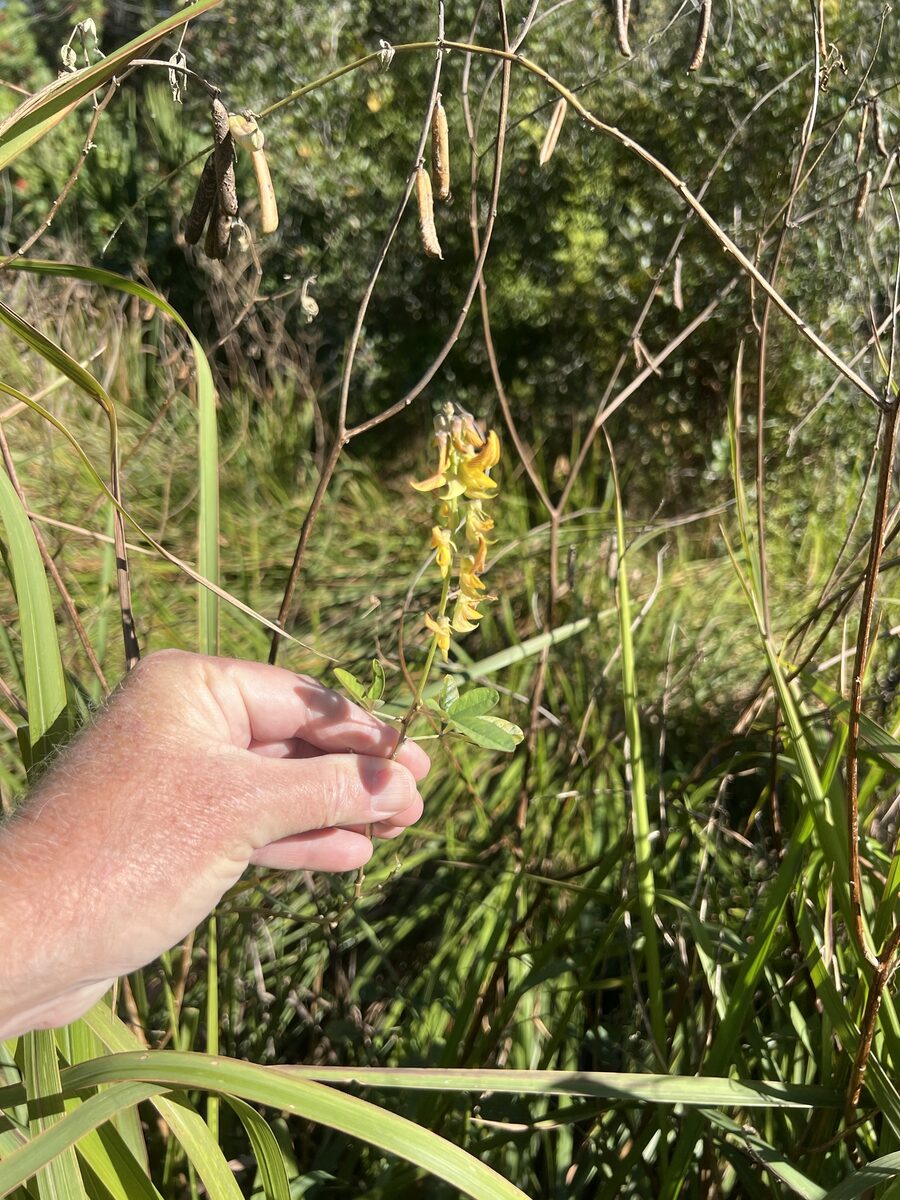
Pueraria montana var. chinensis
(Ohwi) Sanjappa & Pradeep
Thomson kudzu
iNaturalist· cc0
no rights reserved
iNaturalist· cc-by-nc
(c) 方伊琳(阿鈣), some rights reserved (CC BY-NC), uploaded by 方伊琳(阿鈣)
Summary
Source: WikipediaPueraria montana, more commonly known as kudzu, is a species of plant in the botanical family Fabaceae. At least three sub-species (alternatively called varieties) are known. It is closely related to other species in the genus Pueraria (P. edulis and P. phaseoloides) and the common name is used for all of these species and hybrids between them. The morphological differences between them are subtle, they can breed with each other, and it appears that introduced kudzu populations in the United States have ancestry from more than one of the species.
Description
An annual woody climber. It forms tuberous roots.
This description is brief — help expand it
Edible Uses
Kudzu has been referred to as a "quasi-wild" species, since it has been farmed and selectively bred by humans for millennia in its native range, but cultivated strains have never become isolated from wild populations, resulting in repeated interchanges between wild and farmed kudzu. As a result, the gene pool of kudzu is diverse, vigorous, and strongly influenced by the plant's relationship with humans. The main uses of kudzu are for food, for fiber, and as a medicinal plant; it is also used to make paper, for basketry, and as a food source for livestock. The starchy root of kudzu has been used for food in China since before 540 CE, with specific cultivars bred for this purpose, and often sustained Chinese people during famines that occurred throughout history. Kudzu starch is used as a thickening or gelling agent similar to arrowroot, tapioca or potato starch, and has many alleged benefits as a health food. Kudzu is still utilized for food in China, Japan, and Korea. Kudzu starch is an important component of many Japanese confections and sweets, valued for its ability to set firmly with a fine, translucent appearance. It is also turned into flour and can be used to make noodles. Kudzu is furthermore considered an important medicinal plant, and is sometimes sold as a supplement in health food stores. Kudzu cloth is called "ko-pu" and archaeological records indicate that ko-pu was used in China at least 6,000 years ago. From the Zhou dynasty to the early twentieth century, kudzu was one of three major textile materials used in China, with the others being silk and ramie. Kudzu textiles were inexpensive and widespread, and formed such a major part of commerce that the Zhou dynasty had a specific office for dealing with kudzu-related affairs. In Japan, the earliest evidence for kudzu cloth dates back to 300-538 CE, and it continued to be used into the Edo period. Kudzu fiber is a bast fiber, like linen or hemp. To obtain the bast fibers, the new young vines are harvested in summer and boiled, then left to be fermented by the action of naturally occurring bacteria in mounds of grass until the outer bark becomes slimy and can be washed off in running water. In 2023, kudzu was used to develop a biodegradable alternative to plastic food packaging.
Traditional Uses
The tuberous root is eaten cooked.
This uses section is brief — help expand it
Distribution
It is a subtropical plant. It often grows in deciduous forests.
Where It Grows
Asia, Bhutan, China, Hawaii, Himalayas, India, Indochina, Laos, Myanmar, Northeastern India, SE Asia, Philippines, Sikkim, Taiwan, Vietnam,
Synonyms
Also Known As
Mayong, Pani alu
References (5)
- Lim, T. K., 2015, Edible Medicinal and Non Medicinal Plants. Volume 9, Modified Stems, Roots, Bulbs. Springer p 71
- Patiri, B. & Borah, A., 2007, Wild Edible Plants of Assam. Geethaki Publishers. p 40 (As Pueraria thomsonii)
- Pegu, R., et al, 2013, Ethnobotanical study of Wild Edible Plants in Poba Reserved Forest, Assam, India. Research Journal of Agriculture and Forestry Sciences 1(3):1-10 (As Pueraria thomsonii)
- Sarma, H., et al, 2010, Updated Estimates of Wild Edible and Threatened Plants of Assam: A Meta-analysis. International Journal of Botany 6(4): 414-423 (As Pueraria thomsonii)
- Wiersema, J. H. & Leon, B., 2013, World Economic Plants. A Standard Reference CRC Press. 2nd Ed. p 572 (As Pueraria montana var. thomsonii)