Pueraria montana var. lobata
(Willd.) Sanjappa & Pradeep
Kudzu, Japanese arrowroot
gbif· cc-by
Hector Montero
gbif· cc-by
岸本年郎
gbif· cc-by
岸本年郎
Summary
Source: WikipediaPueraria montana var. lobata, the East Asian arrowroot, or kudzu vine, is a perennial plant in the family Fabaceae.
Description
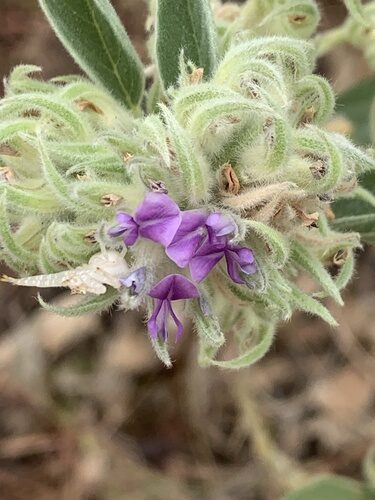
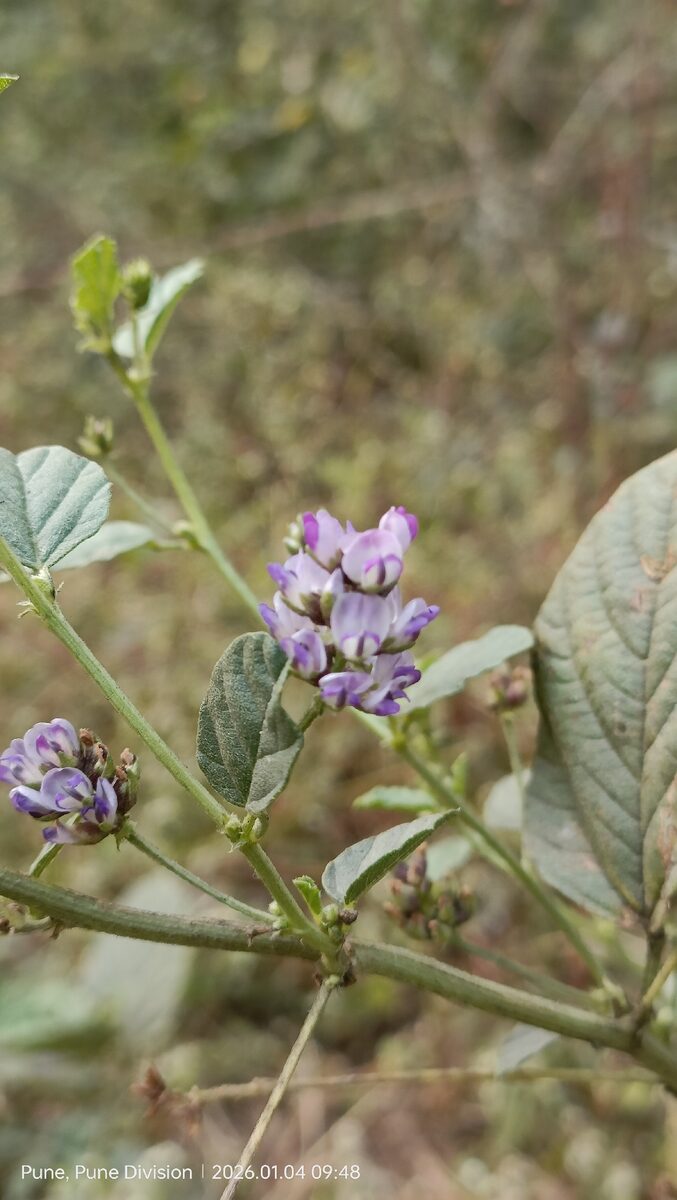
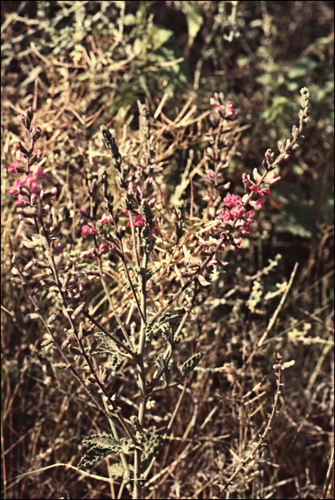
A slow growing climbing legume with a thickened edible tuber. It has a thick stem which is hairy at the base. The stem can be 2.5 cm across. It can climb to 20 m high. The leaves are hairy and divided into 3 leaflets. They are oval or diamond shaped and they have lobes. The middle leaflet is the largest. The side leaflets are not equal on both sides of the main vein. The leaflets are 10-18 cm long by 8-15 cm wide. The leaves taper towards the tip. The leaf stalk is 20 cm long. The flowers are pea like and purple. They are 2 cm long and produced in upright stalks. The clusters along the stalks are 25-40 cm long. The fruit are oblong pods 9 cm long and 1 cm wide. They are covered with dense rusty hairs. The tuber is shaped like a cassava root. It can be 60-90 cm long.
Edible Uses
The root tuber is cooked and eaten, or processed into flour used as a thickener for sauces. The leaves, shoots, and flowers are used as vegetables. In India, seeds are fermented in a closed container for about seven days to make a drink.
Traditional Uses
The root tuber is cooked and eaten. A kind of flour can also be made from the roots. This is processed into a thickener for sauces. The leaves, shoots and flowers can be used as a vegetable. In India the seeds are boiled and kept in a closed container for about seven days and then allowed to decompose. A drink is made from it.
Medicinal Uses
Pueraria montana var. lobata has several practical applications, as well as uses in medicine and cosmetics. More than 70 phytochemical are present in Kudzu root, with the major groups being isoflavonoids and triterpenoids with their glycosides. 41 phytochemicals, including large amounts of isoflavones have been identified within Kudzu flowers. One of the major phytochemicals in Kudzu plants is puerarin, which has antioxidant and anti-aging properties. The chemical components of both root and flower are useful for both medicinal and cosmetic purposes. The leaves of Kudzu plants can be consumed as vegetables and are high in triterpenoid saponins and isoflavones, which have several health benefits. The root of Pueraria montana var. lobata, which is rich in bioactive constituents, has been used in traditional medicine in Eastern Asia. The Kudzu flowers have also been used in traditional medicine for conditions such as dysentery and alcoholism. The phytochemicals in kudzu plants contain many antioxidants, which can lower the risk of several disorders such as atherosclerosis, diabetes, and cancer. When used in combination with other medicinal herbs, Pueraria montana var. lobata was found to reduce fasting blood glucose levels in patients with type 2 diabetes mellitus. Pueraria montana var. lobata also has hepatoprotective properties and can be used in combination with other botanical drugs to enhance the effects of treating acute liver injury. Phytochemical compounds that are present in Pueraria montana var. lobata, particularly flavonoid compounds, which are widely used ingredients for cosmetics, prove Kudzu to be a potential source for bioactive compounds in future cosmetic applications. The phytochemical puerarin, which exists in the root of Kudzu, has been shown to inhibit the formation of advanced glycation end (AGEs) products related to skin-aging. Other studies have shown the potential of phytochemicals to participate in skin regeneration by promoting migration, proliferation, and collagen synthesis and thereby promoting skin pro-inflammatory activity and epithelialization which results in skin regeneration and healing. This makes Pueraria montana var. lobata a potentially useful alternative for the production of anti-aging and skin-regeneration cosmetics. Also, the melanogenesis inhibitory activity of Pueraria montana is of special interest in cosmetics, particularly in Asia where lighter skin is preferred amongst women. Studies have shown that the plant's extract consists of anti-melanogenesis activity by activating Akt/GSK-3b and interrupting maturation of tyrosinase by inhibiting a-glucosidase. Additionally, research has been done to examine the use of Pueraria montana var. lobata nanocellulose as a sustainable packaging material. Researchers found that isolated kudzu cellulose nanocrystals (CNCs) are a suitable reinforcing material for nanocomposites. However, further research is necessary to determine sustainable CNC extraction methods. The starch powder made from the East Asian arrowroot is called kudzu powder. Kudzu powder is used to make arrowroot tea in traditional medicines of China, Japan and Korea (in Korea the root unprepared is also used). The production of this powder in Japan was concentrated among the Kuzu (国栖) people who once lived along the Yoshino River in Nara Prefecture, which gave the plant its Japanese (and later loaned into English kudzu) name.
Distribution
A temperate to subtropical plant. Wild forms grow between 30 and 1860 m in the tropics. Cultivated forms are more common in high altitude areas up to 2700 m altitude in Papua New Guinea. It grows in grassland and on the edge of forests. It suits hardiness zones 5-11.
Where It Grows
Africa, American Samoa, Asia, Australia, Caribbean, Caucasus, Central Asia, China, Chuuk, Cuba, East Timor, Fiji, India, Indochina, Indonesia, Japan, Kiribati, Korea, Laos, Malaysia, Micronesia, New Caledonia, Niue, Norfolk Island, North America, Pacific, Pakistan, Papua New Guinea, PNG, Philippines, Puerto Rico, Rotuma, Russia, Samoa, SE Asia, Solomon Islands, Taiwan, Tajikistan, Thailand, Timor-Leste, Tonga, Torres Strait, USA, Vanuatu, Vietnam, Wallis & Futuna, West Africa, West Indies,
Cultivation
It is normally grown by stem cuttings. It grows slowly. Plants also grow self sown from seed.
Production
The time to maturity is 2-3 years. A tuberous root can be 35 kg weight.
Other Information
It is a commercially cultivated vegetable. A minor root crop in Papua New Guinea. It is used as a reserve food and for ceremonies.
Notes
The tubers contain 27% starch. Chemical composition (peeled root): Protein = 2.13%. Fat = 0.1%. Carbohydrate = 27.1%. Ash = 1.45%. Probably now Pueraria montana var lobata. It has a chemical that reduces craving for alcohol.
Synonyms
Also Known As
Aka fala, Baai, Ban kumsa, Bitok, Chik, Chikdeongkul, Chil, Chilgi, Cu nang, Deday, Gegen, Goruma, Horon, Inoka, Kopitu, Koudzou, Oka moi, Owitu, Qari yaka, Same, Tahaunon, Tamyakhura, Tebi, Tobi, Wa yaka
References (72)
- Agric. Univ. Wageningen Pap. 85-1:53. 1985
- Ambasta S.P. (Ed.), 2000, The Useful Plants of India. CSIR India. p 504
- Arora, R. K., 2014, Diversity in Underutilized Plant Species - An Asia-Pacific Perspective. Bioversity International. p 108 (As Pueraria thunbergia)
- Bodner, C. C. and Gereau, R. E., 1988, A Contribution to Bontoc Ethnobotany. Economic Botany, 43(2): 307-369
- Brickell, C. (Ed.), 1999, The Royal Horticultural Society A-Z Encyclopedia of Garden Plants. Convent Garden Books. p 846
Show all 72 references Hide references
- Bull. Tokyo Sci. Mus. 18:16. 1947
- Burkill, H. M., 1985, The useful plants of west tropical Africa, Vol. 3. Kew.
- Burkill, I.H., 1966, A Dictionary of the Economic Products of the Malay Peninsula. Ministry of Agriculture and Cooperatives, Kuala Lumpur, Malaysia. Vol 2 (I-Z) p 1870 (As Pueraria hirsuta)
- Chen, B. & Qiu, Z., Consumer's Attitudes towards Edible Wild Plants, Ishikawa Prefecture, Japan. p 24 www.hindawi.com/journals/ijfr/aip/872413.pdf
- Cundall, P., (ed.), 2004, Gardening Australia: flora: the gardener's bible. ABC Books. p 1110
- CURREY, (As Pueraria thunbergiana )
- Dey, A. & Mukhererjee, A., 2015, Living and Survival Amidst Hunger: Wild Edible Botanicals as a Prime Forest Productivity in the Rural Purulia District, West Bengal, India from Colonial to Present. Research Journal of Forestry 9(3): 71-86 (As Pueraria thunbergiana)
- Duke, J.A., 1992, Handbook of Edible Weeds. CRC Press. p 164
- Facciola, S., 1998, Cornucopia 2: a Source Book of Edible Plants. Kampong Publications, p 110
- Flora of Australia Volume 49, Oceanic Islands 1, Australian Government Publishing Service, Canberra. (1994) p 183
- Franklin, J., Keppel, G., & Whistler, W., 2008, The vegetation and flora of Lakeba, Nayau and Aiwa Islands, Central Lau Group, Fiji. Micronesica 40(1/2): 169–225, 2008 (As Pueraria lobata)
- French, B.R., 1986, Food Plants of Papua New Guinea, A Compendium. Asia Pacific Science Foundation p 18
- French, B.R., 2010, Food Plants of Solomon Islands. A Compendium. Food Plants International Inc. p 376 (As Pueraria lobata var. montana)
- Grubben, G. J. H. and Denton, O. A. (eds), 2004, Plant Resources of Tropical Africa 2. Vegetables. PROTA, Wageningen, Netherlands. p 564
- Hedrick, U.P., 1919, (Ed.), Sturtevant's edible plants of the world. p 535 (As Pueraria thunbergiana)
- Hide, R., et al, 1979, A checklist of some plants in the territory of the Sinasina Nimai (Simbai Province, Papua New Guinea), with notes on their uses. Department Anthropology, University of Aukland
- Hu & Hsun, Native forage plants 678. 1955, nom. nud. (As Pueraria pseudohirsuta)
- Hwang, H., et al, 2013, A Study on the Flora of 15 Islands in the Western Sea of Jeollanamdo Province, Korea. Journal of Asia-Pacific Biodiversity Vol. 6, No. 2 281-310 (As Pueraria lobata)
- Hwang, HS, et al, 2014, Distribution characteristics of plant in the Ungseokbong Mountain, Gyeongsangnam-do, Korea. Journal of Asia-Pacific Biodiversity. 7(2014) e164-e178 (As Pueraria lobata)
- ILDIS Legumes of the World http:www:ildis.org/Legume/Web
- Illustrated Flora of Central Texas p 690
- Kang, Y., et al, 2012, Wild food plants and wild edible fungi in two valleys on the Qinling Mountains (Shaanxi, central China) Journal of Ethnobiology and Ethnomedicine; 9:26
- Kay, D.E., 1973, Root Crops, Digest 2, Tropical Products Institute, London, p 87
- Kays, S. J., and Dias, J. C. S., 1995, Common Names of Commercially Cultivated Vegetables of the World in 15 languages. Economic Botany, Vol. 49, No. 2, pp. 115-152
- Kermath, B. M., et al, 2014, Food Plants in the Americas: A survey of the domesticated, cultivated and wild plants used for Human food in North, Central and South America and the Caribbean. On line draft. p 727
- Kim, H. & Song, M., 2013, Ethnobotanical analysis for traditional knowledge of wild edible plants in North Jeolla Province (Korea). Genetic. Resour. Crop Evol. (2013) 60:1571-1585
- Kiple, K.F. & Ornelas, K.C., (eds), 2000, The Cambridge World History of Food. CUP p 1797
- Hu, Shiu-ying, 2005, Food Plants of China. The Chinese University Press. p 482
- Kuo, W. H. J., (Ed.) Taiwan's Ethnobotanical Database (1900-2000), http://tk.agron.ntu.edu.tw/ethnobot/DB1.htm
- Lazarides, M. & Hince, B., 1993, Handbook of Economic Plants of Australia, CSIRO. p 202
- Lebot, V. & Sam, C., Green desert or ‘all you can eat’? How diverse and edible was the flora of Vanuatu before human introductions?. Terra australis 52 p 410
- Lim, T. K., 2015, Edible Medicinal and Non Medicinal Plants. Volume 9, Modified Stems, Roots, Bulbs. Springer p 71
- Liu, Yi-tao, & Long, Chun-Lin, 2002, Studies on Edible Flowers Consumed by Ethnic Groups in Yunnan. Acta Botanica Yunnanica. 24(1):41-56
- Marinelli, J. (Ed), 2004, Plant. DK. p 466 (As Pueraria montana var lobata)
- Martin, F.W. & Ruberte, R.M., 1979, Edible Leaves of the Tropics. Antillian College Press, Mayaguez, Puerto Rico. p 200 (As Pueraria thunbergiana)
- Mua Bioversity Profile, 2013, Profile for Management of the Habitats and Related Ecological and Cultural Resources of Mua Island. Torres Strait Regional Authority Land & Sea Management Unit. p 32
- Ong, H. G., et al, 2015, Ethnobotany of the wild edible plants gathered in Ulleung Island, South Korea. Genet Resourc Crop Evol. Springer (As Pueraria lobata)
- Peekel, P.G., 1984, (Translation E.E.Henty), Flora of the Bismarck Archipelago for Naturalists, Division of Botany, Lae, PNG. p 255, 254
- Pemberton, R. W. & Lee, N. S., 1996, Wild Food Plants in South Korea: Market Presence, New Crops, and Exports to the United States. Economic Botany, Vol. 50, No. 1, pp. 57-70 (As Pueraria thunbergiana)
- Pham-Hoang Ho, 1999, An Illustrated Flora of Vietnam. Nha Xuat Ban Tre. p 948
- Plants for a Future database, The Field, Penpol, Lostwithiel, Cornwall, PL22 0NG, UK. http://www.scs.leeds.ac.uk/pfaf/ (Also as Pueraria pseudohirsuta)
- Powell, J.M., Ethnobotany. In Paijmans, K., 1976, New Guinea Vegetation. Australian National University Press. p 111
- PROSEA handbook Volume 9 Plants yielding non-seed carbohydrates. p 178
- Purseglove, J.W., 1968, Tropical Crops Dicotyledons, Longmans. p 220 (As Pueraria thunbergiana)
- READ,
- READ, (As Pueraria thunbergiana)
- S.C.A.P.,
- Sillitoe, P. 1995, An Ethnobotanical Account of the Plant Resources of the Wola Region, Southern Highlands Province, Papua New Guinea. J. Ethnobiol. 15(2): 201-235
- Smith, A.C., 1985, Flora Vitiensis Nova, Lawaii, Kuai, Hawaii, Volume 3 p 226
- Solomon, C., 2001, Encyclopedia of Asian Food. New Holland. p 159 (As Pueraria thunbergiana)
- Song, M., et al, 2013, Traditional knowledge of wild edible plants in Jeju Island, Korea. Indian Journal of Traditional Knowledge. 12(2) pp 177-194
- Terra, G.J.A., 1973, Tropical Vegetables. Communication 54e Royal Tropical Institute, Amsterdam, p 70 (As Pueraria thunbergiana)
- Thaman, R.R., 1976, The Tongan Agricultural System, University of the South Pacific, Suva, Fiji. p 420
- Thaman, R. R., 1987, Plants of Kiribati: A listing and analysis of vernacular names. Atoll Research Bulletin No. 296
- Thothathri, K., & Pal, G.D., 1987, Further Contribution to the Ethnobotany of Subansiri District, Aranchal Pradesh. J. Econ. Tax. Bot. Vol. 10 No. 1 pp 149-157 (As Pueraria hirsuta)
- UPHOF,
- USDA, ARS, National Genetic Resources Program. Germplasm Resources Information Network - (GRIN). [Online Database] National Germplasm Resources Laboratory, Beltsville, Maryland. Available: www.ars-grin.gov/cgi-bin/npgs/html/econ.pl (10 April 2000)
- Verdcourt, B., 1979, Manual of New Guinea Legumes. Botany Bulletin No 11, Division of Botany, Lae, Papua New Guinea. p 485 (Drawing)
- Wang, J. et al, 2013, A Study on the Utilization of Wild Plants for Food in Liangshan Yi Autonomous Prefecture. Plant Diversity and Resources. 35(4): 416-471 (As Pueraria lobata)
- Wang, J., et al, 2020, An ethnobotanical survey of wild edible plants used by the Yi people of Liangshan Prefecture, Sichuan Province, China. Journal of Ethnobiology and Ethnomedicine 16:10 p 8
- Wiersema, J. H. & Leon, B., 2013, World Economic Plants. A Standard Reference CRC Press. 2nd Ed. p 571
- www.wildediblefood.com
- www.manoa.hawaii.edu/botany/plants of micronesia
- www.worldagroforestrycentre.org/treedb/
- Yuncker, T. G., 1943, The Flora of Niue Island. Bernice P. Bishop Museum Bulletin 178 p 65
- Yuncker, T.G., 1959, Plants of Tonga, Bernice P. Bishop Museum, Hawaii, Bulletin 220. p 147
- Zeven, A. C. & de West, J. M. J., 1982, Dictionary of cultivated plants and their regions of diversity. Wageningen. p 40 (As Pueraria thunbergiana)